Inca Trail to Machu Picchu: Complete Hiking Guide

Inca Trail to Machu Picchu: Complete Hiking Guide
Photo by Paolo Salazar on Pexels

Peru Inca Trail to Machu Picchu: Complete Hiking Guide

🌍 Plan & Book Your Trip

Compare the best deals for this destination — flights, hotels, tours and more:

Affiliate links — we may earn a commission at no extra cost to you.

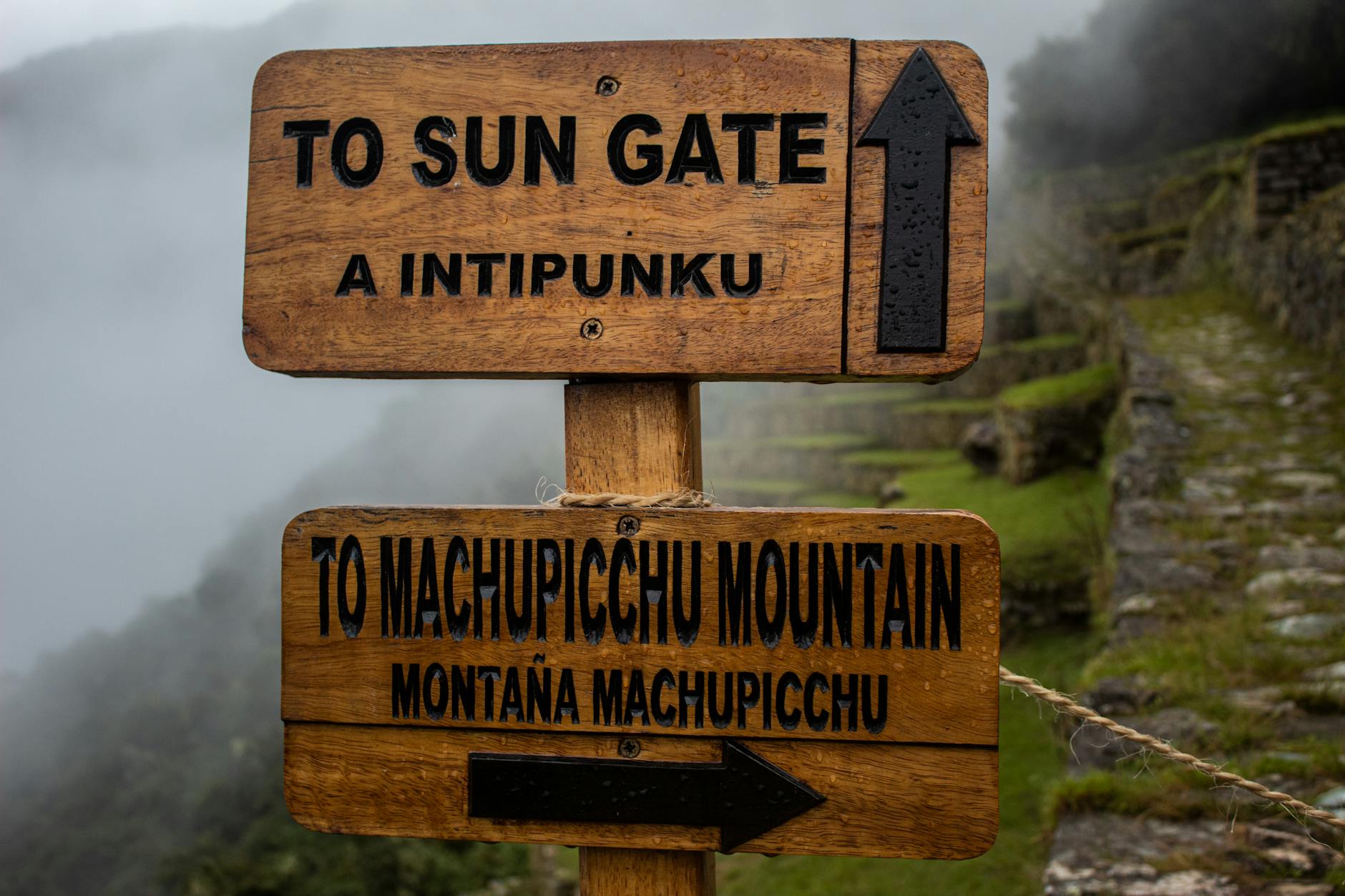
The original Inca Trail — a 500-year-old stone path through cloud forests and mountain passes to the Sun Gate of Machu Picchu.

Standing at the Sun Gate on day four, watching Machu Picchu materialize through the morning mist below me — that was the single most emotional moment I’ve experienced on any trek. Four days of hard hiking, altitude headaches, freezing nights, and burning quads… and then suddenly, there it was. The city that launched a thousand bucket lists, revealed at the exact angle the Incas intended. No bus ride can replicate that moment. If you’re planning this trek and need a comprehensive inca trail guide, I’ve put everything I learned the hard way into this post.

The Classic Inca Trail is a 4-day, 26-mile trek through the Andes to Machu Picchu — following the same stone path that Inca messengers ran 500 years ago. It crosses three mountain passes (the highest at 13,828 feet), passes through cloud forests, subtropical jungles, and dozens of Inca ruins, and ends with a sunrise approach to Machu Picchu through the Sun Gate.

It’s the world’s most famous trek for a reason. But it requires serious planning, physical preparation, and booking months in advance. Let me break it all down.

Key Takeaways

  • Book 6+ months in advance. Only 500 people per day are allowed on the trail (200 trekkers + 300 porters/guides). Permits sell out fast, especially for May-September.
  • You MUST go with a licensed operator. Independent trekking is not allowed.
  • Altitude is the biggest challenge, not fitness. The highest pass is 13,828 feet.
  • Total cost: $600-$1,500+ depending on operator quality (budget to luxury).
  • The trek is 4 days/3 nights on the classic route. A 2-day “short trail” option exists.
  • Day 2 is the hardest — Dead Woman’s Pass at 13,828 feet with 4,000+ feet of climbing.
  • Arrive in Cusco 2-3 days early to acclimate to 11,000 feet before trekking.
  • February closure: The trail closes every February for maintenance.

Quick Facts

DetailInfo
LocationCusco Region, Peru
Trail length26 miles (43 km) — Classic 4-day route
Highest pointDead Woman’s Pass / Warmiwañusca (13,828 ft / 4,215 m)
Duration4 days / 3 nights (Classic); 2 days / 1 night (Short)
Daily permits500 total (200 trekkers + 300 staff)
Permit cost~$200-250 USD per person (changes annually)
Total trek cost$600-$1,500+ (includes permit, guide, porters, meals, camping)
Best monthsMay–September (dry season)
ClosedFebruary (annual maintenance)
Starting elevation8,920 ft (2,720 m) at Km 82
Ending elevation7,970 ft (2,430 m) at Machu Picchu
DifficultyModerate-Strenuous (altitude is the main challenge)

The Permit System: Book Early or Miss Out

Here’s the reality: 500 permits per day sounds like a lot, but when you subtract the ~300 spots reserved for porters, guides, and cooks, only about 200 trekker permits exist per day. During peak season (June-August), these sell out 4-6 months in advance. For popular dates around Inti Raymi festival (June 24), they sell out 6+ months ahead.

How permits work:

  • You can’t buy a permit directly — your licensed tour operator purchases it for you.
  • Permits are non-transferable and tied to your passport number.
  • Once a date sells out, it’s gone. No waitlists.
  • Availability opens in October for the following year.
My advice: Choose your dates and book with an operator 6 months before your trek date. If you’re flexible on dates, 3-4 months sometimes works for shoulder season (April, May, October). If you want June/July peak season, 6 months minimum.

What if permits are sold out? Alternatives exist: the Salkantay Trek (5 days, no permit needed), Lares Trek, or the Inca Jungle Trail. All end at Machu Picchu via train for the final stretch. The Salkantay is the most popular alternative and equally stunning.

Choosing a Tour Operator

Since independent hiking isn’t allowed, your operator choice matters enormously. Here’s what to evaluate:

FactorBudget Operators ($600-800)Mid-Range ($800-1,200)Luxury ($1,200-1,500+)
Group size12-16 people8-12 people6-8 people
Porter ratioMinimalGoodExcellent
Food qualityBasic but adequateSurprisingly goodRestaurant-quality
EquipmentBasic tents, thin padsQuality tents, thicker padsPremium tents, thick mattresses
GuidesKnowledgeableExcellent + passionateExpert historians
ExtrasNoneSome (hot drinks, snacks)Full service (hot showers, charging)
Things to look for:
  • Licensed by Peru’s Ministry of Culture (required — verify their license number)
  • Porter welfare policies (fair wages, weight limits, proper equipment for porters)
  • Group size cap (smaller = better experience)
  • Guide-to-trekker ratio (1:8 maximum)
  • Reviews on TripAdvisor and Google from the last 12 months
  • Clear cancellation and refund policies
My experience: I went mid-range and it was perfect. The food was shockingly good (three-course meals in the middle of the Andes), the guide was a local archaeology expert who brought ruins alive with stories, and the group of 10 became genuine friends by day four.

The 4-Day Itinerary: Day by Day

Day 1: Km 82 to Wayllabamba (7.5 miles / 12 km)

DetailInfo
Start elevation8,920 ft (2,720 m)
End elevation9,840 ft (3,000 m)
Elevation gain920 ft (280 m)
DifficultyEasy — gentle warm-up
Duration5-6 hours hiking
Day 1 is a warm-up. You’ll be picked up from your Cusco hotel around 4-5 AM, drive 2 hours to Km 82 (the trail starting point), and begin walking along the Urubamba River valley.

What you’ll see:

  • Urubamba River valley — lush, green, relatively flat
  • Inca ruins of Llactapata (first archaeological site)
  • Rural Andean communities and terraced farmland
  • Transition from valley floor into cloud forest
  • First views of Veronica glacier (snowcapped peak)
This day feels deceptively easy. The trail is gentle, the scenery is beautiful, and you’ll think: “What’s everyone complaining about?” Save that energy. You’ll need it tomorrow.

Camp: Wayllabamba — a forested campsite at 9,840 feet. Your porters will have camp set up and dinner ready when you arrive. This is the last place to buy bottled water or snacks from locals.

Day 2: Wayllabamba to Pacaymayo (Dead Woman’s Pass)

DetailInfo
Start elevation9,840 ft (3,000 m)
High point13,828 ft (4,215 m) — Dead Woman’s Pass
End elevation11,810 ft (3,600 m)
Elevation gain4,000 ft (1,215 m) to the pass
DifficultySTRENUOUS — the hardest day
Duration6-8 hours hiking
This is it. The day everyone warns you about. You’ll climb nearly 4,000 vertical feet from cloud forest to the highest point on the trail — Dead Woman’s Pass (Warmiwañusca) at 13,828 feet.

What to expect:

  • Morning (3-4 hours): Relentless uphill through progressively thinner air. The trail goes from forest to scrubby puna grassland. Your pace will slow dramatically above 12,000 feet.
  • The pass: A notch in the mountain with prayer flags and emotional trekkers. Views of both valleys (the one you climbed and the one you’ll descend into). Many people cry. The altitude and effort make emotions raw.
  • Afternoon: Steep descent (1,500 feet) to Pacaymayo camp. Tough on knees.
My experience: I’ll be honest — this was one of the hardest physical days of my life. Not because the trail is technical (it’s just stairs, endlessly), but because every step above 12,500 feet felt like hiking through molasses. My lungs burned. My head pounded. I stopped every 50 steps to breathe. And then I crested the pass, saw the world spread below me, and felt something I can only describe as pure triumph.

Survival tips:

  • Start slow. Slower than you think. The mantra is “pole, pole” (slowly, slowly).
  • Drink coca tea at breakfast (helps with altitude).
  • Take small steps — really small.
  • Don’t be embarrassed if you’re the slowest. Altitude affects everyone differently.
  • The pass is achievable for anyone with reasonable fitness — it’s just slow.

Day 3: Pacaymayo to Wiñay Wayna (The Beautiful Day)

DetailInfo
Start elevation11,810 ft (3,600 m)
Two more passes12,625 ft + 12,073 ft
End elevation8,694 ft (2,650 m)
Total distance10 miles (16 km)
DifficultyModerate (two smaller passes, then mostly downhill)
Duration8-10 hours hiking
Day 3 is the longest day in distance but far more enjoyable than Day 2. You’ll cross two more (smaller) passes, descend through the most beautiful section of cloud forest, and pass the most impressive Inca ruins on the trail.

Highlights:

  • Runkurakay ruins — circular Inca watchtower with valley views
  • Sayacmarca — cliffside Inca city (stunning and uncrowded)
  • Cloud forest descent — orchids, hummingbirds, moss-covered trees, magical atmosphere
  • Phuyupatamarca — “Town Above the Clouds” — terraced ruins perched on a cliff edge with views into the Urubamba canyon
  • Wiñay Wayna — the most impressive ruins on the trail (terraced agricultural site cascading down a steep slope)
This is the day that makes the Inca Trail more than just “a hard hike.” The combination of Inca engineering, cloud forest beauty, and the knowledge that Machu Picchu is tomorrow creates an atmosphere of building anticipation.

My experience: The cloud forest section after the second pass was my favorite stretch of the entire trail. Mist drifting through ancient trees draped in moss, orchids growing from every surface, the stone path beneath my feet worn smooth by 500 years of footsteps. I understood in that moment why the Incas chose this specific route — it’s a ceremonial approach, designed to build awe.

Camp: Wiñay Wayna — the final campsite, perched above the ruins. Most groups celebrate with a final dinner together. Your guides will wake you at 3:30 AM for the final push.

Day 4: Wiñay Wayna to Machu Picchu (The Sunrise)

DetailInfo
Start time3:30 AM wake-up, 4:30-5:30 AM start (after checkpoint opens)
Distance3.7 miles (6 km)
ElevationRelatively flat, then final climb to Sun Gate
DifficultyEasy-Moderate (short, but emotional)
Duration2-3 hours to Sun Gate; 30 min more to Machu Picchu
You’ll barely sleep. The excitement is too much. Wake at 3:30, pack quickly (porters take your gear), eat a quick breakfast, and line up at the checkpoint gate. It opens around 5:30 AM and trekkers funnel through in order.

The final stretch:

  • 1-2 hours of relatively flat trail through cloud forest
  • Final steep staircase up to Intipunku (Sun Gate)
  • First glimpse of Machu Picchu below, usually emerging from morning mist
  • 30-minute descent to the citadel itself
  • Guided tour of Machu Picchu (2-3 hours)
The Sun Gate moment: This is what you’ve been waiting for. You climb the final stone stairs, step through the ancient gateway, and there it is — Machu Picchu spread below you in its mountain saddle, often with mist swirling through the terraces and Huayna Picchu towering behind it. Everyone stops. Many cry. Four days of effort crystallize into a single perfect view.

After Machu Picchu: Your guided tour explores the citadel for 2-3 hours. Then you’ll take the bus down to Aguas Calientes (the town below) for lunch and a train back to Cusco (or Ollantaytambo for a bus transfer).

Altitude Preparation: Don’t Skip This

Altitude is the #1 factor that ruins Inca Trail experiences. Dead Woman’s Pass sits at 13,828 feet — high enough for serious altitude sickness if you’re not prepared.

My preparation protocol:

  1. Arrive in Cusco 2-3 days before the trek. Cusco sits at 11,150 feet. Use this time to acclimate — walk around town, do easy activities, stay hydrated.
  2. Consider Diamox (acetazolamide). Talk to your doctor before the trip. Many trekkers take it preventatively starting 1-2 days before. It genuinely helps.
  3. Drink coca tea obsessively. Available everywhere in Cusco. Locals swear by it for altitude.
  4. Stay hydrated. 3-4 liters per day minimum while acclimating.
  5. Sleep lower, hike higher. If possible, visit the Sacred Valley (lower than Cusco) to sleep and do day trips higher.
  6. Don’t drink alcohol for the first 48 hours. It worsens altitude symptoms.
  7. Listen to your body. Mild headache is normal. Severe headache, vomiting, confusion — descend immediately.
Who gets altitude sickness? There’s no correlation with age, fitness, or previous altitude experience. Extremely fit people get hit just as hard as anyone. The only way to know is to expose yourself and see how you respond. Take it seriously regardless of your fitness level.

What to Pack for the Inca Trail

Your porters carry the heavy gear (tents, cooking equipment, food). You carry a daypack with personal items. Most operators limit porter-carried personal gear to 5-7 kg (11-15 lbs).

Essential daypack items:

  • Water (2-3 liters) — bladder or bottles
  • Rain jacket — showers are possible any month
  • Sun protection — hat, sunscreen, sunglasses
  • Warm layer — fleece or puffy for passes and mornings
  • Camera
  • Snacks (energy bars, chocolate, nuts)
  • Toilet paper + hand sanitizer
  • Small first aid kit + altitude meds
  • Headlamp (for early Day 4 start)
  • Trekking poles (highly recommended for knees on descents)
  • Cash (soles) for tips
In your porter-carried bag:
  • Sleeping bag (some operators provide — check quality and bring your own liner)
  • Change of clothes for camp
  • Toiletries
  • Extra layers for cold nights (temps drop to 30-40°F at high camps)
  • Dry bag or plastic bags for rain protection

A Quick Reflection

On the morning of Day 4, standing at the Sun Gate, I wasn’t looking at Machu Picchu. I was looking at the faces around me.

There was a 65-year-old retired teacher who’d trained for a year. A couple celebrating their 30th anniversary. A solo woman from Japan who’d spoken barely a word the first two days but had been beaming since she crested Dead Woman’s Pass. A college kid who’d saved for two years to afford the trip.

We all stood there, misty-eyed, watching this impossible city materialize below us. And what hit me wasn’t the view — it was the shared understanding. We’d all earned this moment with blistered feet, burning lungs, and 3:30 AM alarms. No tour bus delivers that feeling. No shortcut exists.

The Inca Trail isn’t the only way to see Machu Picchu. It’s not even the easiest. But it is, I believe, the way the city was meant to be experienced — approached slowly, earned physically, revealed dramatically through an ancient stone gateway after days of anticipation.

That walk through the Sun Gate made me understand why the Incas built the trail exactly as they did: the city isn’t just a destination. The journey IS the experience.

Porter Culture: Respect the Backbone of the Trail

I want to address something most guides skip: the porters. These are the people — mostly Quechua men from rural mountain communities — who carry 20+ kg on their backs, running past you on the trail in sandals, setting up your camp before you arrive, and cooking your meals at altitude.

How to be a respectful trekker:

  • Choose an operator with fair porter wages. Ask specifically how much porters are paid (it should be above the minimum set by regulations).
  • Tip generously. Standard tip pool is $30-50 per trekker for the porter team, plus $20-30 for your guide. This is expected, not optional.
  • Don’t litter — and pick up any litter you see. Porters often clean up after careless trekkers.
  • Thank them. Learn “gracias” and “thank you” in Quechua: “añay.”
  • Don’t overpack. Every extra kilo goes on a porter’s back.
The trek would not exist without these individuals, and their working conditions have improved significantly due to advocacy and regulation — but they still do extraordinary physical labor for modest pay. Respect that.

Costs Breakdown

ExpenseApproximate Cost (USD)
Trek package (mid-range operator)$800–$1,200
Includes: Permit, guide, porters, meals, tent, transport
Flights to Lima$400–$900 (from US)
Lima to Cusco flight$80–$150
Cusco accommodation (2-3 nights pre/post)$30–$80/night
Tips (porters + guide)$50–$80
Sleeping bag rental (if needed)$20–$40
Extra gear (poles, etc.)$10–$30
Machu Picchu bus ticket (down only)$12
Train back to Cusco area$60–$150 (Peru Rail/Inca Rail)
Total estimated trip cost$1,500–$2,500+

Frequently Asked Questions

How far in advance do I need to book the Inca Trail?

Six months minimum for June-August dates. I booked 7 months ahead for a July trek and my preferred date was already gone — I had to shift by three days. For April-May or September-October, 3-4 months sometimes works, but why risk it? The earlier you decide, the more date flexibility you have.

How fit do I need to be to hike the Inca Trail?

You need moderate cardiovascular fitness — specifically the ability to walk uphill for 4-6 hours at altitude. If you can hike 8-10 miles with significant elevation gain at home, you can do this trek. The altitude is the great equalizer — marathon runners and casual hikers both suffer above 13,000 feet. Train with stairs and long uphill walks. People aged 15 to 70+ complete it regularly.

Is the Inca Trail dangerous?

No, it’s a well-maintained trail with experienced guides and support staff. The path has stone steps throughout and no technical sections. The real “danger” is altitude sickness — mitigated by proper acclimatization in Cusco beforehand. Bring trekking poles for the descents (your knees will thank you) and rain gear. Serious incidents are extremely rare.

What are the alternatives if Inca Trail permits are sold out?

The Salkantay Trek is the best alternative — 5 days through diverse landscapes (glaciers, cloud forest, jungle), no daily permit limit, and you still reach Machu Picchu. The Lares Trek is more cultural, passing through traditional communities. The Inca Jungle Trail combines biking, rafting, and hiking. All end with a train ride to Aguas Calientes and Machu Picchu visit.

Book permits and check current rules on the official Machu Picchu (Peru government) site — Inca Trail permits sell out months ahead.

Final Thoughts

The Inca Trail is overhyped in some ways and underhyped in others. The hype about Machu Picchu? Earned. The Sun Gate reveal? As dramatic as promised. The physical challenge? Real but manageable for most people.

What’s underhyped: the ruins along the trail itself (Sayacmarca alone would be a tourism highlight anywhere else), the cloud forest descent on Day 3 (pure magic), the bonds you form with your trekking group (shared suffering creates real connection), and the profound respect you develop for Inca engineering when you walk on their 500-year-old roads through impossible terrain.

Start planning now. Book early. Acclimate properly. And when you stand at that Sun Gate on Day 4, let yourself feel it fully. You earned it.

Planning your Peru adventure? Use our Trip Planner to organize your full itinerary.

More international hiking guides:

✈️ Planning your trip?

Compare cheap flights, hotels and car rentals for your adventure.

Find Cheap Flights →Compare Hotels →

🌍 Plan & Book Your Trip

Compare the best deals for this destination — flights, hotels, tours and more:

Affiliate links — we may earn a commission at no extra cost to you.

Leave a Comment

Your email address will not be published. Required fields are marked *

Scroll to Top