15 Best National Park Hikes in America (After 50+ Parks)
🌍 Plan & Book Your Trip
Best deals powered by Travelpayouts:
Affiliate links — no extra cost to you.
The kind of trail that makes you forget about everything else — somewhere along the 15 best hikes in America’s national parks.
After hiking in 50+ national parks across the country — from the slot canyons of Utah to the volcanic ridges of Hawaii to the glacier-carved peaks of Montana — I’ve narrowed it down to the 15 best national park hikes that I’d tell anyone to prioritize. Not the most popular. Not the easiest. The best.
These are the trails that stopped me in my tracks. The ones I think about at my desk on a random Tuesday. The hikes that made me understand why people rearrange their entire lives around getting outdoors.
Whether you’re building a bucket list or planning your next park trip, this is the list.
Affiliate disclosure: This guide contains affiliate links. If you buy through one, we may earn a small commission at no extra cost to you. We only recommend gear we’ve actually tested or would happily use ourselves. Full disclosure here.
Key Takeaways
- These 15 hikes span 12 different national parks across 9 states — not just the usual Utah/California suspects.
- Difficulty ranges from easy to strenuous — there’s something here for every fitness level.
- Season matters enormously — some trails are only accessible 3-4 months per year.
- Most don’t require permits, but a few popular ones do (I’ll flag them).
- Each entry includes the specific detail other lists leave out: elevation gain, best time of day, and what to actually expect on trail.
Quick Facts
| 🏞️ Parks covered | 12 national parks |
|---|---|
| 🗺️ States represented | 9 (UT, CA, MT, WY, AZ, TN, CO, WA, HI) |
| 🥾 Difficulty range | Easy to strenuous |
| ⏱️ Shortest hike | 1.5 miles |
| ⏱️ Longest hike | 17 miles |
| 📋 Permits required | 3 of 15 hikes |
The Full Comparison Table
| # | Hike | Park | Distance | Elevation Gain | Difficulty | Best Season |
|---|---|---|---|---|---|---|
| 1 | The Narrows (Bottom-Up) | Zion | 6-9 mi RT | 200 ft | Moderate | Jun–Oct |
| 2 | Highline Trail | Glacier | 11.8 mi | 1,600 ft | Moderate | Jul–Sep |
| 3 | Half Dome | Yosemite | 14-16 mi RT | 4,800 ft | Strenuous | May–Oct |
| 4 | Angels Landing | Zion | 5.4 mi RT | 1,488 ft | Strenuous | Mar–Nov |
| 5 | Observation Point | Zion | 8 mi RT | 2,148 ft | Moderate-Hard | Mar–Nov |
| 6 | Cascade Canyon | Grand Teton | 9.1 mi RT | 1,100 ft | Moderate | Jun–Sep |
| 7 | Grinnell Glacier | Glacier | 10.6 mi RT | 1,840 ft | Moderate | Jul–Sep |
| 8 | Alum Cave to Mt. LeConte | Great Smoky Mtns | 10 mi RT | 2,763 ft | Strenuous | Apr–Nov |
| 9 | Emerald Lake Trail | Rocky Mountain | 3.6 mi RT | 700 ft | Easy | Jun–Oct |
| 10 | Skyline Trail | Mt. Rainier | 5.5 mi loop | 1,700 ft | Moderate | Jul–Sep |
| 11 | South Kaibab to Bright Angel | Grand Canyon | 16.5 mi | 4,380 ft | Strenuous | Mar–May, Sep–Nov |
| 12 | Kalalau Trail (first 2 mi) | Na Pali Coast (Kauai) | 4 mi RT | 800 ft | Moderate | Apr–Sep |
| 13 | Mist Trail | Yosemite | 5.4 mi RT | 1,000 ft | Moderate | May–Jul |
| 14 | Delicate Arch Trail | Arches | 3 mi RT | 629 ft | Easy-Moderate | Mar–May, Sep–Nov |
| 15 | Avalanche Lake | Glacier | 4.6 mi RT | 730 ft | Easy | Jun–Oct |
The 15 Best Hikes, In Detail
1. The Narrows — Zion National Park, Utah
The hike: You wade up a river between thousand-foot sandstone walls. It’s unlike anything else in America.
| Detail | Info |
|---|---|
| Distance | 6–9 miles round trip (your choice) |
| Elevation gain | ~200 ft |
| Difficulty | Moderate |
| Permit | No (bottom-up) |
| Best season | June–October |
| Best time of day | Early morning (fewer crowds, safer weather) |
The Narrows is my #1 because it delivers a completely unique experience. You’re not walking beside water — you’re walking in it, with canyon walls towering on both sides. The “Wall Street” section, about 2 miles in, is where the canyon squeezes tightest and the wow factor peaks.
Pro tip: Rent water shoes and a walking stick in Springdale. Regular hiking boots are useless here. Check our complete Narrows guide and our Narrows gear guide for everything you need.
What most lists won’t tell you: Check the flow rate before you go. Above 150 CFS and the park closes the hike. Below that, anything under 80 CFS is ideal for beginners.
2. Highline Trail — Glacier National Park, Montana
The hike: A ridgeline traverse across the Continental Divide with glaciers, mountain goats, and views that stretch into Canada.
| Detail | Info |
|---|---|
| Distance | 11.8 miles (point-to-point with shuttle) |
| Elevation gain | 1,600 ft |
| Difficulty | Moderate |
| Permit | No |
| Best season | July–September |
| Best time of day | Morning start (afternoon storms) |
The Highline Trail is the hike that made me fall in love with Montana. You start at Logan Pass, walk along the Garden Wall with thousand-foot drop-offs to your left, and watch mountain goats graze like they own the place (they do). The trail stays high the entire time — you’re looking down on most of the park.
Pro tip: Take the shuttle back from The Loop trailhead. Do it point-to-point, not out-and-back.
What most lists won’t tell you: The first quarter-mile has a cable bolted into the cliff face for a reason — it’s exposed. If heights bother you, this section will test you. After that, the trail widens and mellows.
3. Half Dome — Yosemite National Park, California
The hike: The iconic granite summit of Yosemite, reached via cables bolted into the rock for the final 400 feet.
| Detail | Info |
|---|---|
| Distance | 14–16 miles round trip |
| Elevation gain | 4,800 ft |
| Difficulty | Strenuous |
| Permit | Yes (lottery system) |
| Best season | Late May–October (when cables are up) |
| Best time of day | Pre-dawn start required |
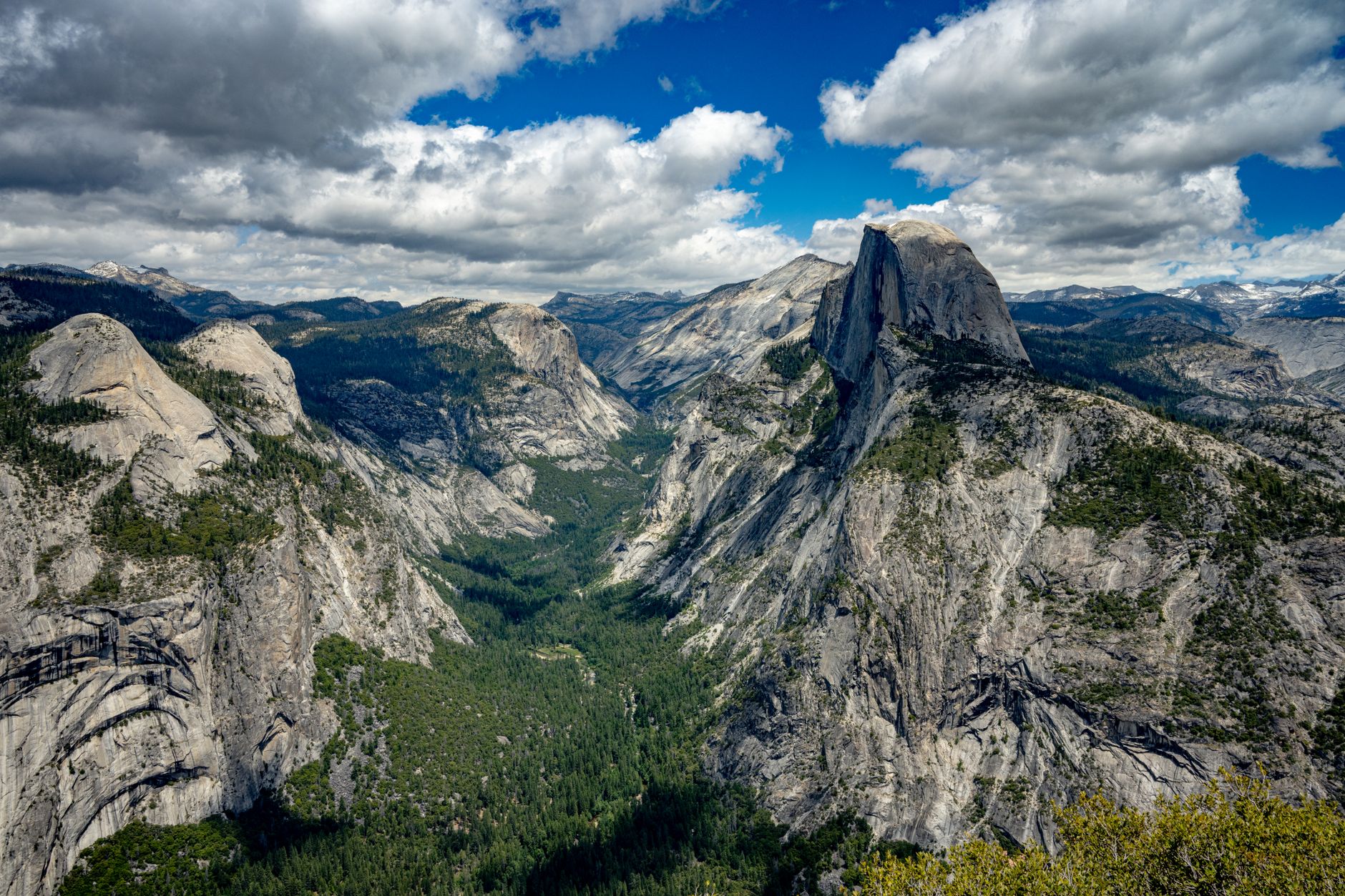
Half Dome is a full-day commitment and you need a permit (enter the lottery months in advance). But standing on that summit, looking down at Yosemite Valley 4,800 feet below, is one of those “I can’t believe I’m here” moments that earns its reputation.
Pro tip: Start by 5-6 AM to avoid crowds on the cables and afternoon thunderstorms. Bring gloves for the cables — they’re worn smooth.
What most lists won’t tell you: The Sub Dome section right before the cables is often the hardest part — steep, exposed granite with no railing. The cables get all the attention, but Sub Dome is where people turn around.
4. Angels Landing — Zion National Park, Utah
The hike: A knife-edge ridge with chains and 1,000-foot drops on both sides, ending at a summit overlooking all of Zion Canyon.
| Detail | Info |
|---|---|
| Distance | 5.4 miles round trip |
| Elevation gain | 1,488 ft |
| Difficulty | Strenuous (exposure, not distance) |
| Permit | Yes (lottery) |
| Best season | March–November |
| Best time of day | Sunrise (fewest people on chains) |
Angels Landing is the most exhilarating 2.5-mile scramble you’ll ever do. The chain section along the final half-mile is genuinely thrilling — narrow, exposed, with sheer drops that your brain can’t quite process. It’s not for everyone, but if you can handle heights, it’s unforgettable.
Pro tip: The permit lottery opens months in advance. Apply for the day-before lottery as backup.
What most lists won’t tell you: Everything up to Scout Lookout (before the chains) is a great hike on its own — paved switchbacks, Walter’s Wiggles, and canyon views. You don’t have to do the chain section to have an incredible time.
5. Observation Point — Zion National Park, Utah
The hike: The highest viewpoint in Zion Canyon — you look down on Angels Landing from here.
| Detail | Info |
|---|---|
| Distance | 8 miles round trip |
| Elevation gain | 2,148 ft |
| Difficulty | Moderate-Hard |
| Permit | No |
| Best season | March–November |
| Best time of day | Morning (shade in the canyon section) |
I’ll say it: Observation Point has a better view than Angels Landing, with no chains, no lottery, and fewer people. You climb through Echo Canyon, pass through a short slot canyon section, then emerge on a promontory looking straight down at the Angels Landing trail. It’s wild.
Pro tip: Check if the East Rim trailhead is accessible (fire damage occasionally closes it). The alternate route from Weeping Rock adds distance.
What most lists won’t tell you: The final approach is flat and wide — after the steep climb, you walk out onto a mesa before reaching the edge. Great spot for lunch.
6. Cascade Canyon — Grand Teton National Park, Wyoming
The hike: A gentle valley hike surrounded by the most dramatic mountain scenery in the Lower 48.
| Detail | Info |
|---|---|
| Distance | 9.1 miles round trip |
| Elevation gain | 1,100 ft |
| Difficulty | Moderate |
| Permit | No |
| Best season | June–September |
| Best time of day | Morning (the Tetons are front-lit) |
Take the boat shuttle across Jenny Lake (or hike the shore), then follow the creek into Cascade Canyon with the Tetons towering directly overhead. Moose sightings are common, wildflowers explode in July, and the scale of the mountains is almost obscene.
Pro tip: Take the boat shuttle one way, hike the shore the other — saves time going in, gives you lake views going out.
What most lists won’t tell you: The trail forks at 4.5 miles. The left fork to Lake Solitude adds 5+ miles but is worth it if you have the legs. The right fork to Hurricane Pass is the route for serious peak-baggers.
7. Grinnell Glacier Trail — Glacier National Park, Montana
The hike: A steady climb to one of the last remaining glaciers in the park, passing turquoise lakes the entire way.
| Detail | Info |
|---|---|
| Distance | 10.6 miles round trip |
| Elevation gain | 1,840 ft |
| Difficulty | Moderate |
| Permit | No |
| Best season | July–September |
| Best time of day | Morning (clearer skies, calmer winds) |
Every quarter-mile on this trail delivers a new jaw-drop: Swiftcurrent Lake, Josephine Lake, then Grinnell Lake glowing turquoise below, and finally the glacier itself clinging to the mountainside with icebergs floating in the melt pool. It’s a master class in what “scenic” means.
Pro tip: Take the boat shuttle across Swiftcurrent and Josephine lakes to shave 3.5 miles off the round trip. Focus your energy on the upper section.
What most lists won’t tell you: Bighorn sheep and mountain goats are almost guaranteed on the upper sections. They often stand directly on the trail — give them space and wait.
8. Alum Cave Trail to Mt. LeConte — Great Smoky Mountains, Tennessee
The hike: The most dramatic trail in the Smokies, climbing through an arch, past Alum Cave Bluffs, to the highest lodge-accessible peak in the East.
| Detail | Info |
|---|---|
| Distance | 10 miles round trip |
| Elevation gain | 2,763 ft |
| Difficulty | Strenuous |
| Permit | No |
| Best season | April–November |
| Best time of day | Early morning (crowds build by 9 AM) |
The Smokies get overlooked on “best hikes” lists, and that’s a mistake. Alum Cave takes you through old-growth forest, past the towering Alum Cave Bluffs (not actually a cave — a massive overhang), and up cable-assisted sections to LeConte’s summit where you can stay overnight at the rustic lodge.
Pro tip: Book LeConte Lodge a year in advance if you want to overnight. Otherwise, it’s a day hike.
What most lists won’t tell you: The trail from Arch Rock to Alum Cave Bluffs is the best section. If you’re short on time or energy, hiking to the bluffs and back (4.4 mi RT) is still phenomenal.
9. Emerald Lake Trail — Rocky Mountain National Park, Colorado
The hike: A gentle climb past three alpine lakes to a stunning emerald pool surrounded by peaks — accessible for nearly everyone.
| Detail | Info |
|---|---|
| Distance | 3.6 miles round trip |
| Elevation gain | 700 ft |
| Difficulty | Easy |
| Permit | No (timed entry for park) |
| Best season | June–October |
| Best time of day | Sunrise (reflections, no crowds) |
This is the best short hike in America if you’re at altitude. You climb past Nymph Lake, Dream Lake (gorgeous in its own right), and finally reach Emerald Lake tucked into a cirque of rocky peaks. It’s only 1.8 miles each way but feels like you’ve entered a different world.
Pro tip: Get the timed entry reservation for Bear Lake corridor. Show up at 6 AM and you’ll have Dream Lake to yourself.
What most lists won’t tell you: Dream Lake at mile 1 is arguably prettier than Emerald Lake, especially at sunrise with Hallett Peak reflecting in the water. Don’t rush past it.
10. Skyline Trail — Mt. Rainier National Park, Washington
The hike: Alpine meadows exploding with wildflowers, with the massive glaciated bulk of Rainier looming overhead.
| Detail | Info |
|---|---|
| Distance | 5.5 miles (loop) |
| Elevation gain | 1,700 ft |
| Difficulty | Moderate |
| Permit | No |
| Best season | Late July–September |
| Best time of day | Morning (clouds roll in afternoon) |
In late July and August, the Skyline Trail at Paradise transforms into the most wildflower-dense landscape I’ve ever walked through. Lupine, paintbrush, and avalanche lilies carpet the meadows while Rainier’s glaciers tower above. It’s almost too scenic to be real.
Pro tip: Go clockwise. The views build as you climb, and you get the hardest uphill done while you’re fresh.
What most lists won’t tell you: The trail often has snow patches into mid-July. Check ranger stations for conditions — microspikes can extend your season by a few weeks.
11. South Kaibab to Bright Angel — Grand Canyon, Arizona
The hike: The ultimate Grand Canyon experience — descending one trail and climbing out another, seeing the canyon from the inside.
| Detail | Info |
|---|---|
| Distance | 16.5 miles (point-to-point) |
| Elevation gain | 4,380 ft (ascending) |
| Difficulty | Strenuous |
| Permit | Yes (for overnight); no for rim-to-rim day hike |
| Best season | March–May, September–November |
| Best time of day | Pre-dawn start essential |
Going down South Kaibab is like descending through a geology textbook — every layer a different color, a different era. Touch the river at Phantom Ranch, then climb out Bright Angel with its shade and water stops. It’s a full-body, all-day commitment that most people call the best hike of their life.
Pro tip: Do NOT attempt this in summer. Temperatures at the bottom exceed 110°F. Spring and fall only. Carry a minimum of 4 liters of water.
What most lists won’t tell you: South Kaibab has no water and no shade. If you start there (recommended for views), you’re committed — there’s no easy bailout until Bright Angel.
12. Kalalau Trail (First 2 Miles) — Na Pali Coast, Kauai, Hawaii
The hike: The opening stretch of Hawaii’s most famous coastal trail, with dramatic clifftop ocean views.
| Detail | Info |
|---|---|
| Distance | 4 miles round trip (to Hanakapi’ai Beach) |
| Elevation gain | 800 ft |
| Difficulty | Moderate |
| Permit | No (for first 2 miles only) |
| Best season | April–September (dry season) |
| Best time of day | Morning (less mud, better light) |
The full Kalalau Trail is 11 miles one-way and requires a permit, but the first 2 miles to Hanakapi’ai Beach are free and deliver peak Na Pali Coast drama: lush green ridges dropping into turquoise ocean, red dirt trail, and a beach that feels like the end of the world.
Pro tip: The trail gets extremely muddy in wet season. Bring trekking poles and water shoes for creek crossings.
What most lists won’t tell you: Don’t swim at Hanakapi’ai Beach — the currents are deadly. Enjoy it from the sand. If you have energy, continue 2 more miles inland to Hanakapi’ai Falls.
13. Mist Trail — Yosemite National Park, California
The hike: A steep granite staircase that takes you alongside two massive waterfalls — you will get soaked.
| Detail | Info |
|---|---|
| Distance | 5.4 miles round trip (to Nevada Fall) |
| Elevation gain | 1,000 ft |
| Difficulty | Moderate |
| Permit | No |
| Best season | May–July (peak waterfall flow) |
| Best time of day | Morning (rainbows in the mist, fewer crowds) |
Walking up the granite steps beside Vernal Fall with the waterfall spraying you like a fire hose is one of the most visceral experiences in any national park. Continue to Nevada Fall for an even bigger payoff. Time it for late May or June when snowmelt makes the falls thunderous.
Pro tip: Bring a rain jacket or dry bag for your phone/camera. You will get wet — it’s called “Mist Trail” for a reason.
What most lists won’t tell you: The steps are brutally slippery when wet. People fall every year. Grip the handrail and take your time. It’s not a race.
14. Delicate Arch Trail — Arches National Park, Utah
The hike: A short but surreal hike to the most iconic natural arch in the world.
| Detail | Info |
|---|---|
| Distance | 3 miles round trip |
| Elevation gain | 629 ft |
| Difficulty | Easy-Moderate |
| Permit | No (timed entry for park) |
| Best season | March–May, September–November |
| Best time of day | Sunset (golden light on the arch) |
You’ve seen Delicate Arch on Utah’s license plate. In person, it’s bigger, more dramatic, and more emotional than any photo conveys. The final bend in the trail where the arch suddenly appears — framing the La Sal Mountains behind it — is one of the great reveals in hiking.
Pro tip: Arrive 1-1.5 hours before sunset. You want time to find a spot in the natural amphitheater. It gets crowded.
What most lists won’t tell you: There’s a narrow, exposed ledge section near the end. It’s only about 200 yards but if you have a fear of heights and drop-offs, it can be unnerving. Stick to the wall side.
15. Avalanche Lake — Glacier National Park, Montana
The hike: The easiest hike on this list — and proof that “easy” and “spectacular” aren’t mutually exclusive.
| Detail | Info |
|---|---|
| Distance | 4.6 miles round trip |
| Elevation gain | 730 ft |
| Difficulty | Easy |
| Permit | No |
| Best season | June–October |
| Best time of day | Any (it’s beautiful all day) |
A gentle boardwalk through old-growth cedar forest gives way to a mountain lake surrounded by cliffs with waterfalls streaming down every face. This is the hike I recommend to anyone visiting Glacier who isn’t sure about their fitness level — it’s short, flat-ish, and absolutely stunning.
Pro tip: Walk to the far end of the lake for the best view. Most people stop at the first beach.
What most lists won’t tell you: This is prime grizzly country. Carry bear spray, make noise, and hike in groups. Bear sightings here are common, especially in early morning.
How I Chose These Hikes
After 50+ parks, I used three criteria:
- Scenery that stops you cold — not just “nice views” but genuinely jaw-dropping landscapes
- Unique experience — each hike offers something you can’t get anywhere else
- Accessibility — I included hikes across difficulty levels so everyone has options
I deliberately excluded hikes that require multi-day permits months in advance (sorry, Enchantments), are only accessible via sketchy unmaintained trails, or have been loved to death with lines and overcrowding (though a few popular ones earned their spot).
A Quick Reflection
I remember sitting on the shore of Grinnell Glacier Lake — turquoise water, icebergs floating past, bighorn sheep on the ridge above — and thinking, “This is better than Iceland.” And I love Iceland. But there’s something about knowing these trails exist within a day’s drive (or a cheap flight) from anywhere in America that makes them feel more personal. You don’t need to cross an ocean or break the bank. The best hikes in the world are in our own backyard, and they’re waiting for you to show up.
FAQ
What is the most scenic national park hike in America? Based on consistent scenery throughout the entire hike, I’d give it to the Highline Trail in Glacier National Park. From start to finish, you’re at ridgeline level with views stretching to Canada. There’s no boring section.
What’s the best national park hike for beginners? Emerald Lake Trail in Rocky Mountain National Park or Avalanche Lake in Glacier. Both are under 5 miles, moderate elevation gain, and deliver incredible scenery without requiring serious fitness.
Do you need permits for national park hikes? Most don’t require hiking permits, but some popular trails do: Half Dome (lottery), Angels Landing (lottery), and overnight hikes like the Grand Canyon’s Rim-to-Rim. Several parks now require timed-entry reservations for driving in (Arches, Rocky Mountain) even if the trail itself is free.
What’s the hardest national park hike worth doing? The South Kaibab to Bright Angel route through the Grand Canyon. It’s 16+ miles with 4,380 feet of climbing, but seeing the canyon from the inside — standing at the Colorado River with the walls towering above — is worth every painful step on the way out.
Always confirm trail conditions, fees, and permits at the official National Park Service site before you go.
Final Thoughts
Fifty parks later, I still get the same flutter before every new trailhead. That’s the magic of national park hiking — even after hundreds of miles, the next trail could be the one that rewrites your top five.
Start with whatever’s closest to you. Don’t overthink the “perfect first park.” Just go, walk, and let the trail do what it does best.
Looking for deeper guides? Check our complete Narrows beginner’s guide, our Grand Teton vs Glacier comparison, and the best day hikes in the Grand Canyon. Ready to plan? Our free Trip Planner builds custom itineraries for any park on this list.