Complete Gear Guide for Hiking The Narrows in Zion
🌍 Plan & Book Your Trip
Best deals powered by Travelpayouts:
Affiliate links — no extra cost to you.
The full Narrows kit — everything between you and a miserable, freezing, slippery day in the river.
Here’s what nobody tells you before your first trip to The Narrows: the hike itself is straightforward. It’s the gear that makes or breaks it. Show up in sneakers and cotton shorts on a 55°F water day and you’ll be hypothermic, bruised, and miserable within an hour. Show up with the right Narrows Zion gear and you’ll have one of the best days of your life.
I’ve hiked The Narrows six times across different seasons — spring snowmelt, summer monsoon edges, and perfect fall days. This guide covers every piece of gear you need, whether you’re renting in Springdale or buying your own kit.
Affiliate disclosure: This guide contains affiliate links. If you buy through one, we may earn a small commission at no extra cost to you. We only recommend gear we’ve actually tested or would happily use ourselves. Full disclosure here.
Key Takeaways
- Water shoes with sticky rubber soles are the single most important piece of gear — more than anything else, they determine whether you enjoy The Narrows or hate it.
- Neoprene socks are essential below 65°F water — your feet go numb fast in cold mountain water.
- A walking stick isn’t optional — the underwater rocks are invisible and the current is real.
- Renting in Springdale costs $25-35/day for a full package; buying your own saves money after 2-3 visits.
- Dry bags protect your phone and camera — one wrong step and you’re chest-deep without warning.
Quick Facts
| 📍 Location | The Narrows, Zion National Park, Utah |
|---|---|
| 🌡️ Water temp range | 50°F (spring) to 68°F (late summer) |
| 💧 Typical depth | Ankle to waist (occasional chest in spring) |
| 💰 Full rental cost | $25–$35/day (Springdale outfitters) |
| 💰 Full buy cost | $200–$350 (one-time) |
| ⏱️ Typical hike time | 3–6 hours |
| 🏪 Rental shops | 4-5 outfitters on Zion Park Blvd in Springdale |
The Complete Narrows Gear List
Here’s everything, organized by priority:
| Priority | Item | Rent or Buy? | Approx. Cost (Buy) |
|---|---|---|---|
| Essential | Water shoes / canyoneering boots | Either | $85–$150 |
| Essential | Neoprene socks | Either | $20–$40 |
| Essential | Walking stick / trekking poles | Either | $15–$60 |
| Essential | Dry bag (phone/camera) | Buy | $15–$30 |
| Seasonal | Dry pants / dry suit (spring/fall) | Rent | $150–$300 (buy) |
| Recommended | Quick-dry shorts/pants | Buy | $30–$60 |
| Recommended | Synthetic or wool base layer | Buy | $25–$50 |
| Recommended | Waterproof phone case | Buy | $15–$25 |
| Nice to have | Gaiters (keeps sand out) | Buy | $20–$35 |
| Nice to have | Waterproof camera setup | Buy | $30–$200 |
Water Shoes vs. Canyoneering Boots
This is the #1 decision you’ll make for The Narrows, so let’s break it down properly.
Canyoneering Boots (What Outfitters Rent)
The rental shops in Springdale give you tall, stiff-soled boots with sticky rubber — basically rock-climbing shoes in boot form. They’re designed for one thing: gripping underwater rock.
Pros:
- Excellent ankle support in fast current
- Very thick sole — you don’t feel sharp rocks
- The rental package includes neoprene socks and a stick
- Designed specifically for this kind of hiking
Cons:
- Heavy and clunky
- Terrible on dry trail (the 1-mile Riverside Walk is awkward)
- Rental pairs may not fit perfectly
- You’re paying $25-35 every time
Water Hiking Shoes (My Preference)
After six Narrows trips, I switched to owning my own water shoes (Astral Loyak) with separate neoprene socks. The grip is comparable, the weight is half, and they actually work on dry trail too.
Pros:
- Lighter and more comfortable
- Work on dry trail sections
- You own them — no rental fees
- Better fit (they’re YOUR shoes)
- Versatile for other water hikes
Cons:
- Less ankle support than boots
- Thinner sole — you feel rocks more
- You need to buy socks and stick separately
- Requires some research to pick the right pair
My Recommendation By Season
| Season | Water Temp | My Pick |
|---|---|---|
| Spring (May–early Jun) | 50–58°F | Canyoneering boots + dry pants (rent the full package) |
| Summer (Jul–Aug) | 60–68°F | Water shoes + thin neoprene socks |
| Fall (Sep–Oct) | 55–63°F | Water shoes + thick neoprene socks |
| Late fall (Nov) | 48–55°F | Canyoneering boots + dry pants |
For a deeper dive on specific shoe models, check our best water shoes for hiking guide where I tested 8 pairs head-to-head.
Neoprene Socks — Don’t Skip These
I made the mistake of skipping neoprene socks on a June trip thinking, “It’s summer, how cold can it be?” Answer: cold enough that I couldn’t feel my feet after 45 minutes. The Virgin River is snowmelt-fed. Even in summer, it’s colder than you expect.
What to Look For
- Thickness: 2-3mm for summer, 3-5mm for spring/fall
- Height: Knee-high is ideal (prevents sand/pebbles from entering your shoes)
- Fit: Snug but not cutting off circulation — you’ll wear them for hours
My Picks
| Sock | Thickness | Best For | Price |
|---|---|---|---|
| NRS Boundary Sock | 3mm | All-around (best value) | $30 |
| NRS HydroSkin 0.5 | 0.5mm | Summer only (warm days) | $25 |
| Glacier Glove Premium | 3mm | Cold water (spring/fall) | $35 |
| Henderson Thermoprene | 5mm | Very cold water (late fall) | $40 |
Pro tip: Put neoprene socks on BEFORE your shoes. Seems obvious, but I’ve watched people try to stuff socks into already-on shoes at the trailhead. Also, sprinkle baby powder inside the socks to make them easier to pull on — game changer.
Walking Sticks & Trekking Poles
I told the story in our Narrows beginner’s guide about skipping the walking stick my first time. The current knocked me sideways within 20 minutes. Don’t repeat my mistake.
Rental Sticks vs. Your Own Trekking Poles
| Factor | Rental Stick | Trekking Poles (own) |
|---|---|---|
| Stability | Excellent (wide, heavy base) | Good (narrower tip) |
| Cost | $5-8/day (included in packages) | $30-120 one-time |
| Weight | Heavy (ash or hardwood) | Light (aluminum/carbon) |
| Usability in deep water | Great (tall, thick) | Decent (adjust height) |
| Pack-ability | Can’t take home | Collapses into pack |
My take: The chunky rental sticks actually work better in The Narrows than collapsible trekking poles because they’re heavier and don’t flex in current. If you’re doing The Narrows once, rent the stick. If you hike with poles regularly, bring your own and extend them to max height.
Tips for Using Your Stick
- Plant it upstream before each step
- Use it to test depth before committing your weight
- In fast current, form a triangle: two feet + stick = three points of contact
- Lean into the current slightly — the river pushes you, the stick holds you
Dry Pants and Dry Suits
When You Need Them
- Water temp below 55°F (spring and late fall)
- If you plan to go past Wall Street (deeper water)
- If you run cold or have poor circulation
- If it’s a cloudy day with no sun warming you
When You Don’t
- Summer (July–August) with water above 62°F
- Short hikes (under 2 hours)
- If you’re generating a lot of body heat walking fast
Rent or Buy?
Dry pants cost $150-300 to buy — that’s overkill for most people. Rent them from a Springdale outfitter for $10-15/day as part of a package. They’re bulky, specialized, and you probably won’t use them more than a couple times a year.
What they actually are: Waterproof pants (often bib-style) with sealed seams. You wear thermal layers underneath. They keep you completely dry from the waist down.
Dry Bags — Protecting Your Valuables
One wrong step in The Narrows and you’re suddenly chest-deep in the river. It happens to everyone at least once. If your phone, wallet, and car keys are in your pocket… well, you see the problem.
What I Carry
| Item | Protection | My Pick |
|---|---|---|
| Phone | Waterproof case + dry bag | Sea to Summit Lightweight Dry Bag (1L) |
| Camera | Dry bag + rain cover | Sea to Summit Big River (5L) |
| Snacks/keys | Dry bag | Any 2L roll-top bag |
| Full daypack | Pack liner | Trash compactor bag (free, bombproof) |
Pro tip: Don’t trust “waterproof” phone cases alone. I’ve seen them fail. Put your phone in a waterproof case AND inside a dry bag. Belt and suspenders.
Camera Protection Specifically
If you’re bringing a real camera (and you should — The Narrows is outrageously photogenic), here’s what works:
- Budget: Zip-lock bags (doubled) + a 5L dry bag = surprisingly effective
- Mid-range: Aquapac camera case ($40-80) — lets you shoot through it
- Serious: Peak Design Shell rain cover + dry bag when not shooting
- Action cam: GoPro or DJI Osmo (waterproof already, just bring it)
Check our best photo spots in Zion guide for exactly where to take your camera out.
What to Wear (Beyond the Gear)
Summer (July–August)
- Quick-dry shorts or convertible pants
- Synthetic T-shirt or sun hoodie
- Neoprene socks (thin, 2mm)
- Water shoes
- Hat and sunscreen (the open sections get full sun)
Spring/Fall (May–Jun, Sep–Oct)
- Synthetic base layer (top and bottom)
- Quick-dry hiking pants
- Neoprene socks (3mm)
- Water shoes or canyoneering boots
- Fleece layer in your dry bag (for after)
- Dry pants if water is below 55°F
What NOT to Wear
- Cotton anything — it holds cold water against your skin
- Jeans — heavy, slow-drying, chafing nightmare
- Regular hiking boots — they get destroyed and provide zero grip
- Flip-flops — I’ve seen it. Don’t be that person.
Where to Rent Gear in Springdale
There are 4-5 outfitters on Zion Park Boulevard in Springdale (the town at Zion’s south entrance). They all offer similar packages:
Typical rental package ($25-35/day):
- Canyoneering boots (sized to you)
- Neoprene socks
- Hardwood walking stick
- Optional: dry pants (+$10-15)
Tips for renting:
- Book online the night before during peak season (June–September)
- Pick up gear early — shops open at 6-7 AM
- Try boots on with the neoprene socks to check fit
- Return by closing time to avoid extra charges
- Ask about their “waterproof bag” add-on — it’s overpriced vs. bringing your own
Renting vs. Buying: The Math
| Renting | Buying Your Own | |
|---|---|---|
| 1 trip | $30 | $200+ |
| 3 trips | $90 | $200+ (paid off) |
| 5 trips | $150 | $200+ (saving money) |
| Fit | Generic | Perfect for your feet |
| Convenience | Walk-in, walk-out | Pack and carry |
Break-even point: About 3 trips. If you do The Narrows once, rent everything. If you’re coming back (or doing Kanarra Falls too), buy.
My Complete Kit (What I Actually Bring)
After six trips, here’s my exact loadout:
- Astral Loyak water shoes — $110
- NRS Boundary 3mm neoprene socks — $30
- Black Diamond Trail Ergo trekking poles (extended to max) — $70
- Sea to Summit 1L dry bag (phone + keys) — $18
- Sea to Summit 5L dry bag (camera + snacks) — $25
- Trash compactor bag as pack liner — $0.50
- Quick-dry hiking shorts — $45
- Synthetic sun hoodie — $40
- Aquapac camera case (if bringing DSLR) — $60
Total investment: ~$400 one-time (but most of this gear works for ANY water hike, not just The Narrows).
A Quick Reflection
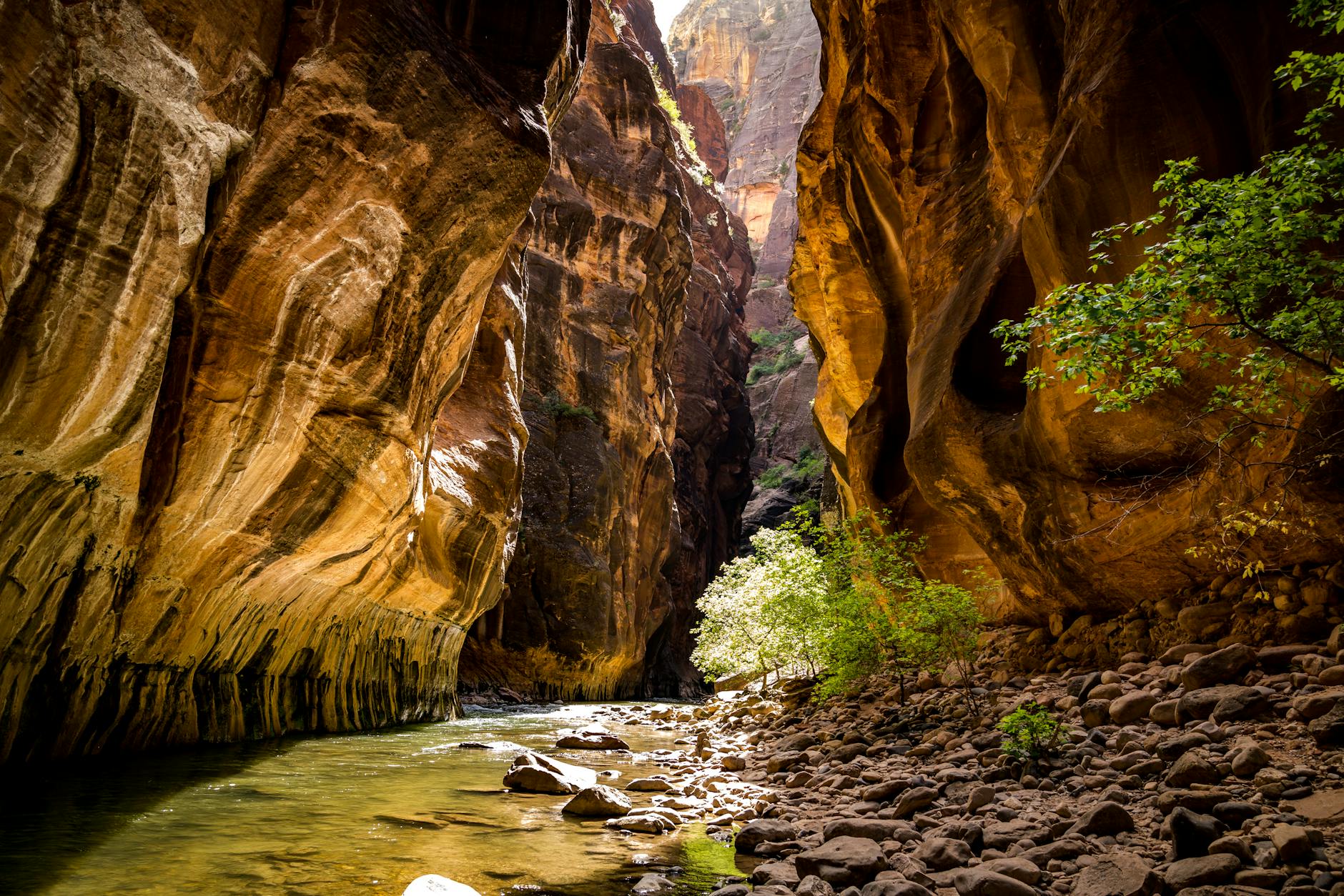
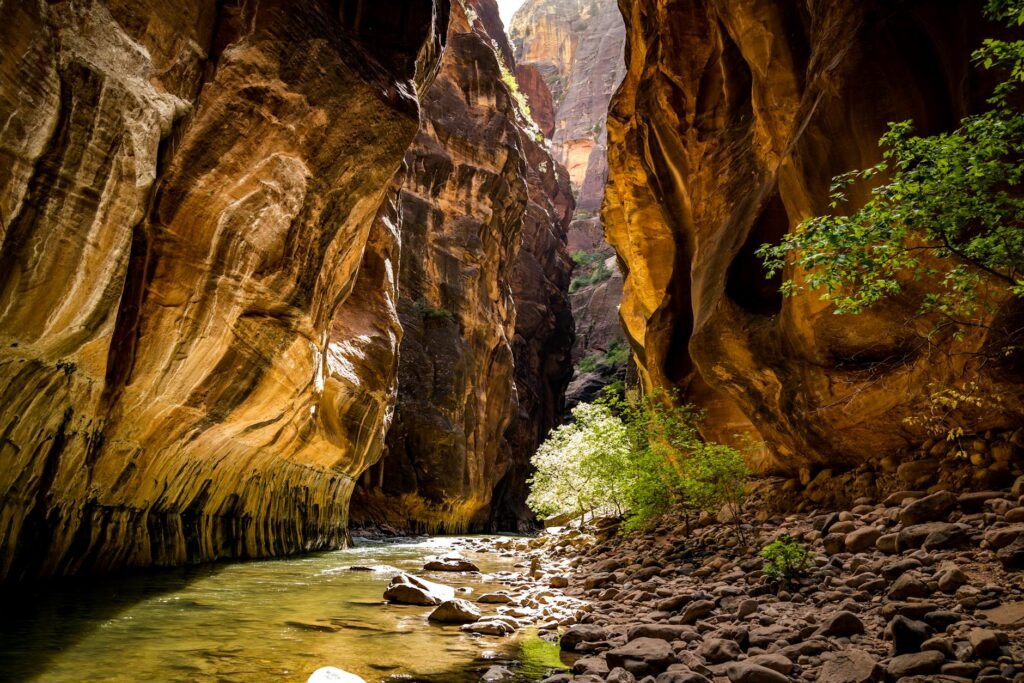
My third Narrows trip was the first time I brought my own gear. I remember lacing up my Astrals at the Riverside Walk — shoes that fit my feet, socks I’d already tested in cold water, a pack I’d organized the night before. For the first time, I wasn’t thinking about gear at all once I stepped into the river. I was just… there. Watching the light bounce off the walls, listening to the water echo through the canyon. That’s what the right gear does — it disappears. You stop thinking about your feet and start thinking about where you are. That’s the whole point.
Common Mistakes (And How to Avoid Them)
- Skipping neoprene socks in “warm” months — The river is always colder than the air. Always.
- Wearing cotton — Wet cotton + canyon shade = shivering within 30 minutes.
- No dry bag — One stumble and your phone is swimming.
- Renting boots without trying them with socks — Boot + sock together is bigger than boot alone. Size up.
- Bringing only one trekking pole — Two is better than one in The Narrows. If renting, grab the stick.
- Skipping sun protection — The open sections of The Narrows are fully exposed. You’re also getting reflection off the water.
- Overpacking — You’re wading in a river. Every ounce in your pack matters when the current hits you.
FAQ
What gear do I need to hike The Narrows in Zion? At minimum: water shoes with sticky rubber soles, neoprene socks, a walking stick, and a dry bag for your phone. In spring or fall, add dry pants. You can rent all of this in Springdale for $25-35/day.
Are canyoneering boots necessary for The Narrows? Not in summer. Good water shoes (like the Astral Loyak) with neoprene socks work great when the water’s above 60°F. In spring/fall when it’s colder and deeper, canyoneering boots with their higher ankle support and thicker insulation are worth it.
How cold is the water in The Narrows? It ranges from about 50°F in spring (May) to 68°F in late summer (August). Even in summer, it’s colder than most people expect because it’s snowmelt-fed and shaded by canyon walls. Neoprene socks are recommended year-round.
Should I rent gear in Springdale or buy my own? If this is your only water hike, rent everything — it’s $30 for a day and you don’t have to carry it home. If you plan to do The Narrows again, hike Kanarra Falls, or do other water trails, buying pays for itself after about 3 trips.
Before your hike, check current flow rates and conditions on the official Zion – The Narrows page.
Final Thoughts
The Narrows is one of the most unique hikes in America — but gear anxiety shouldn’t be part of the experience. Whether you rent in Springdale or build your own kit, the formula is simple: sticky soles, warm socks, a reliable stick, and a dry bag for the things you can’t afford to drop in the river.
Get the gear right, and all you have to think about is how impossibly beautiful that canyon is.
First time? Start with our complete Narrows beginner’s guide for trail details, safety, and route options. Want shoe-specific comparisons? Check our best water shoes for hiking review. Planning a full Zion trip? Our Zion vs Bryce comparison helps you decide where to spend your days, and our free Trip Planner builds your custom itinerary.
🌍 Plan & Book Your Trip
Best deals powered by Travelpayouts:
Affiliate links — no extra cost to you.