10 Best Stargazing Spots in the USA (Dark Sky Parks)
🌍 Plan & Book Your Trip
Compare the best deals for this destination — flights, hotels, tours and more:
Affiliate links — we may earn a commission at no extra cost to you.
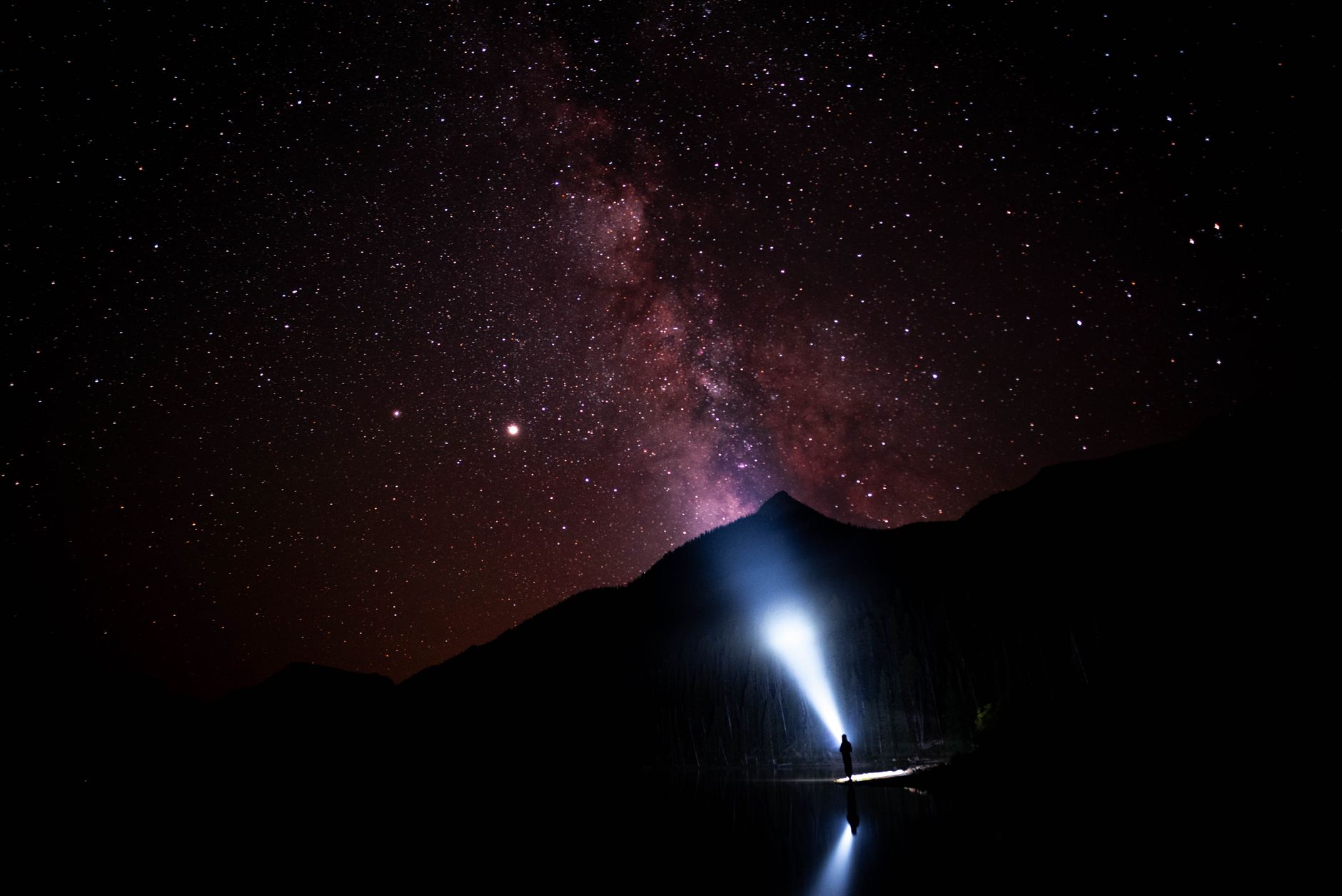
The Milky Way blazing over a certified Dark Sky park — a view most of us never see from home.
Most of us have never truly seen the night sky. Roughly 80% of Americans live under light pollution bright enough to hide the Milky Way — so the first time you stand under a genuinely dark sky and watch our galaxy arch overhead, it stops you cold. This guide to the best stargazing spots in the USA is your ticket to that experience: ten certified Dark Sky places where, on a clear, moonless night, the stars come out by the thousands.
I’ve focused on official International Dark Sky parks and reserves — places that actively protect their darkness — spread across the country so there’s likely one within road-trip range. For each, I’ll cover why it’s special, the best season, and the practical stuff (new moon timing, what to bring) that separates a magical night from a cold, disappointing one.
Key Takeaways
- The darkest, most reliable skies are in certified International Dark Sky Parks, mostly in the remote West.
- Death Valley, Big Bend, and Great Basin are among the darkest parks in the country.
- Cherry Springs (Pennsylvania) is the premier dark-sky destination east of the Mississippi.
- Time your trip to the new moon and aim for Milky Way season (roughly April–October) for the galactic core.
- Let your eyes adapt for 20–30 minutes, use a red headlamp, and dress far warmer than you expect.
Quick Facts
| 🌌 What to look for | Certified Dark Sky parks & reserves |
|---|---|
| 🌑 Best timing | New moon, clear skies |
| 🌠 Milky Way season | ~April–October (core visible) |
| 🗺️ Darkest regions | Desert Southwest, Great Basin, West Texas |
| 🧥 Key gear | Red headlamp, warm layers, star app |
| ⏱️ Eye adaptation | 20–30 minutes in full darkness |
The single most important tip: Check the moon phase. A full moon washes out the stars almost as badly as a city. Plan your stargazing trip within a few days of the new moon for the darkest skies.
How to Pick a Stargazing Night
Great stargazing is part location, part timing. Even the darkest park disappoints under a bright moon or cloudy sky. Stack these factors in your favor:
| Factor | What You Want | Why |
|---|---|---|
| Moon phase | New moon (±3–4 days) | Moonlight drowns out faint stars |
| Weather | Clear, low humidity | Clouds and haze kill the view |
| Milky Way season | April–October | Galactic core is up at night |
| Timing | After astronomical twilight | True darkness, ~1.5 hrs after sunset |
| Elevation | Higher = thinner, clearer air | Less atmosphere to look through |
| Light pollution | Bortle 1–3 (Dark Sky parks) | The whole point |
The 10 Best Stargazing Spots in the USA
1. Death Valley National Park, California/Nevada
One of the largest and darkest Dark Sky Parks in the country. Death Valley’s vast, dry desert basin and minimal surrounding development make for staggering night skies. Spots like Harmony Borax Works, Mesquite Flat Dunes, and Badwater Basin offer wide-open horizons. Best season: late fall through early spring (summer is dangerously hot). The dryness means exceptional clarity.
2. Big Bend National Park, Texas
Remote West Texas has some of the darkest measured skies in the lower 48. Big Bend’s isolation — far from any city — means the Milky Way casts shadows on the best nights. The Rio Grande Village and Chisos Basin areas are popular. Best season: fall through spring; summer is hot, though higher elevations stay milder.
3. Cherry Springs State Park, Pennsylvania
The crown jewel of eastern stargazing. Set atop a remote plateau in the Pennsylvania Wilds, Cherry Springs has a dedicated Astronomy Field built for serious skywatching, far from city glow. It’s a pilgrimage site for East Coast astronomers. Best season: summer for the Milky Way, though clear winter nights are crisp and dark. Expect dew and bring warm layers year-round.
4. Great Basin National Park, Nevada
One of the least-visited national parks, and that solitude pays off at night. At high elevation with bone-dry air and almost no light pollution, Great Basin offers some of the clearest skies anywhere — and it hosts an annual astronomy festival. Best season: summer and early fall (the high-elevation road and facilities are seasonal).
5. Natural Bridges National Monument, Utah
The world’s first certified International Dark Sky Park. This small Utah monument frames the Milky Way through its famous stone bridges — the Owachomo Bridge silhouette under the galaxy is a bucket-list astrophotography shot. Best season: spring through fall. Remote and quiet, it’s pure dark-sky magic.
6. Grand Canyon National Park, Arizona
A certified Dark Sky Park with the bonus of one of Earth’s most iconic landscapes beneath the stars. The annual Star Party (with telescopes set up for visitors) is a highlight. The North Rim is darker and quieter; the South Rim is more accessible. Best season: late spring through early fall (North Rim is seasonal).
7. Bryce Canyon National Park, Utah
At over 8,000 feet with dry air and famously dark skies, Bryce is a stargazing star. Rangers run popular astronomy programs, and the hoodoos below a sky full of stars are unforgettable. Best season: late spring through fall. The high elevation means cold nights even in summer — layer up.
8. Joshua Tree National Park, California
The closest world-class dark sky to Southern California’s millions. Joshua Tree’s high desert delivers brilliant skies, with the park’s iconic trees and boulders as foreground. It can be busier (and a bit brighter on the edges) than the most remote parks, but it’s wonderfully accessible. Best season: fall through spring (summer is brutally hot).
9. Cedar Breaks National Monument, Utah
A lesser-known gem at over 10,000 feet — one of the highest-elevation Dark Sky places in the country, with correspondingly thin, clear air. The summer star programs are excellent. Best season: summer (the road closes in winter due to snow). Genuinely cold nights even in July.
10. Big Cypress / Everglades Region, Florida (Southeast Option)
For the Southeast, the protected darkness of the Big Cypress / Everglades area offers a rare dark-sky pocket amid a heavily populated region. Humidity and bugs are the trade-offs, but the wide, flat horizons over the wetlands can be striking. Best season: winter (dry season) for clearer air and fewer mosquitoes.
Compare the Top Dark Sky Spots
| Park | State | Best Season | Standout Feature |
|---|---|---|---|
| Death Valley | CA/NV | Fall–Spring | Vast, ultra-dark desert basin |
| Big Bend | TX | Fall–Spring | Darkest skies in lower 48 |
| Cherry Springs | PA | Summer | Best dark sky in the East |
| Great Basin | NV | Summer–Fall | High, dry, uncrowded |
| Natural Bridges | UT | Spring–Fall | First-ever Dark Sky Park |
| Grand Canyon | AZ | Spring–Fall | Iconic landscape + Star Party |
| Bryce Canyon | UT | Spring–Fall | Hoodoos + ranger programs |
| Joshua Tree | CA | Fall–Spring | Most accessible from SoCal |
| Cedar Breaks | UT | Summer | Ultra-high elevation |
| Big Cypress | FL | Winter | Rare Southeast dark sky |
When to Go: Timing the Milky Way
If your goal is to see the bright galactic core of the Milky Way (the dramatic, glowing part everyone photographs), timing matters:
- Milky Way core season: roughly April through October in the Northern Hemisphere.
- Peak viewing: June–August, when the core is highest and visible for longest.
- Pre-dawn vs late night: Early in the season the core rises before dawn; mid-season it’s up most of the night.
- Always target the new moon. Even in peak season, a bright moon ruins it.
What to Bring for a Night Under the Stars
- Red headlamp or red flashlight — preserves your night vision (white light resets your eyes for 20+ minutes)
- Warm layers — deserts and high elevations get cold at night, even after hot days
- A blanket or reclining chair — looking up is hard on the neck
- Star app + planisphere — to identify constellations and planets
- Binoculars — a surprisingly great, affordable way to see star clusters and the moon’s craters
- Snacks and a thermos — stargazing is a slow, cozy activity
- For photos: a camera with manual mode, a sturdy tripod, and a wide, fast lens
- A full tank of gas + offline maps — dark sky parks are remote with no service
How to Actually See More Stars
- Let your eyes adapt. Give yourself 20–30 minutes in full darkness with no white light. This is the step most people skip — and it makes the biggest difference.
- Kill all white light. Phone screens, car interior lights, a buddy’s flashlight — one burst resets everyone’s night vision. Red light only.
- Use averted vision. Faint objects appear brighter when you look slightly beside them rather than straight at them.
- Get away from any structures. Even a distant gas station or parking-lot light dims the sky. Walk to a darker spot.
- Be patient. The longer you look, the more stars appear. Faint detail emerges gradually.
A Quick Reflection
I grew up in a suburb where the night sky meant maybe a dozen visible stars and the orange glow of streetlights. I genuinely thought the Milky Way was something you only saw in photos — a thing that existed in NASA images, not over my head.
Then, on a road trip, I rolled into Great Basin late at night, exhausted, planning to just crash. I stepped out of the car to stretch, glanced up out of habit — and froze. The entire sky was full. Not a dozen stars. Thousands. And there, arching from horizon to horizon, was a hazy band of light I’d never seen before in my life. It took me an embarrassing few seconds to realize I was looking at our own galaxy, edge-on, from the inside.
I sat on the hood of that car for two hours in the cold, neck craned back, not saying a word. I’ve chased dark skies ever since. Here’s the thing nobody tells you: the Milky Way has been there your whole life. You just have to drive far enough from the lights to remember it.
Stargazing Etiquette & Safety
- Protect everyone’s night vision — red light only, no white flashlights or phone screens.
- Don’t shine lights at others or at telescopes — it ruins long-exposure photos and adapted eyes.
- Arrive before dark if possible, so you can set up without disturbing others.
- Mind the cold and the remoteness — bring layers, water, and a full tank; help may be far away.
- Watch for wildlife at night and stay aware of cliffs and uneven ground in the dark.
- Pack out everything and keep noise down — these are shared, quiet spaces.
FAQ
What is the best Dark Sky park for stargazing in the USA? It’s hard to beat Death Valley, Big Bend, and Great Basin for sheer darkness and clarity — all are among the darkest places in the lower 48. For the East Coast, Cherry Springs State Park in Pennsylvania is the top destination. The “best” one is whichever you can reach on a clear, moonless night.
When is the best time to see the Milky Way? The bright galactic core is visible from roughly April through October, peaking in June, July, and August when it’s highest and up longest. Always plan around the new moon — even in peak season, a bright moon will wash out the Milky Way.
What do I need to bring for stargazing? A red headlamp (to protect night vision), warm layers, a reclining chair or blanket, a star app, and ideally binoculars. For astrophotography, add a camera with manual mode, a tripod, and a wide, fast lens. Don’t forget a full tank of gas and offline maps, since dark sky parks are remote.
How long does it take for your eyes to adjust to the dark? About 20 to 30 minutes of being in full darkness with no white light. This dark adaptation is what lets you see thousands of faint stars instead of just the bright ones — so avoid phone screens and use only red light to keep your night vision intact.
Dark Sky certifications, program schedules, and seasonal access change over time. Verify each park’s status, fees, and night-sky event calendar, and check the moon phase and weather forecast before you go.
For certified dark-sky locations and stargazing tips, see DarkSky International.
Final Thoughts
The best stargazing spots in the USA aren’t just dark — they’re protected, remote, and reliably clear, the kind of places where the Milky Way still owns the night. Pick one within road-trip range, build your trip around the new moon and a clear forecast, pack warm layers and a red headlamp, and give your eyes the patience they need to adjust. Do that, and you’ll see the sky the way humans saw it for thousands of years before electric light — thousands of stars, a glowing galaxy overhead, and a quiet that puts everything back in perspective. It’s free, it’s ancient, and it’s waiting just past the edge of the city lights.
Make it a national-park adventure: see our guides to Death Valley, Joshua Tree, and the Best Sunrise Hikes in the USA for the other end of the day. Don’t forget a reliable headlamp (red mode!) for night adventures. Plan your dark-sky road trip with our free Trip Planner.
FAQ Schema (paste in a Custom HTML block at the end of the post)
“html “
✈️ Planning your trip?
Compare cheap flights, hotels and car rentals for your adventure.
Find Cheap Flights →Compare Hotels →🌍 Plan & Book Your Trip
Compare the best deals for this destination — flights, hotels, tours and more:
Affiliate links — we may earn a commission at no extra cost to you.