Winter Hiking Gear & Layering Guide: How to Stay Warm and Safe
🌍 Plan & Book Your Trip
Compare the best deals for this destination — flights, hotels, tours and more:
Affiliate links — we may earn a commission at no extra cost to you.
Dialing in your layers and traction transforms winter hiking from a miserable, sweaty-then-freezing slog into one of the most peaceful experiences in the outdoors.
The first winter hike I ever attempted, I wore a cotton hoodie and my regular running shoes. Within an hour I was soaked in sweat, then shivering uncontrollably the moment I stopped moving, and I slipped so many times on the icy trail that I gave up and turned around. It was miserable — and genuinely a little dangerous. The right winter hiking gear isn’t about buying the most expensive jacket on the shelf; it’s about understanding a simple system that keeps you warm, dry, and upright when the temperature drops below freezing.
Winter hiking is, honestly, my favorite kind of hiking. The trails are empty, the snow muffles everything into total silence, and a familiar summer trail becomes a brand-new world under a coat of white. But the margin for error is thinner than in summer. Cotton kills, sweat freezes, and a twisted ankle two miles out in single-digit temperatures is a serious situation. This guide breaks down exactly what to wear and carry, layer by layer, so you can enjoy the magic without the misery.
Key Takeaways
- The 3-layer system is everything: a moisture-wicking base layer, an insulating mid layer, and a weatherproof shell. Master this and you’ve solved 80% of winter comfort.
- Never wear cotton. It soaks up sweat, stops insulating, and can be genuinely dangerous in the cold. Choose merino wool or synthetics.
- Microspikes are the single best winter hiking purchase — lightweight traction that turns sketchy icy trails into safe ones.
- Manage your sweat. Overheating leads to soaked layers that freeze when you stop. Start a little cold and shed layers before you sweat.
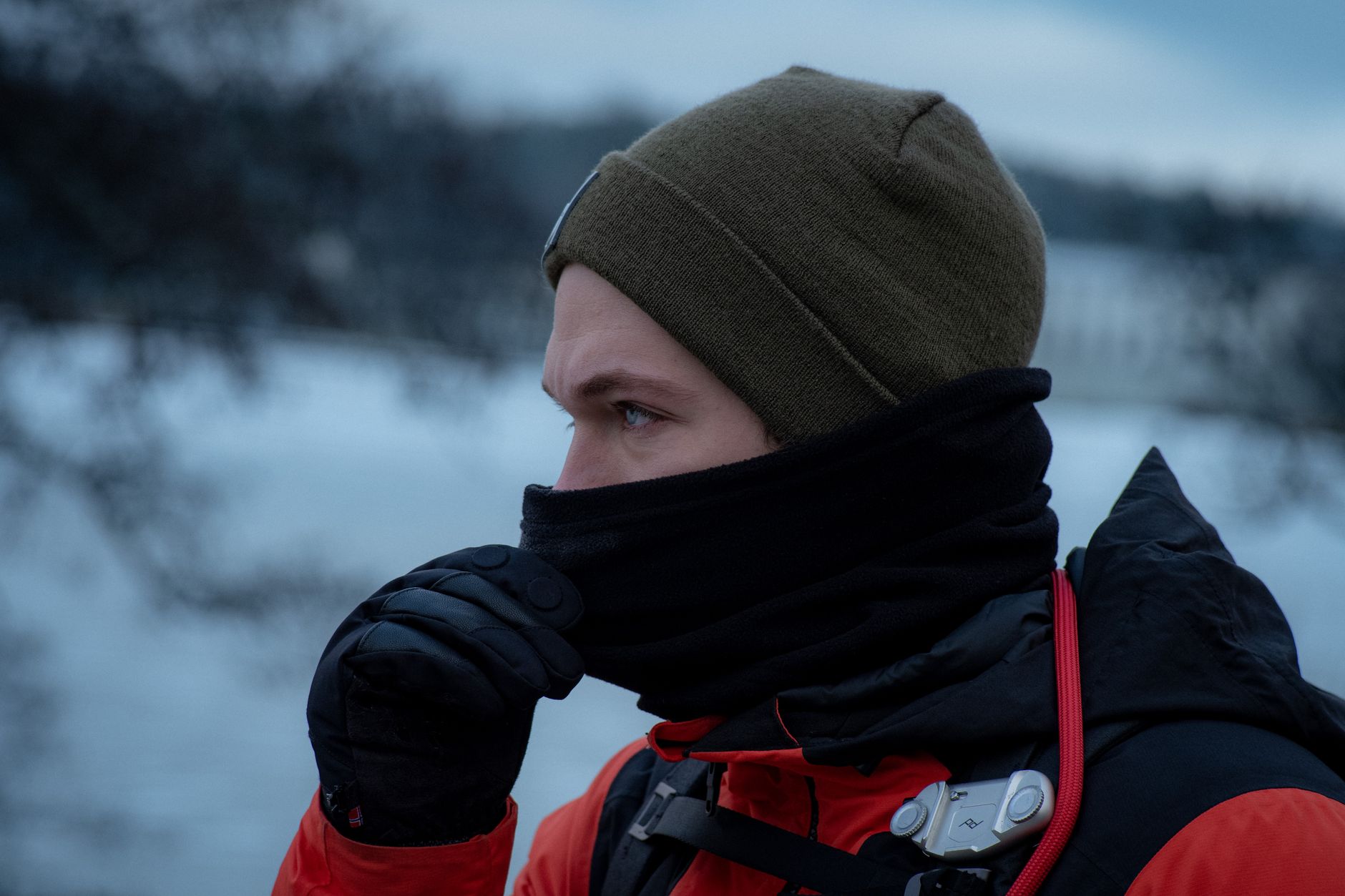
- Protect the extremities: insulated gloves, a warm hat, and a buff or neck gaiter prevent most heat loss and frostbite risk.
- Pack the safety extras — headlamp (winter daylight is short), extra insulation, hot drink, and emergency supplies.
Quick Facts
| Detail | Info |
|---|---|
| Core system | Base layer + mid layer + shell |
| Fabrics to use | Merino wool, polyester, fleece, down, synthetic insulation |
| Fabric to avoid | Cotton (anything — shirts, socks, jeans) |
| Traction | Microspikes (icy trails); snowshoes (deep snow); crampons (mountaineering) |
| Biggest beginner mistake | Overdressing and sweating through layers |
| Daylight warning | Short winter days — always carry a headlamp |
| Hydration | You dehydrate in cold too — insulated bottle prevents freezing |
| Skill level | Beginner-friendly with the right gear |
The Foundation: Understanding the 3-Layer System
Forget everything you know about “just wearing a big coat.” Winter hiking comfort comes from layering — a system that lets you add and remove insulation as your body heats up (climbing) and cools down (resting, descending). Here’s how the three layers work together.
Layer 1: The Base Layer (Moisture Management)
The base layer sits against your skin, and its job is to pull sweat away from your body so you don’t get clammy and cold. This is the most important layer for comfort, and it’s where beginners go wrong by wearing cotton.
Choose:
- Merino wool — naturally odor-resistant, warm even when damp, comfortable across a wide temperature range. My personal favorite.
- Synthetic (polyester) — dries fastest, cheaper, more durable, but holds odor.
Pro tip: Choose a “lightweight” or “midweight” base layer for active hiking. Heavyweight base layers are for low-output activities and will leave you overheating on the climb.
Layer 2: The Mid Layer (Insulation)
The mid layer traps warm air to keep you cozy. This is your adjustable thermostat — you’ll often hike in just a base layer on a hard climb, then throw the mid layer on the moment you stop.
Choose:
- Fleece — breathable, warm, dries fast, works while moving. Great for active insulation.
- Down jacket — incredibly warm for the weight and packs tiny, but useless when wet. Best as a “stop and rest” layer.
- Synthetic puffy — slightly heavier than down but keeps insulating when damp. The safer choice for wet, snowy conditions.
Layer 3: The Shell (Weather Protection)
The shell is your armor against wind, snow, and rain. It blocks the elements while (ideally) letting your sweat vapor escape.
Choose:
- Hardshell (waterproof/breathable) — full protection from wind and precipitation; essential for wet snow, rain, or exposed, windy summits.
- Softshell — more breathable and stretchy, sheds light snow and blocks wind, but isn’t fully waterproof. Great for cold, dry days.
The Complete Winter Hiking Gear Checklist (Affiliate Table)
Here’s my head-to-toe system. The table below is set up for affiliate links — swap in your product picks and current pricing before publishing.
| Gear Item | What to Look For | Priority | Shop |
|---|---|---|---|
| Merino base layer top | Lightweight/midweight, snug fit | Essential | Check price |
| Merino base layer bottoms | Midweight long underwear | Essential | Check price |
| Fleece mid layer | Breathable, full-zip | Essential | Check price |
| Insulated puffy (synthetic) | Packable, hooded | Essential | Check price |
| Waterproof hardshell jacket | Pit zips, adjustable hood | Essential | Check price |
| Waterproof shell pants | Side zips for venting | Recommended | Check price |
| Microspikes | Stainless steel spikes, easy on/off | Essential | Check price |
| Insulated waterproof boots | Rated to your conditions | Essential | Check price |
| Merino hiking socks | Cushioned, NOT cotton | Essential | Check price |
| Gaiters | Keep snow out of boots | Recommended | Check price |
| Insulated gloves + liner gloves | Layered hand system | Essential | Check price |
| Warm hat / beanie | Wool or fleece, covers ears | Essential | Check price |
| Buff / neck gaiter | Versatile face/neck protection | Recommended | Check price |
| Insulated water bottle | Prevents freezing | Essential | Check price |
| Headlamp | Short winter days = early darkness | Essential | Check price |
| Trekking poles (snow baskets) | Stability on snow/ice | Recommended | Check price |
Traction: Microspikes vs. Snowshoes vs. Crampons
Choosing the right traction device for the conditions is a winter safety essential. Here’s how they compare.
| Traction Device | Best For | Terrain | Difficulty |
|---|---|---|---|
| Microspikes | Packed snow, ice on trails | Rolling/moderate trails | Beginner |
| Snowshoes | Deep, unpacked powder | Flat to moderate, deep snow | Beginner |
| Crampons | Steep, hard ice/alpine | Mountaineering, steep ice | Advanced |
Snowshoes come into play when snow is deep and unpacked — they spread your weight so you “float” instead of “postholing” (sinking thigh-deep with every step). If you’ll be breaking trail through fresh powder, you need them.
Crampons are specialized mountaineering gear for steep, hard ice and alpine ascents — overkill (and potentially dangerous) for casual trail hiking. Only use them with proper boots and training.
How to Dress: Putting the System Together
Here’s how I actually use the layering system on a typical cold-weather hike:
- At the trailhead: Start slightly cold. Base layer + light fleece. If you feel cozy standing still, you’ll overheat hiking. “Be bold, start cold.”
- On the climb: Strip down as you warm up — often to just the base layer. Vent with pit zips before you start sweating.
- At rest stops/summit: Throw on the puffy IMMEDIATELY when you stop. Your sweat will start cooling you fast.
- On the descent: Add the shell back for wind protection; you generate less heat going downhill.
Avoiding the #1 Winter Mistake: Sweat
It sounds backwards, but sweat is your biggest enemy in winter, not cold. When you overdress and sweat on the climb, that moisture saturates your layers. The moment you stop moving, that wet fabric goes cold against your skin and can chill you dangerously fast.
How to manage it:
- Start cold and let your body heat up.
- Vent aggressively — pit zips, unzip the front, remove your hat.
- Slow your pace on big climbs to keep sweat output down.
- Swap to dry layers at the summit if you’ve sweated through (some hikers pack a spare base layer).
Protecting Your Extremities
Most of your discomfort (and frostbite risk) happens at the edges — hands, feet, ears, face.
- Hands: Use a two-glove system — thin liner gloves for dexterity, insulated waterproof gloves or mittens over the top. Mittens are warmer than gloves (fingers share heat).
- Feet: Insulated, waterproof boots + merino socks. Avoid lacing too tight (restricts circulation = cold feet). Gaiters keep snow out.
- Head/ears: A wool or fleece beanie that covers your ears. You lose real heat from an exposed head.
- Face/neck: A buff or neck gaiter you can pull up over your nose in wind. On bitter days, add a balaclava.
- Toe/hand warmers: Cheap disposable warmers are a luxury that can save a day in extreme cold.
Winter Hiking Safety Essentials
Beyond clothing, winter demands a few extra safety items and habits:
- Headlamp + spare batteries — winter days are short and darkness comes fast (see my headlamp guide). Cold also drains batteries faster.
- Extra insulation layer — always carry more warmth than you think you’ll need, in case you’re stuck.
- Hot drink in an insulated flask — a thermos of tea or cocoa is morale and warmth in one.
- Navigation — snow hides the trail. Carry a map, compass, or GPS, and download offline maps.
- Tell someone your plan — route and expected return time.
- Know the signs of hypothermia and frostbite — shivering, slurred speech, numbness, waxy white skin. Turn around early if conditions deteriorate.
- Start early — give yourself a wide daylight buffer.
A Quick Reflection
A few winters ago I hiked a familiar local summit that I’d done a dozen times in summer — easy, well-marked, nothing technical. But in January it was a different mountain entirely. Halfway up, I hit a stretch of trail that was pure blue ice under a thin dusting of snow, sloping toward a steep drop-off. In summer it was a casual walk. That day, without traction, it was a genuine no-go.
I sat down on a rock, pulled my microspikes out of my pack, and stretched them over my boots. The transformation was instant — suddenly I was walking across the ice with total confidence, the little steel teeth biting in with every step. I cruised up to a summit I had completely to myself, sat in my puffy jacket with a thermos of tea, and watched my breath drift out over a valley blanketed in snow and absolute silence.
That $40 set of microspikes turned a dangerous, fear-filled scramble into one of my favorite hikes of the year. It drove home the lesson that winter hiking isn’t about toughness or expensive jackets — it’s about having the right, often surprisingly cheap, gear and knowing how to use it. Respect the season, dial in your system, and the winter trails will reward you with a kind of peace you’ll never find in July.
Frequently Asked Questions
New to cold-weather hiking? The American Hiking Society offers solid foundational safety resources before you head out.
Final Thoughts
Winter hiking gets a bad reputation as cold, dangerous, and only for hardcore mountaineers. But the truth is, with a properly dialed-in layering system and a $40 pair of microspikes, it’s one of the most accessible and rewarding ways to enjoy the outdoors. Empty trails, total silence, sparkling snow, and summits all to yourself — that’s the payoff.
Build your system from the skin out: a wicking base layer, adjustable insulation, and a protective shell. Add traction for the conditions, protect your hands, feet, and head, and pack the safety extras for short winter days. Start cold, vent often, and layer up the instant you stop.
Get the system right, and you’ll wonder why you ever hung up your boots when the temperature dropped.
Planning a cold-weather adventure? Use our Trip Planner to organize your gear list, check conditions, and plan your winter routes.
Related Reading:
- The Ultimate Hiking Packing List — The complete day-hike and overnight checklist
- Best Headlamps for Hiking & Camping — Critical for short winter days
- Best Budget Hiking Gear Under $50 — Affordable cold-weather essentials
- Best Trekking Poles (Tested & Ranked) — Stability on snow and ice
✈️ Planning your trip?
Compare cheap flights, hotels and car rentals for your adventure.
Find Cheap Flights →Compare Hotels →🌍 Plan & Book Your Trip
Compare the best deals for this destination — flights, hotels, tours and more:
Affiliate links — we may earn a commission at no extra cost to you.