A national park road trip is one of the best-value vacations in America — $35 parks, free hiking, and scenery that billionaires can’t buy better access to. But “budget” doesn’t mean “cheap and miserable.” It means spending smart so your money goes toward more parks, more days, and more memories instead of overpriced hotel rooms you sleep in for 6 hours.
This guide is the complete system for planning a national park road trip on any budget — from the $50/day shoestring to the $150/day comfort trip. I’ll cover the pass that saves you hundreds, the accommodation trick most people miss, how to eat well without restaurants, and real cost breakdowns for popular routes.
Key Takeaways
The America the Beautiful Pass ($80) covers entrance to ALL 400+ federal recreation sites for a year — it pays for itself in 3 parks.
Camping drops your lodging cost from $150-$300/night to $20-$40/night (and it’s a better experience).
The cheapest days to start a road trip are Tuesday-Thursday (lower rental car and gas station prices).
Cook 2 of 3 meals yourself with a simple cooler setup — saves $30-$50/day per person.
A 7-day national park road trip for 2 people is realistically doable for $1,000-$2,500 total depending on comfort level.
STEP 1: Choose Your Route (3 Classic Budget Routes)
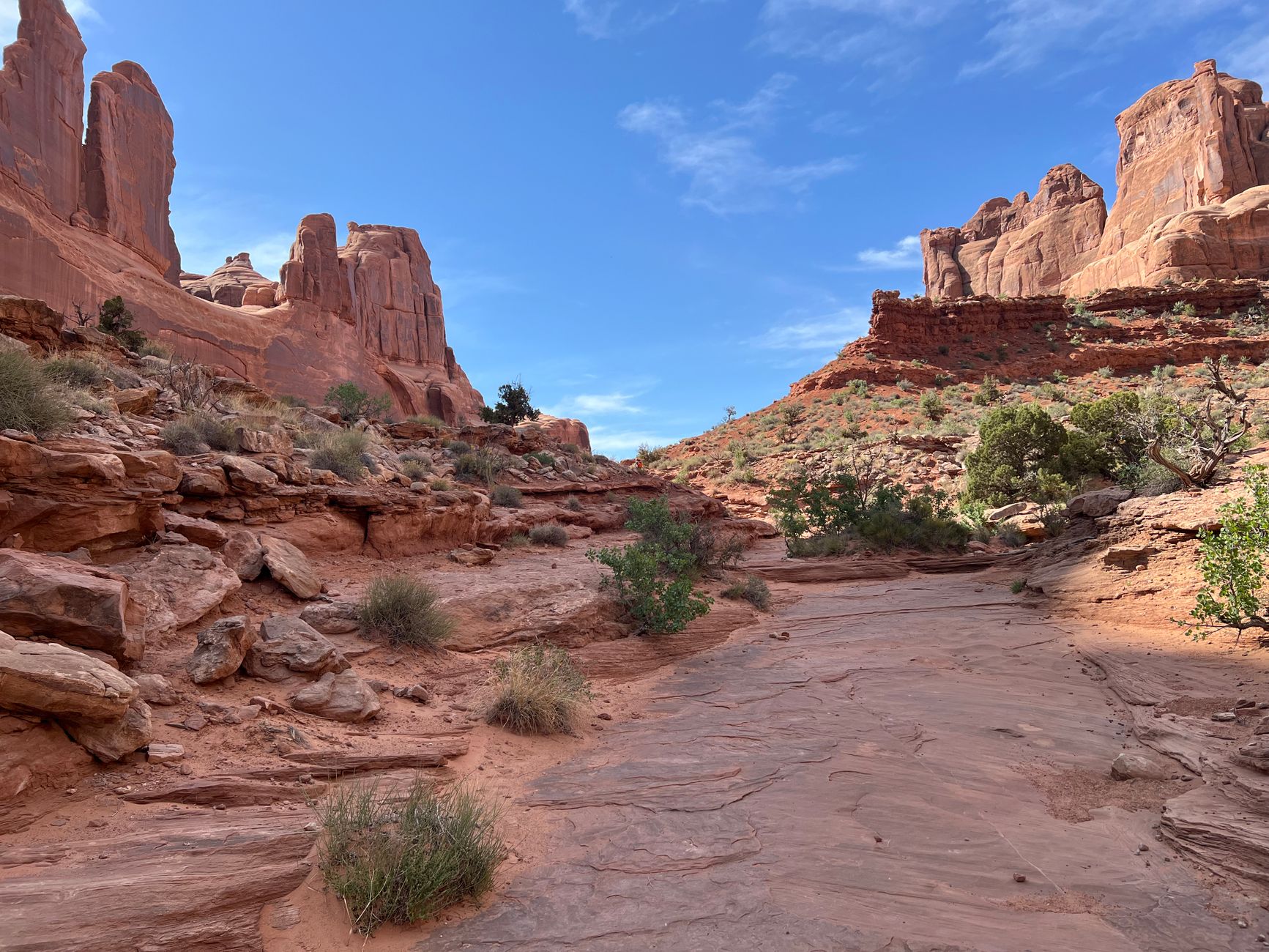
Route A: Southern Utah Loop (5-7 days)
Parks: Zion → Bryce Canyon → Capitol Reef → Arches → Canyonlands
Start/End: Las Vegas (cheapest rental cars + flights)
Total driving: ~700 miles
Best for: Desert lovers, hikers, photographers
Parks: Yosemite → Sequoia → Kings Canyon → (+ Pacific Coast Highway)
Start/End: San Francisco or Los Angeles
Total driving: ~800-1,000 miles
Best for: Waterfall chasers, tree lovers, road trip romantics
Budget Level
Est. Cost (2 people, 7 days)
Shoestring
$900-$1,400
Moderate
$1,600-$2,400
Comfortable
$2,800-$4,000
Route C: Great Smoky Mountains + Blue Ridge (5-7 days)
Parks: Great Smoky Mountains → Blue Ridge Parkway → Shenandoah
Start/End: Atlanta or Charlotte (cheap flights)
Total driving: ~600-800 miles
Best for: East Coast residents, families, waterfall hunters, fall foliage
Budget Level
Est. Cost (2 people, 7 days)
Shoestring
$700-$1,100
Moderate
$1,200-$1,800
Comfortable
$2,000-$3,000
The Smokies have NO entrance fee — only a parking tag ($5-$15/day). This route is the cheapest of the three.
STEP 2: The Pass That Saves Everything
America the Beautiful Annual Pass — $80
This is the single best deal in American travel. For $80 (one-time, covers a full year), you get entrance to:
All 63 national parks
All national forests
All national monuments
All BLM lands
All national wildlife refuges
400+ total federal recreation sites
Math: Most national parks charge $30-$35 per vehicle. Visit 3 parks = $90-$105 in fees. The $80 pass pays for itself before you’ve finished park #3.
Where to buy: Recreation.gov, any national park entrance station, or REI stores.
Pro tip: The pass covers the driver + all passengers in one vehicle. One pass per car = everyone gets in.
STEP 3: Accommodation (Where the Real Savings Are)
Accommodation is the #1 cost variable on a road trip. Here’s how each option compares:
Option
Cost/Night
Pros
Cons
Tent camping (park)
$20-$40
Cheapest, inside the park, nature immersion
Need gear, less comfortable, weather-dependent
Car camping / van
$0-$20
Ultra-cheap, flexible, no reservation needed (BLM land)
Less comfortable, need setup
Budget motel
$60-$100
Shower, bed, AC, no gear needed
Generic, outside park, adds up fast
Mid-range hotel
$120-$200
Comfortable, reliable, good location
Expensive over multiple nights
Airbnb/cabin
$80-$200
Kitchen (cook!), space, character
Variable quality, minimum stays
The Budget Sweet Spot: Camp 4-5 nights, motel 1-2 nights
The most comfortable budget approach is camping most nights (when weather is good and you’re near parks) with 1-2 motel nights mixed in for showers, laundry, and a proper bed when you need a reset.
Example (7-night trip):
5 nights camping @ $30 = $150
2 nights motel @ $90 = $180
Total lodging: $330 (vs. $1,050+ for 7 nights in hotels)
How to Book Campsites
Recreation.gov — the official booking site for federal campgrounds (national parks, national forests)
Book 6 months ahead for popular parks (Zion, Yosemite, Smokies campgrounds sell out fast)
First-come-first-served sites exist — arrive by early afternoon on weekdays
BLM (Bureau of Land Management) land — free dispersed camping on public land near many western parks (legal, no reservation needed, no facilities)
Free Camping Options (Legal!)
Near western parks, there’s often free dispersed camping on BLM or National Forest land just outside park boundaries:
Near Moab/Arches/Canyonlands: extensive free BLM camping along roads
Near Zion: free camping on BLM land near Virgin/La Verkin
Near Bryce: Dixie National Forest has free dispersed spots
Apps to find it: FreeRoam, iOverlander, Campendium (filter by “free”)
Rules for dispersed camping: Pack out everything, no campfires in drought conditions, stay on existing sites, leave no trace.
STEP 4: Food (Eat Well for $15-$25/Day Per Person)
Restaurant meals near national parks average $15-$25 per meal per person. Three meals/day × 7 days × 2 people = $630-$1,050 in food alone. Here’s how to cut that by 60%:
Bread, deli meat/cheese, PB&J supplies, trail mix, apples
$5-$8
Dinner
Pre-made wraps, pasta salad, rotisserie chicken, canned soup
$7-$12
Snacks
Trail mix, jerky, dried fruit, energy bars
$3-$5
TOTAL
$18-$30/person/day
The hybrid approach (best of both): Cook breakfast and lunch yourself, then eat ONE restaurant dinner every 2-3 days as a treat. This cuts food costs by 40-50% while still enjoying local restaurants.
Refill Stations Save Money
Every national park has free water refill stations. Bring reusable bottles and refill constantly — buying bottled water at park gift shops is a $3-$5/day waste.
STEP 5: Transportation (Car + Gas Strategy)
Rental Car Tips
Tip
Savings
Rent from major airports (more competition = lower prices)
20-40% cheaper than small-town rentals
Book 6-8 weeks ahead
Best prices for domestic road trips
Avoid airport surcharges by picking up at off-airport locations
$30-$50 savings
Use Autoslash.com to track price drops after booking
Automatic re-booking if price drops
Return to the same location (one-way fees are huge)
$50-$200 savings
Decline rental insurance IF your credit card covers it
$15-$30/day savings
Choose economy/compact — you don’t need an SUV for paved park roads
$10-$20/day savings
Best cities to rent from (cheapest + near parks):
Las Vegas — cheapest major rental city in the West (Utah parks, Grand Canyon, Death Valley)
Denver — competitive pricing (Rocky Mountain, Great Sand Dunes)
Atlanta — cheap southern hub (Great Smokies, Congaree)
Fill up BEFORE entering remote areas (gas near parks can be $1-$2/gallon more expensive)
Use GasBuddy app to find cheapest stations along your route
Costco gas if you’re a member — often $0.30-$0.50 cheaper per gallon
Budget ~$0.15-$0.20 per mile for a fuel-efficient car at current prices
STEP 6: Timing (When to Go for Best Value)
Factor
Cheapest Option
Most Expensive
Season
April-May, September-October
June-August (peak summer)
Day of week
Depart Tuesday-Thursday
Depart Friday-Sunday
Booking window
6-8 weeks ahead
Last-minute or 6+ months
Campground availability
Weekdays, shoulder season
Weekends, holidays, summer
The “value window”: A mid-September to mid-October road trip offers the best combination of good weather, thin crowds, lower prices, AND fall color in many parks.
STEP 7: The Complete Budget Breakdown (Real Numbers)
That’s 5 national parks, 7 days of adventure, for under $1,300 per person. Show me a resort vacation that competes with that.
STEP 8: Money-Saving Hacks (Advanced)
Hack #1: The “Every-Other-Day” Rule
Alternate big activity days (full hiking, park exploration) with rest/travel days. On rest days, spend less — cook all meals, drive to next destination, do free activities. This prevents burnout AND saves money.
Hack #2: Free Ranger Programs
Every national park offers free ranger-led programs — guided hikes, campfire talks, stargazing events, geology walks. These are essentially free guided tours by experts. Check the park newspaper when you arrive.
Hack #3: Junior Ranger Programs (Families)
Kids complete a free activity booklet → earn a badge at the ranger station. It’s structured, educational, free, and keeps kids engaged at every park. Works for ages 4-12+.
Hack #4: The “Town Day” Reset
Every 3-4 days, plan a half-day in the nearest town: do laundry ($5-$8), shower at a campground ($5), restock groceries, charge devices at a café. This prevents the “I’m gross and exhausted” wall that ruins trips.
Hack #5: National Park Week (Free Entrance Days)
The NPS offers several free entrance days each year (typically MLK Day, first day of National Park Week in April, National Public Lands Day in September). Plan your trip around one and skip the pass entirely if you’re only visiting 1-2 parks.
Hack #6: Gas Reward Programs
Kroger/Fred Meyer fuel points, grocery store reward programs, and credit card gas cashback (2-5%) add up fast on a 700+ mile road trip. A 5% cashback card on $100 of gas = $5 back. Small but free.
Hack #7: Library Passes
Many public libraries lend free park passes (day passes to state parks, sometimes national parks). Check your library’s website before your trip — you might save $35-$80 for free.
The Gear You Need (Minimal List)
If you’re camping, here’s the budget-friendly essentials:
Item
Budget Option
Cost
Tent (2-person)
Coleman Sundome or Ozark Trail
$40-$60
Sleeping bags (×2)
Coleman or Ozark Trail (40°F rated)
$30-$50 each
Sleeping pads (×2)
Closed-cell foam pads
$15-$25 each
Cooler
Coleman 48-quart
$30-$40
Camp stove
Single-burner propane (Coleman)
$25-$35
Headlamps (×2)
Petzl Tikkina or similar
$25 each
Total camping setup
$235-$360
Already have gear? Your road trip cost drops by $200-$350.
Don’t want to buy? Many REI stores rent camping gear packages. Or just motel the whole trip for $60-$100/night more.
Common Mistakes That Waste Money
Mistake
Cost
Fix
Buying park entrance at each gate
$105-$175 (3-5 parks)
Buy $80 America the Beautiful Pass
Eating every meal at restaurants
$50-$75/day per person
Cook 2 of 3 meals (cooler system)
Booking the closest hotel to each park
$150-$300/night
Camp or stay in nearby budget towns
Renting a large SUV “just in case”
$30-$50/day extra
Economy car handles all paved park roads
Buying water bottles at gift shops
$3-$5 each
Bring reusable + refill at free stations
Not checking campground availability
Forced into expensive last-minute hotels
Book 6 months ahead on recreation.gov
Skipping the park pass
$35 per park
$80 annual pass covers everything
Planning Timeline (When to Do What)
When
Action
6 months out
Book popular campgrounds (Zion, Yosemite, Smokies on recreation.gov)
3-4 months out
Book flights (use price alerts from Google Flights + Skyscanner)
2-3 months out
Book rental car (use Autoslash for tracking), buy America the Beautiful Pass
1 month out
Plan daily itinerary, check trail conditions, download offline maps
1 week out
Buy groceries/cooler supplies, pack gear, download park apps
Day before
Fill gas tank, check weather forecast, confirm all reservations
A Quick Reflection
My most expensive national park trip cost $4,200 for two people over 8 days — hotels every night, restaurants every meal, zero planning. My most memorable trip cost $1,100 for the same two people over 7 days — camping under the stars in Canyonlands, cooking breakfast watching the sunrise over Bryce, and splurging on ONE great dinner in Moab at the end. The second trip was better in every way. Not because we suffered — because we were in the parks, not just near them.
Budget road tripping isn’t about deprivation. It’s about putting your money where the magic actually is: more parks, more days, more time outside.
FAQ
How much does a national park road trip cost? For 2 people over 7 days: $1,000-$1,500 on a tight budget (camping + cooking), $1,500-$2,500 moderate (mix of camping and motels), or $2,500-$4,000+ comfortable (hotels + restaurants). The biggest variable is accommodation.
Is the America the Beautiful Pass worth it? If you’re visiting 3 or more national parks in a year, absolutely — it pays for itself and then some. At $80 for unlimited access to 400+ federal sites, it’s arguably the best deal in American travel.
Can you camp inside national parks? Yes — most national parks have campgrounds. Popular ones (Yosemite, Zion, Smokies) book out 6 months ahead on recreation.gov. Less popular parks often have first-come-first-served sites available on weekdays.
What’s the cheapest national park road trip? The Great Smoky Mountains + Blue Ridge Parkway route from Atlanta — no park entrance fee (Smokies are free), cheap flights into Atlanta, free camping options along the Parkway, and lower accommodation costs in the Southeast.
Do I need a special car for national parks? No. A standard sedan handles all paved park roads. You only need 4WD for specific unpaved backcountry roads (which are optional). Save $20-$40/day by renting an economy car.
Reserve campsites, tours, and permits through the official Recreation.gov site.
Final Thoughts
The national parks belong to everyone — and experiencing them shouldn’t require a luxury budget. With an $80 annual pass, a cooler full of groceries, a tent under the stars, and a tank of gas, you can see some of the most stunning landscapes on Earth for less than the cost of a single fancy weekend getaway. Plan smart, pack light, and go — the parks are waiting, and they don’t check your bank balance at the entrance.