Morocco Atlas Mountains Trekking Guide
🌍 Plan & Book Your Trip
Compare the best deals for this destination — flights, hotels, tours and more:
Affiliate links — we may earn a commission at no extra cost to you.
A traditional Berber village in the Imlil Valley — the gateway to Jebel Toubkal and some of North Africa’s finest trekking, just 90 minutes from Marrakech’s bustling medina.
I went to Marrakech expecting souks, riads, and tagine. I didn’t expect to be standing on the summit of North Africa’s highest peak 48 hours later, looking out over a sea of mountains stretching into the Sahara, while my Berber guide brewed mint tea on a portable stove at 13,671 feet. That’s the magic of the Atlas Mountains — world-class trekking hides barely 90 minutes from one of the world’s most famous cities. If you’re researching atlas mountains trekking, I’ve put together everything you need to know, from a casual day trip in the Ourika Valley to the full Toubkal summit push.
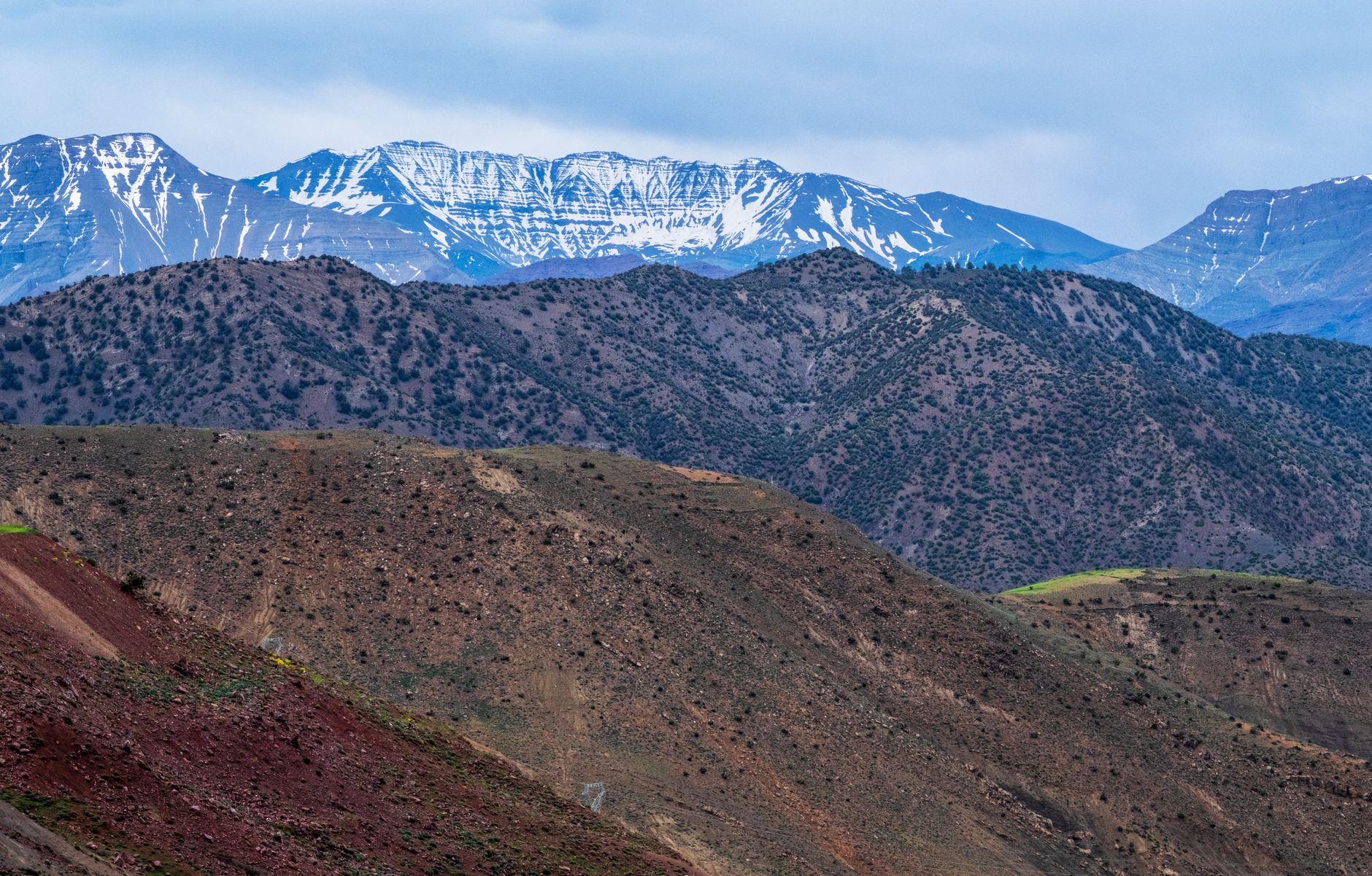
The Atlas Mountains stretch across Morocco like a spine — 1,500 miles of peaks, valleys, and gorges separating the fertile coastal plains from the Sahara Desert. The High Atlas section, with peaks exceeding 13,000 feet, offers trekking that rivals the Himalayas in cultural richness while costing a fraction of the price. You’ll walk through ancient Berber villages where life has barely changed in centuries, sleep in mountain refuges and village guesthouses, share meals with families who welcome strangers as honored guests, and summit peaks with views stretching from the Mediterranean to the Sahara on clear days.
And the best part? You can go from sipping coffee in a Marrakech rooftop café to standing in a mountain valley surrounded by walnut groves and snowcapped peaks before lunch.
Key Takeaways
- Jebel Toubkal (4,167m / 13,671 ft) is the highest peak in North Africa — summitable in 2 days without technical climbing.
- Marrakech to trailhead is just 90 minutes — making day trips and short treks incredibly accessible.
- A local guide is strongly recommended (required for some routes) — $40-70/day depending on group size and route.
- Best seasons: April-June and September-November. Summer (July-Aug) is hot at lower elevations; winter requires mountaineering gear for Toubkal.
- Morocco is BUDGET-FRIENDLY trekking. Total cost for a 2-day Toubkal trek: $150-300 per person all-inclusive.
- Berber culture is half the experience. Homestays, shared meals, and village interactions make this more than just hiking.
- No permits needed for most routes — a refreshing contrast to heavily regulated treks elsewhere.
- Physical fitness: Moderate fitness for valley treks; good fitness required for Toubkal (altitude + steep terrain).
Quick Facts
| Detail | Info |
|---|---|
| Location | Central Morocco (High Atlas range, south of Marrakech) |
| Highest peak | Jebel Toubkal: 4,167 m (13,671 ft) |
| Gateway city | Marrakech (90 min to Imlil trailhead) |
| Trek options | Half-day to 10+ days |
| Guide cost | $40-70/day (includes route-finding, translation, logistics) |
| Mule hire | $15-25/day (carries your main bag) |
| Toubkal refuge | ~$20-30/night (bunk + meals) |
| Best months | April-June (spring wildflowers) and September-November (cool, clear) |
| Permits | None required for most routes (some require national park fee ~$5) |
| Tipping culture | Expected — 10-15% for guides, small tips for mule handlers |
| Language | Berber (Tamazight) in villages, French widely spoken, some English |
| Visa | Most nationalities get 90-day visa-free entry to Morocco |
Trek Options: From Easy to Epic
Option 1: Ourika Valley Day Trip (Easy — No Hiking Experience Needed)
| Detail | Info |
|---|---|
| Duration | Half day to full day |
| Difficulty | Easy |
| Distance from Marrakech | 1 hour drive |
| Highlights | Setti Fatma waterfalls, Berber markets, valley scenery |
| Best for | Families, non-hikers, those adding a mountain day to a Marrakech trip |
| Cost | $30-50/person for organized day trip (or $10-15 if self-arranged via bus) |
What you’ll experience:
- Drive through progressively dramatic scenery as the valley narrows
- Traditional Berber villages with terraced gardens
- Riverside restaurants serving tagine and fresh orange juice
- Short walk to waterfalls (30-60 minutes, some scrambling for upper falls)
- Monday market (souk) in Ourika town for local crafts and produce
- Visit on a weekday for fewer crowds (Monday for the market, though).
- The waterfall walk involves some rock-hopping — wear closed-toe shoes with grip.
- Local “guides” will offer to lead you to the falls — a small tip ($3-5) is expected.
- Bring swimwear in summer — the pools below the falls are refreshing.
- Combine with a visit to a Berber herb/argan oil cooperative along the road.
Option 2: Imlil Valley + Armed Village Trek (Moderate — 1 Day)
| Detail | Info |
|---|---|
| Duration | Full day (6-8 hours hiking) |
| Difficulty | Moderate |
| Distance from Marrakech | 90 minutes to Imlil |
| Total hiking | 10-14 km (6-9 miles) |
| Elevation gain | 600-900 m (2,000-3,000 ft) |
| Highlights | Berber villages, walnut groves, mountain views, cultural immersion |
| Best for | Hikers wanting a single-day mountain experience with cultural depth |
| Cost | $50-80/person (guide, transport, lunch in village) |
A typical circuit:
- Imlil → Armed village (traditional architecture, kasbah) → Tacheddirt (pastoral valley) → return to Imlil
- Lunch at a Berber family home (included with most guides) — tagine, fresh bread, mint tea
- Stunning mountain views throughout
- Visit to a Berber cooperative or school if interested
- Hire a guide in Imlil ($40-50 for the day, can be shared across a group).
- The Berber lunch in a village home is a highlight — don’t skip it.
- Bring small gifts if visiting schools or families (pencils, notebooks — not candy).
- Walking poles helpful on the rocky descent sections.
- This trek is possible year-round (snow adds beauty in winter without making it dangerous at valley level).
Option 3: Jebel Toubkal Summit (2-3 Days — The Classic)
| Detail | Info |
|---|---|
| Duration | 2 days / 1 night (fast) or 3 days / 2 nights (comfortable) |
| Difficulty | Strenuous (altitude + steep terrain, but non-technical) |
| Starting point | Imlil (1,740 m / 5,709 ft) |
| Summit elevation | 4,167 m (13,671 ft) |
| Total elevation gain | 2,427 m (7,963 ft) from Imlil |
| Highlights | North Africa’s highest peak, Toubkal Refuge, valley views, summit panorama |
| Best for | Fit hikers wanting a bucket-list peak without technical climbing |
| Cost | $150-300/person (guide, mule, refuge, meals) |
Standard 2-Day Itinerary:
Day 1: Imlil → Toubkal Refuge (5-6 hours)
- Walk through Imlil’s walnut groves and up the Mizane Valley
- Pass through Armed village (last tea stop before the mountain)
- Gradual climb through increasingly barren, rocky terrain
- Arrive at the Toubkal Refuge (3,207 m / 10,522 ft) by afternoon
- Settle in, have dinner, rest for early summit start
- Wake at 5-6 AM for early start (summit before clouds build)
- 3-4 hour steep climb on scree and loose rock to the summit
- Summit at 4,167 m — panoramic views of the High Atlas, Anti-Atlas, and on clear days, the Sahara
- Descend to refuge (1.5-2 hours), collect gear
- Continue descent to Imlil (3-4 hours)
- Celebration tagine and mint tea in Imlil
What the Toubkal Refuge Is Like
The Refuge du Toubkal (CAF Refuge) sits at 3,207m on a rocky plateau. Here’s what to expect:
- Accommodation: Bunk beds in dormitory rooms (bring sleeping bag or rent one)
- Meals: Basic but filling — soup, tagine, bread, hot drinks (included in most guided treks)
- Facilities: Basic toilets, no showers (it’s one night — you’ll survive)
- Atmosphere: International mix of trekkers sharing stories, early bedtime, excitement/nerves for summit day
- Temperature: COLD at night (can drop below freezing even in summer) — bring warm layers for sleeping
Toubkal Summit Tips
- Start early. Leave the refuge by 6 AM — clouds often build by midday and obscure views.
- The scree is relentless. Two steps forward, one step sliding back. Poles help enormously.
- Altitude is real at 4,000m+. If you haven’t been at altitude recently, you’ll feel it. Move slowly.
- The summit is a flat plateau with a triangulation pillar — plenty of room for photos and celebration.
- Descent is harder on knees than the ascent — poles are your friend.
- Bring 2-3 liters of water from the refuge — no water sources above.
- Celebrate in Imlil afterward — you just climbed the highest peak in North Africa!
Option 4: Multi-Day Atlas Traverse (3-10 Days — The Full Experience)
For those wanting deeper immersion, multi-day traverses link villages, valleys, and passes across the High Atlas. Routes can be customized from 3 to 10+ days.
Popular multi-day routes:
| Route | Duration | Difficulty | Highlights |
|---|---|---|---|
| Imlil-Toubkal-Lac d’Ifni | 3-4 days | Strenuous | Summit + stunning mountain lake |
| M’Goun Traverse | 5-6 days | Strenuous | Morocco’s 2nd highest peak, remote valleys |
| Imlil to Setti Fatma | 3-4 days | Moderate | Valley-to-valley traverse through villages |
| Ait Bouguemez (“Happy Valley”) | 4-7 days | Moderate | Remote agricultural valley, dinosaur footprints |
| Toubkal Circuit | 5-7 days | Strenuous | Full circumnavigation of the Toubkal massif |
Costs Breakdown: Atlas Mountains Trekking
One of the best things about Morocco is the cost. This is genuinely affordable international trekking.
| Item | Budget | Mid-Range | Comfortable |
|---|---|---|---|
| Guide (per day) | $40-50 | $50-70 | $70-100 (premium English-speaking) |
| Mule + handler (per day) | $15-20 | $20-25 | $25-30 |
| Refuge accommodation | $15-20/night | $20-30/night | $30-50 (private room, if available) |
| Village homestay | $15-25 (with meals) | $25-40 | $40-60 (premium gîtes) |
| Meals on trek | $10-15/day | $15-25/day | Included in higher-end packages |
| Marrakech-Imlil transfer | $10-15 (shared taxi) | $40-60 (private car) | $60-80 (with pickup/dropoff) |
| 2-Day Toubkal Trek TOTAL | $150-200/person | $200-300/person | $300-500/person |
| 5-Day Traverse TOTAL | $350-500/person | $500-800/person | $800-1,200/person |
Hiring a Guide: Do You Need One?
For Toubkal (2-day summit): STRONGLY RECOMMENDED
The trail to the refuge is well-marked, but:
- A guide handles logistics (refuge booking, mule hire, meals)
- Provides safety on summit day (route-finding in clouds, altitude monitoring)
- Culturally enriches the experience (local knowledge, village interactions)
- Supports the local economy directly
For Day Treks: RECOMMENDED
Valley treks through villages are possible solo, but guides:
- Open doors that wouldn’t otherwise open (village homes, family meals)
- Navigate the network of unmarked paths between villages
- Translate (most villagers speak Berber/Arabic, limited French/English)
- Cost is minimal ($40-50/day, often split among group)
For Multi-Day Traverses: ESSENTIAL
Remote routes require:
- Route-finding knowledge (many paths are unmarked)
- Mule logistics coordination
- Village accommodations arranged in advance
- Emergency response capability in remote areas
How to Find a Good Guide
- In Imlil: The Bureau des Guides (official guide office) in Imlil has certified mountain guides. Walk in and arrange.
- In Marrakech: Book through reputable agencies — avoid the cheapest options (guides may be unlicensed).
- Online: Research operators with recent reviews (TripAdvisor, Google) — book in advance for peak season.
- Certification: Official Moroccan mountain guides carry a card from CFAMM (Centre de Formation aux Métiers de Montagne).
Best Time to Trek the Atlas Mountains
| Season | Conditions | Best For |
|---|---|---|
| March-April | Snow melting, waterfalls flowing, wildflowers beginning | Valley treks, Ourika Valley, lower routes |
| May-June | Warm, clear, snow gone from most passes, wildflowers peak | Toubkal summit, multi-day traverses, all routes |
| July-August | Hot at lower elevations (35°C+), clear and warm higher up | High-altitude routes only, very early starts needed |
| September-October | Cooling temperatures, harvest season, crystal-clear skies | ALL trekking — arguably the best overall months |
| November | Cool, possible early snow on Toubkal, stunning autumn light | Valley treks, Toubkal (check conditions) |
| December-February | Snow on Toubkal (crampons/ice axe needed), cold valleys | Winter mountaineering (Toubkal), lower valley walks |
Cultural Etiquette for Atlas Mountain Trekking
The Berber (Amazigh) people have inhabited these mountains for thousands of years. Being a respectful visitor enriches everyone’s experience:
Do:
- Greet everyone with “Salaam alaikum” (peace be upon you) — even strangers on the trail
- Accept tea when offered — refusing is considered rude (the three-glass tradition is sacred)
- Remove shoes when entering homes and mosques
- Ask permission before photographing people (especially women)
- Eat with your right hand when eating communal meals (left hand is considered unclean)
- Tip generously — guides, mule handlers, and hosts all depend on tourism income
- Bring small gifts for hosts (sugar, tea, school supplies for villages)
- Dress modestly — cover shoulders and knees, especially in villages and around women
Don’t:
- Don’t photograph women without explicit permission (in rural areas, many prefer not to be photographed)
- Don’t drink alcohol openly in villages (Morocco is Muslim; be respectful)
- Don’t haggle for guide services like you would in the souk — fair pricing supports families
- Don’t litter — pack out everything you bring in
- Don’t give money/candy to children (creates begging culture — donate to village schools instead)
What to Pack for Atlas Mountains Trekking
For Toubkal (2-Day Summit Trek)
| Item | Notes |
|---|---|
| Daypack (25-35L) | Carries your essentials while mule carries main bag |
| Warm layers | Down jacket + fleece — summit and refuge are cold (below freezing at night) |
| Waterproof jacket | Weather can change rapidly, especially in spring/fall |
| Trekking boots | Broken-in, ankle-support boots essential for scree |
| Trekking poles | Critical for the loose scree on summit day descent |
| Sunscreen + sunhat | UV is intense at 4,000m — burns happen fast |
| Headlamp | For early summit start and refuge bathroom trips |
| Water bottles (2-3L) | No water above the refuge |
| Snacks | Energy bars, nuts, dried fruit for summit day |
| Warm sleeping layers | Refuge is cold — thermals for sleeping |
| Sleeping bag | If not renting at refuge (check in advance) |
A Quick Reflection
On the afternoon of my second day in the Atlas, returning from Toubkal’s summit to Imlil, exhausted and elated, my guide Ibrahim stopped at a small village above the tree line. An elderly woman appeared at a door, spoke rapidly in Berber to Ibrahim, and gestured us inside.
We sat on carpets in a simple room while she prepared mint tea — the traditional three glasses (the first sweet as love, the second strong as life, the third gentle as death, as the Berber proverb goes). She spoke no English or French, and I spoke no Berber or Arabic. But somehow, through gestures and Ibrahim’s translation, we had a conversation. She asked about my family. I asked about her children (seven, all moved to Marrakech for work except the youngest). She laughed when Ibrahim translated that I found the mountain hard. She’d carried water from the valley up this path her entire life.
That tea stop lasted 30 minutes and cost nothing (I left money discreetly with Ibrahim to pass along later). It’s the moment I remember most from Morocco — more than the summit, more than the views. Because the Atlas Mountains aren’t just a place to hike. They’re a place where an ancient culture lives in daily rhythm with impossible terrain, and where they welcome passing strangers with a grace that our modern world has largely forgotten.
Frequently Asked Questions
Planning a trek? See the official Visit Morocco site, and use a licensed guide for High Atlas routes.
Final Thoughts
The Atlas Mountains offer something unique in the trekking world: genuine high-mountain adventure combined with deep cultural immersion, all within easy reach of a major city and at a price that makes multi-day treks accessible to budget travelers. You can wake up in a Marrakech riad, and by afternoon be drinking tea with a Berber family at 2,500 meters while snow-capped peaks tower above.
Whether you choose a casual day in the Ourika Valley, a challenging Toubkal summit bid, or a week-long traverse through remote villages, the Atlas will reward you with landscapes, hospitality, and cultural experiences that rival destinations costing three times the price.
Start in Imlil. Hire a guide. Say yes to every glass of tea. And don’t forget to look up — because the mountains here are as old as time and twice as beautiful.
Planning your Atlas Mountains adventure? Use our Trip Planner to organize your trekking itinerary, estimate costs, and coordinate with your Marrakech travel plans.
Related Reading:
- Everest Base Camp Trek Guide — Another bucket-list international trek
- Peru Inca Trail Guide — Cultural trekking in South America
- Best Hiking Backpacks for 2026 — Find the right pack for multi-day treks
- Best Trekking Poles for Hiking — Essential for scree descents
✈️ Planning your trip?
Compare cheap flights, hotels and car rentals for your adventure.
Find Cheap Flights →Compare Hotels →🌍 Plan & Book Your Trip
Compare the best deals for this destination — flights, hotels, tours and more:
Affiliate links — we may earn a commission at no extra cost to you.