Switzerland’s Jungfrau Region: A Hiking & Travel Guide
🌍 Plan & Book Your Trip
Compare the best deals for this destination — flights, hotels, tours and more:
Affiliate links — we may earn a commission at no extra cost to you.
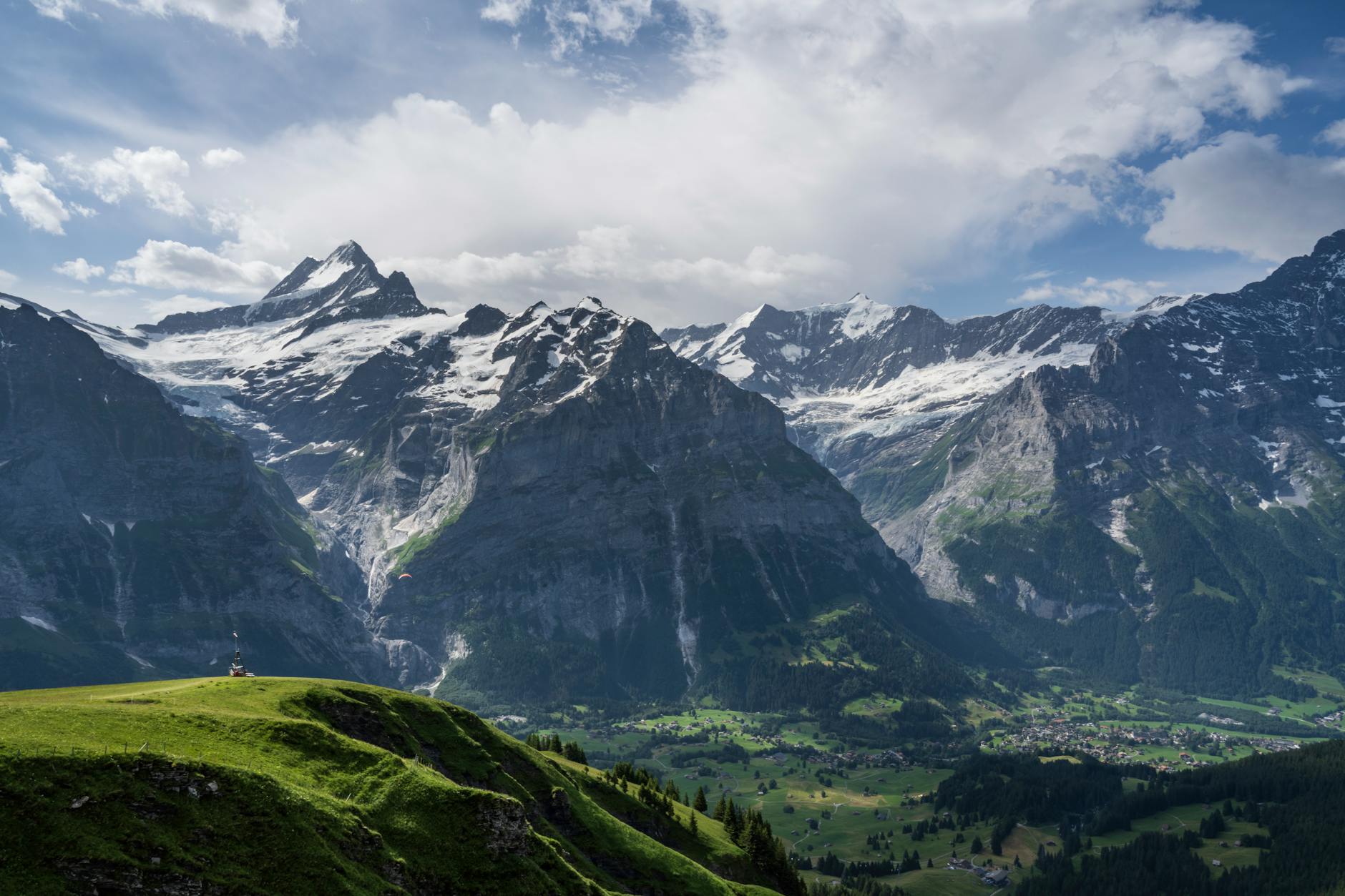
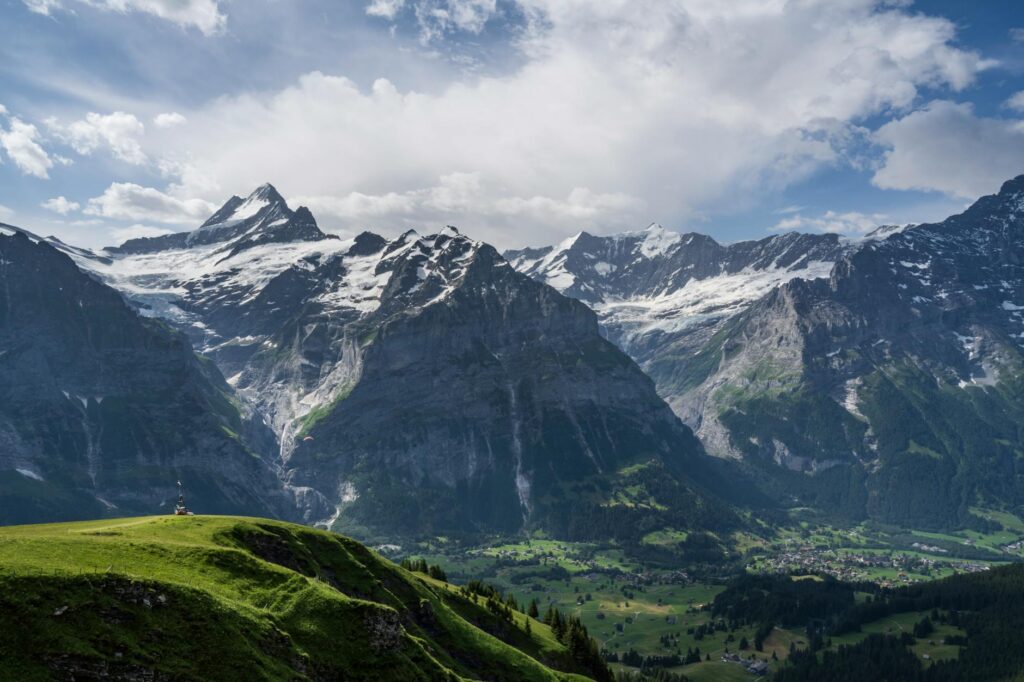
Chalets and wildflower meadows beneath the Eiger, Mönch, and Jungfrau — the heart of the Swiss Alps.
If you’ve ever pictured the Swiss Alps — emerald meadows, cowbells, waterfalls spilling off sheer cliffs, and a wall of glaciated peaks — you were probably picturing the Jungfrau region of Switzerland. Tucked into the Bernese Oberland, this is where the famous trio of the Eiger, Mönch, and Jungfrau rises above storybook villages like Grindelwald, Lauterbrunnen, and Wengen. It’s arguably the most scenic, hike-able, and well-connected corner of the entire Alps — and it’s astonishingly easy to explore by train and cable car.
This guide covers the villages worth basing in, the must-do hikes (including the legendary Eiger Trail), how to reach the “Top of Europe” at Jungfraujoch, and exactly when to go. If you’ve already read our Swiss Alps content, think of this as the deep-dive on the region’s beating heart.
Key Takeaways
- The Jungfrau region centers on three valleys/villages: Grindelwald, Lauterbrunnen, and the car-free Wengen (plus Mürren).
- Jungfraujoch (“Top of Europe”) is Europe’s highest railway station — pricey, but unforgettable on a clear day.
- The Eiger Trail runs right beneath the Eiger’s north face — one of the most dramatic day hikes in the Alps.
- Lauterbrunnen valley alone has dozens of waterfalls, including the famous Staubbach and Trümmelbach Falls.
- A rail pass (Swiss Travel Pass or regional pass) saves money given how much you’ll ride trains and lifts.
Quick Facts
| 📍 Location | Bernese Oberland, central Switzerland |
|---|---|
| 🏔️ Famous peaks | Eiger, Mönch, Jungfrau |
| 🚆 Gateway | Interlaken (then train into the valleys) |
| 🏘️ Best bases | Grindelwald, Lauterbrunnen, Wengen, Mürren |
| 🗓️ Best time | Mid-June to September (peak hiking) |
| ⏱️ Ideal stay | 4–6 days |
| 🎟️ Money tip | A rail pass pays off fast here |
Budget reality check: Switzerland is expensive, and the Jungfraujoch excursion in particular is a splurge. Decide in advance which “big ticket” lifts you’ll ride, and consider a rail pass to soften the cost of all the trains and cable cars.
How to Get There
Nearest airports:
- Zurich (ZRH) — about 2–2.5 hours by train to Interlaken
- Geneva (GVA) — roughly 3 hours by train
- Bern (BRN) — closest, but limited flights
Getting around: You don’t need — and often can’t use — a car here. The region runs on an incredibly efficient network of trains, cogwheel railways, cable cars, and gondolas. Wengen and Mürren are car-free. Embrace the rail system; it’s half the fun.
Where to Base Yourself
Choosing your base is the most important planning decision. Here’s how the main villages compare:
| Village | Vibe | Car-Free? | Best For |
|---|---|---|---|
| Grindelwald | Lively, bigger, lots of lifts | No | First-timers, variety, Eiger access |
| Lauterbrunnen | Dramatic valley, central hub | No | Waterfalls, easy connections |
| Wengen | Quiet, scenic, car-free terrace | Yes | Romance, quiet, big views |
| Mürren | Tiny, high, jaw-dropping views | Yes | Solitude, Schilthorn, hiking |
The Must-Do Experiences
1. Jungfraujoch — “Top of Europe”
The headline excursion: a series of trains climb through a tunnel bored inside the Eiger and Mönch to Jungfraujoch, at 3,454 m the highest railway station in Europe. Up top you’ll find an ice palace carved into the glacier, observation decks, and views over the vast Aletsch Glacier. It’s expensive and can be cloudy, so go on a clear day and book ahead. The newer Eiger Express gondola from Grindelwald dramatically cuts the travel time.
2. The Eiger Trail
For hikers, this is the region’s crown jewel. The Eiger Trail traverses directly beneath the infamous north face of the Eiger, a near-vertical wall of rock and ice with a haunting climbing history. The path (roughly 6 km, moderate) delivers constant, neck-craning drama. Catching it on a clear morning is a bucket-list alpine experience.
3. Lauterbrunnen Valley Waterfalls
The Lauterbrunnen valley is said to have inspired Tolkien’s Rivendell, and it’s easy to see why — sheer cliffs with 72 waterfalls plunging into a green valley floor. Don’t miss the wispy Staubbach Falls (visible from the village) and the thundering Trümmelbach Falls, a series of glacial waterfalls inside the mountain, reached by a tunnel lift.
4. First Cliff Walk & Bachalpsee (from Grindelwald)
Ride the gondola to First, walk the vertigo-inducing First Cliff Walk, then hike to the mirror-like Bachalpsee lake — one of the most photographed spots in the Alps, with the peaks reflected in still water. The descent options (trotti-bikes, zip lines, mountain carts) make it a fun family day.
5. Schilthorn / Piz Gloria (from Mürren)
On the opposite side, a cable car climbs to the Schilthorn and its revolving restaurant (of James Bond fame), with a 360° panorama across to the Eiger, Mönch, and Jungfrau. A spectacular alternative to Jungfraujoch, often with smaller crowds.
The Best Hikes in the Jungfrau Region
| Hike | Distance | Difficulty | Why Go |
|---|---|---|---|
| First → Bachalpsee | ~6 km RT | Easy–Moderate | Iconic reflective lake |
| Eiger Trail | ~6 km | Moderate | Beneath the Eiger north face |
| Männlichen → Kleine Scheidegg | ~4.5 km | Easy | Panoramic ridge, family-friendly |
| North Face Trail (Mürren) | ~6.5 km | Easy–Moderate | Big peaks, fewer crowds |
| Schynige Platte → First | ~15 km | Hard | Classic high alpine traverse |
| Lauterbrunnen → Mürren (via Grütschalp) | varies | Easy | Valley + terrace views |
For strong hikers: The Schynige Platte to First traverse is a long, glorious high route — one of the finest day hikes in Switzerland.
Jungfraujoch vs Schilthorn: Which Mountain Excursion?
Both are spectacular high-mountain trips, but they’re different experiences. Here’s how to choose if you can only do one:
| Jungfraujoch | Schilthorn | |
|---|---|---|
| Elevation | 3,454 m (highest rail in Europe) | 2,970 m |
| Highlight | Aletsch Glacier, ice palace | 360° panorama, Bond film history |
| Crowds | Very busy | Usually less busy |
| Cost | Higher (a major splurge) | High, but typically less |
| Access | Train (Eiger Express + cog rail) | Cable cars from Mürren |
| Best for | “Top of Europe” bragging rights | Best overall panorama of the trio |
Best Time to Visit
Summer (mid-June–September): Prime hiking season. Trails and high lifts are open, meadows are green and full of wildflowers, and cowbells echo across the slopes. July and August are busiest; late June and September are slightly quieter and still glorious.
Shoulder (May & October): Lower trails are lovely, but high routes and some lifts may still be closed (spring) or closing (autumn). October can bring gorgeous golden larches and crisp air. Check lift schedules carefully.
Winter (December–March): Transforms into a world-class ski region (Grindelwald-Wengen-Mürren). Stunning, but a different trip entirely — for skiing and snow scenery, not summer hiking.
The sweet spot: Late June for wildflowers with everything open, or September for stable weather, fewer crowds, and clear mountain views.
What to Pack
- Layers — alpine weather changes fast; mornings are cold, afternoons warm
- Rain shell — mountain showers roll in quickly
- Proper hiking shoes — many trails are rocky or steep
- Sun protection — UV is intense at altitude, even when cool
- Refillable water bottle — many villages have drinkable fountains
- A rail pass or your tickets — and a downloaded transit app
- Cash for huts — some mountain restaurants prefer it; bring Swiss francs
A Quick Reflection
My first morning in Wengen, I almost didn’t bother getting up early — I’d read that clouds usually socked in the peaks until midday. But I set the alarm anyway, stepped onto the balcony of my little guesthouse with a coffee, and the Jungfrau was just… there. Glowing pale gold, impossibly close, with no cloud in sight and not a single other tourist awake.
I caught the first train up toward Männlichen and had the ridge nearly to myself, the whole great wall of the Eiger, Mönch, and Jungfrau lined up across the valley like they were posing. By the time I came back down, the trains were packed and the clouds were building. I’d had the best of it before breakfast.
That’s the Swiss Alps lesson I keep relearning: the mountains reward the early riser. The lifts and trains make it almost too easy to sleep in and arrive at 11. Don’t. Catch that first train, and you’ll get the Alps the way they look in your imagination.
Practical Tips & Mistakes to Avoid
- Get a rail pass. Between trains, cog railways, and cable cars, fares add up fast — a Swiss Travel Pass or regional pass usually pays off.
- Save Jungfraujoch for a clear day. It’s too expensive to spend in the clouds; build flexibility into your itinerary.
- Start early. Beat the crowds on lifts and trails, and catch the mountains before afternoon clouds roll in.
- Book big excursions ahead in peak season, and reserve accommodation early — villages are small.
- Pack for all weather, even on sunny mornings; alpine conditions flip quickly.
- Don’t overschedule. Distances look short but transit takes time. Two or three “big” things per day is plenty.
Suggested 5-Day Itinerary
Day 1 — Arrive & Lauterbrunnen valley: Settle in, walk to Staubbach Falls, and visit Trümmelbach Falls inside the cliff.
Day 2 — Grindelwald & First: Ride to First, do the Cliff Walk, and hike to Bachalpsee for the classic reflection shot.
Day 3 — The Eiger up close: Hike the Eiger Trail or the easy Männlichen–Kleine Scheidegg panorama trail.
Day 4 — Top of Europe: On a clear forecast, ride up to Jungfraujoch via the Eiger Express. Cloudy? Swap with another day.
Day 5 — Mürren & Schilthorn: Take the car-free terrace route to Mürren, ride to the Schilthorn for the panorama, and hike the North Face Trail.
FAQ
How many days do you need in the Jungfrau region? Four to six days is ideal. That gives you time for the big excursions (Jungfraujoch or Schilthorn), two or three signature hikes like the Eiger Trail and Bachalpsee, the Lauterbrunnen waterfalls, and the flexibility to wait out clouds for a clear summit day.
Is the Jungfraujoch trip worth the high price? On a clear day, yes — it’s a genuine once-in-a-lifetime experience standing at Europe’s highest railway station above the Aletsch Glacier. On a cloudy day, you’ll pay a premium for fog, so build flexibility into your plans and go when the forecast is good. If budget is tight, the Schilthorn offers a stunning alternative for less.
What’s the best base village in the Jungfrau region? Grindelwald is the easiest all-rounder for first-timers, with the most lifts and direct Eiger Express access. Lauterbrunnen is the most central and dramatic. For quiet, car-free magic and big views, choose Wengen or Mürren.
When is the best time to hike in the Jungfrau region? Mid-June through September is peak hiking season, when high trails and lifts are open and meadows are green. Late June brings wildflowers; September offers stable weather and thinner crowds. Avoid relying on high-altitude hikes in the shoulder months when snow may linger or lifts close.
Before you go, confirm train and cable car schedules, fares, and lift opening dates at the official Jungfrau Railways and Swiss rail sites — and check the mountain weather forecast before booking Jungfraujoch.
Planning a trip? See the official MySwitzerland site for the Jungfrau region, trains, and mountain passes.
Final Thoughts
The Jungfrau region is the Swiss Alps at their most jaw-dropping and accessible — a place where you can ride a train into the heart of a glacier in the morning and stroll a wildflower meadow beneath the Eiger in the afternoon. Base yourself in a village that matches your style, grab a rail pass, save the big excursions for blue-sky days, and lace up for at least one hike beneath those legendary peaks. Do that, and you’ll understand why generations of travelers have called this the most beautiful corner of the Alps.
Comparing the world’s great mountain ranges? See how the Alps stack up against the Rockies in Banff vs Swiss Alps, or plan another iconic European hiking trip with our Dolomites Italy Guide. Map your route with our free Trip Planner.
FAQ Schema (paste in a Custom HTML block at the end of the post)
“html “
✈️ Planning your trip?
Compare cheap flights, hotels and car rentals for your adventure.
Find Cheap Flights →Compare Hotels →🌍 Plan & Book Your Trip
Compare the best deals for this destination — flights, hotels, tours and more:
Affiliate links — we may earn a commission at no extra cost to you.