Costa Rica Nature & Adventure Travel Guide
🌍 Plan & Book Your Trip
Compare the best deals for this destination — flights, hotels, tours and more:
Affiliate links — we may earn a commission at no extra cost to you.
Costa Rica packs cloud forests, volcanoes, rainforest, and beaches into a country smaller than West Virginia — and wildlife is everywhere you look.
I came to Costa Rica expecting beaches and left obsessed with sloths. Within my first 48 hours I’d watched a three-toed sloth inch across a treetop, locked eyes with a curious white-faced capuchin monkey, and stood on a hanging bridge in a cloud forest so misty it felt like walking through a dream. If you’re planning a trip and want a nature-first Costa Rica nature guide that skips the resort fluff and focuses on the wild stuff, you’re in exactly the right place. This little Central American country crams an astonishing amount of biodiversity into a tiny footprint, and it’s one of the easiest places on earth to see incredible wildlife up close.
Costa Rica contains around 5% of the world’s biodiversity on less than 0.03% of its landmass. It’s a global pioneer in eco-tourism, with over a quarter of its land protected in national parks and reserves. In a single week you can hike a cloud forest, soak in volcano-heated hot springs, spot monkeys and sloths in the rainforest, and watch the sunset over the Pacific. The local mantra is “pura vida” — pure life — and after a week here, you’ll understand exactly what they mean.
Key Takeaways
- The dry season (December–April) is the best time to visit — sunniest weather, easiest travel, peak wildlife viewing.
- Three must-visit nature regions: Monteverde (cloud forest), Arenal (volcano), and Manuel Antonio (rainforest meets beach).
- Wildlife is the headline act — sloths, monkeys, toucans, scarlet macaws, and more, often easy to spot with a guide.
- Hire local guides — they spot wildlife you’d walk right past, and they support the eco-tourism economy.
- Distances are short but drives are slow. Roads are winding and rough; a 4×4 helps. Domestic flights save time.
- It’s a leader in eco-tourism — choose sustainable lodges and tour operators to keep it that way.
- Pack for rain anytime — even the dry season can surprise you, and the rainforest is, well, a rainforest.
Quick Facts
| Detail | Info |
|---|---|
| Location | Central America (between Nicaragua and Panama) |
| Best time | Dry season: December–April |
| Green/rainy season | May–November (lush, cheaper, afternoon rains) |
| Main airports | San José (SJO) and Liberia (LIR) |
| Top nature regions | Monteverde, Arenal, Manuel Antonio |
| Iconic wildlife | Sloths, monkeys, toucans, scarlet macaws, frogs |
| Currency | Costa Rican colón (USD widely accepted) |
| Getting around | Rental 4×4, shuttles, or short domestic flights |
| Ideal trip length | 10–14 days (or 7 for the highlights) |
Getting to & Around Costa Rica
Airports: Two international gateways. San José (SJO) in the central highlands is the main hub and best for Arenal and the central/Pacific regions. Liberia (LIR) in the northwest is closer to the Guanacaste beaches and Monteverde.
Getting around:
- Rental car (4×4 recommended) — the most flexible option. Roads are paved on main routes but winding, and many lodges sit down rough dirt roads where a 4×4 earns its keep.
- Shared/private shuttles — tourist shuttles connect all the major destinations; easy and stress-free.
- Domestic flights — small planes (Sansa) connect far-flung regions like the Osa Peninsula, saving you long, bumpy drives.
The #1 thing first-timers underestimate: distances look short on the map, but drives are SLOW. A “90 km” trip can take 3+ hours on twisty mountain roads. Build in buffer time, avoid night driving, and don’t over-pack your itinerary.
Monteverde: The Cloud Forest
High in the mountains, Monteverde is a magical world of mist-shrouded forest dripping with moss, ferns, and orchids. The cloud forest sits in the clouds (literally), creating a cool, ethereal environment that’s home to an incredible array of birds, including the legendary resplendent quetzal.
What to do:
- Monteverde or Santa Elena Cloud Forest Reserves — Hike the misty trails among ancient trees and hanging gardens.
- Hanging bridges — Walk suspension bridges through the forest canopy, eye-level with the treetops.
- Ziplining — Monteverde is the birthplace of the canopy zipline tour; soar above the forest.
- Night walks — Guided after-dark hikes reveal sleeping birds, frogs, kinkajous, and tarantulas.
- Birdwatching — Time it right (roughly Feb–May) for a chance at the spectacular quetzal.
- It’s cooler and wetter than the lowlands — bring layers and a rain jacket.
- A guide dramatically increases what you’ll spot (their trained eyes are uncanny).
- The road up is famously rough — embrace it as part of the adventure.
Arenal: The Volcano
Arenal is the classic Costa Rica postcard — a near-perfect conical volcano towering over the town of La Fortuna. Though it’s currently in a resting phase (no lava), the area is an adventure playground with hot springs, waterfalls, hiking, and the volcano as a dramatic backdrop.
What to do:
- Arenal Volcano National Park — Hike trails over old lava flows with views of the cone (when clouds cooperate).
- Natural hot springs — Soak in rivers and resort pools heated by the volcano. Pure bliss after a day of hiking.
- La Fortuna Waterfall — A stunning 70-meter waterfall reached by a steep staircase; swim in the pool below.
- Hanging bridges & wildlife — More canopy walks with great birding.
- Lake Arenal — Kayaking, windsurfing, and scenic drives.
- The volcano summit is often cloud-covered — be patient; mornings tend to be clearest.
- Some hot springs are free (riverside), others are luxe resort experiences — pick your budget.
- La Fortuna is a great, walkable base town with lots of restaurants.
Manuel Antonio: Rainforest Meets Beach
On the central Pacific coast, Manuel Antonio National Park is where rainforest spills right down onto white-sand beaches. It’s Costa Rica’s most popular park for a reason — easy trails, gorgeous coves, and some of the most reliable wildlife viewing in the country, all in one compact spot.
What to do:
- Hike the park trails — Easy, well-maintained paths where sloths, monkeys, and iguanas are almost guaranteed.
- Beach time — Playa Manuel Antonio is a stunning crescent of sand inside the park.
- Wildlife spotting — Three- and two-toed sloths, white-faced capuchins, howler monkeys, and the endangered squirrel monkey all live here.
- Guided tour — Guides with telescopes spot sloths and tiny frogs you’d never see alone.
- The park has a daily visitor cap and is closed one day a week — buy tickets in advance and check the schedule.
- Guard your food — the capuchins and raccoons are bold, practiced thieves.
- Go early to beat both the heat and the crowds.
Costa Rica’s Incredible Wildlife
This is why most nature lovers come. Here’s what you can realistically hope to see and where:
| Animal | Where to See It | Notes |
|---|---|---|
| Three-toed sloth | Manuel Antonio, Arenal, Cahuita | Slow-moving; guides spot them easily |
| Howler monkeys | Nationwide | You’ll HEAR them at dawn — a roaring call |
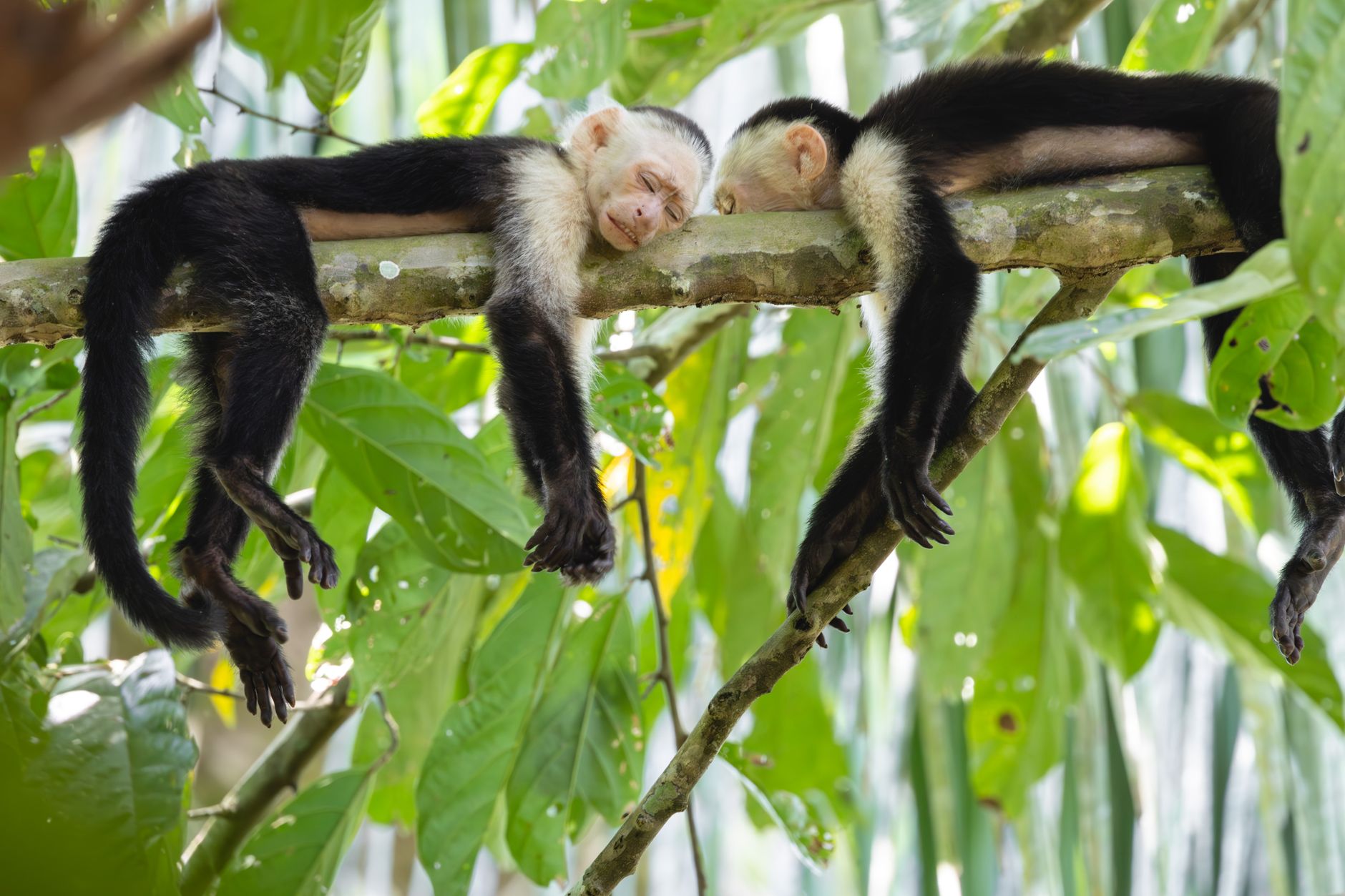
| White-faced capuchins | Manuel Antonio, Pacific coast | Curious and bold around people |
| Squirrel monkeys | Manuel Antonio, Osa | Endangered, small, fast-moving |
| Toucans | Arenal, Caribbean lowlands | Keel-billed and chestnut-mandibled |
| Scarlet macaws | Carara, Osa Peninsula | Brilliant red; loud and unmistakable |
| Resplendent quetzal | Monteverde, San Gerardo de Dota | Best Feb–May; a birder’s holy grail |
| Sea turtles | Tortuguero, Ostional, Pacific coast | Nesting seasons vary by species |
| Poison dart frogs | Caribbean & lowland rainforests | Tiny, brilliantly colored |
Best Time to Visit Costa Rica
| Season | Months | Pros | Cons |
|---|---|---|---|
| Dry season | Dec–April | Sunniest, best beach & hiking weather, peak wildlife | Most crowded, highest prices |
| Green season | May–Nov | Lush, fewer crowds, cheaper, great for waterfalls | Afternoon rains, some rough roads, wettest in Sept–Oct |
A Sample 10-Day Nature Itinerary
Here’s how I’d structure a first nature-focused trip:
- Days 1–3: Arenal / La Fortuna — Fly into SJO, drive to La Fortuna. Hike the volcano park, chase waterfalls, soak in hot springs.
- Days 4–6: Monteverde — Drive to the cloud forest (via the scenic Lake Arenal route). Cloud forest hikes, hanging bridges, a night walk, and ziplining.
- Days 7–9: Manuel Antonio — Head to the Pacific coast. National park wildlife, beach time, and a guided tour.
- Day 10: Return — Drive back to San José for your flight (or fly domestically to save time).
Eco-Tourism: Travel Responsibly
Costa Rica is a world leader in sustainable tourism, and travelers play a role in keeping it that way:
- Choose certified sustainable lodges (look for the CST — Certification for Sustainable Tourism).
- Never feed or touch wildlife — it harms the animals and disrupts their behavior.
- Keep your distance and use guides with scopes instead of getting close for photos.
- Stay on marked trails to protect fragile ecosystems.
- Support local businesses — local guides, family-run sodas (small restaurants), and community tours.
- Skip attractions that keep wild animals captive for selfies.
What to Pack
- Rain jacket — essential year-round (it’s a rainforest, after all)
- Quick-dry clothing and layers (cloud forest is cool, coast is hot and humid)
- Good hiking shoes plus sandals/water shoes for beaches and rivers
- Binoculars — a total game-changer for wildlife and birds
- Insect repellent and strong sun protection
- A dry bag to protect electronics from rain and river spray
- Reusable water bottle — tap water is generally safe in most tourist areas
A Quick Reflection
On my second morning in Manuel Antonio, I’d hired a guide named Marco almost as an afterthought — I figured I could spot animals myself. Within five minutes he stopped dead on the trail, set up his scope, and waved me over without a word. There, motionless in a tree I’d already walked past, was a three-toed sloth with a baby clinging to her chest. I’d looked right at that tree and seen nothing but leaves.
Over the next two hours, Marco showed me things I’d never have found in a lifetime of looking: a tiny red-eyed tree frog tucked under a leaf, a viper coiled on a branch at eye level (yikes), a family of squirrel monkeys raiding a fruit tree, and a toucan that he heard before any of us saw it. He read the forest like a book I couldn’t even open.
At one point I asked him how he spotted the sloth. He just shrugged and smiled. “Pura vida,” he said. “You slow down. You watch. The forest shows you everything — but only if you stop rushing.” That became the whole trip for me. Costa Rica isn’t a place to check boxes and race between sights. It’s a place to slow down, look closely, and let the wildest country I’ve ever visited reveal itself one sloth at a time.
Frequently Asked Questions
Plan around park hours, fees, and reservations using Costa Rica’s national park system, SINAC, before you go.
Final Thoughts
Costa Rica earned its reputation as the world’s nature-travel darling, and a week or two here will show you exactly why. It’s rare to find a destination where you can hike a cloud forest in the morning, soak in volcano-heated springs in the afternoon, and watch monkeys swing through beachfront trees the next day — all in a country you can drive across in a single (long, winding) day. The biodiversity is staggering, the infrastructure for travelers is excellent, and the “pura vida” spirit is genuinely contagious.
Visit in the dry season for your first trip, hit Arenal, Monteverde, and Manuel Antonio, hire local guides, and choose sustainable operators. Pack a rain jacket and binoculars, slow down, and let the forest reveal itself. You’ll leave planning your return trip before you’ve even boarded the flight home.
Pura vida. Go see it for yourself.
Planning your Costa Rica adventure? Use our Trip Planner to organize your route, map the national parks, and plan around the seasons.
Related Reading:
- Patagonia First-Timer Travel Guide — Another epic South/Central American nature trip
- Peru Inca Trail to Machu Picchu Guide — A bucket-list Latin American adventure
- Best Water Shoes for Hiking — Perfect for Costa Rica’s rivers and waterfalls
- Best Rain Jackets for Hiking — Essential rainforest gear
✈️ Planning your trip?
Compare cheap flights, hotels and car rentals for your adventure.
Find Cheap Flights →Compare Hotels →🌍 Plan & Book Your Trip
Compare the best deals for this destination — flights, hotels, tours and more:
Affiliate links — we may earn a commission at no extra cost to you.