Mount Rainier National Park Guide (First-Timer’s)

Mount Rainier National Park Guide (First-Timer's)
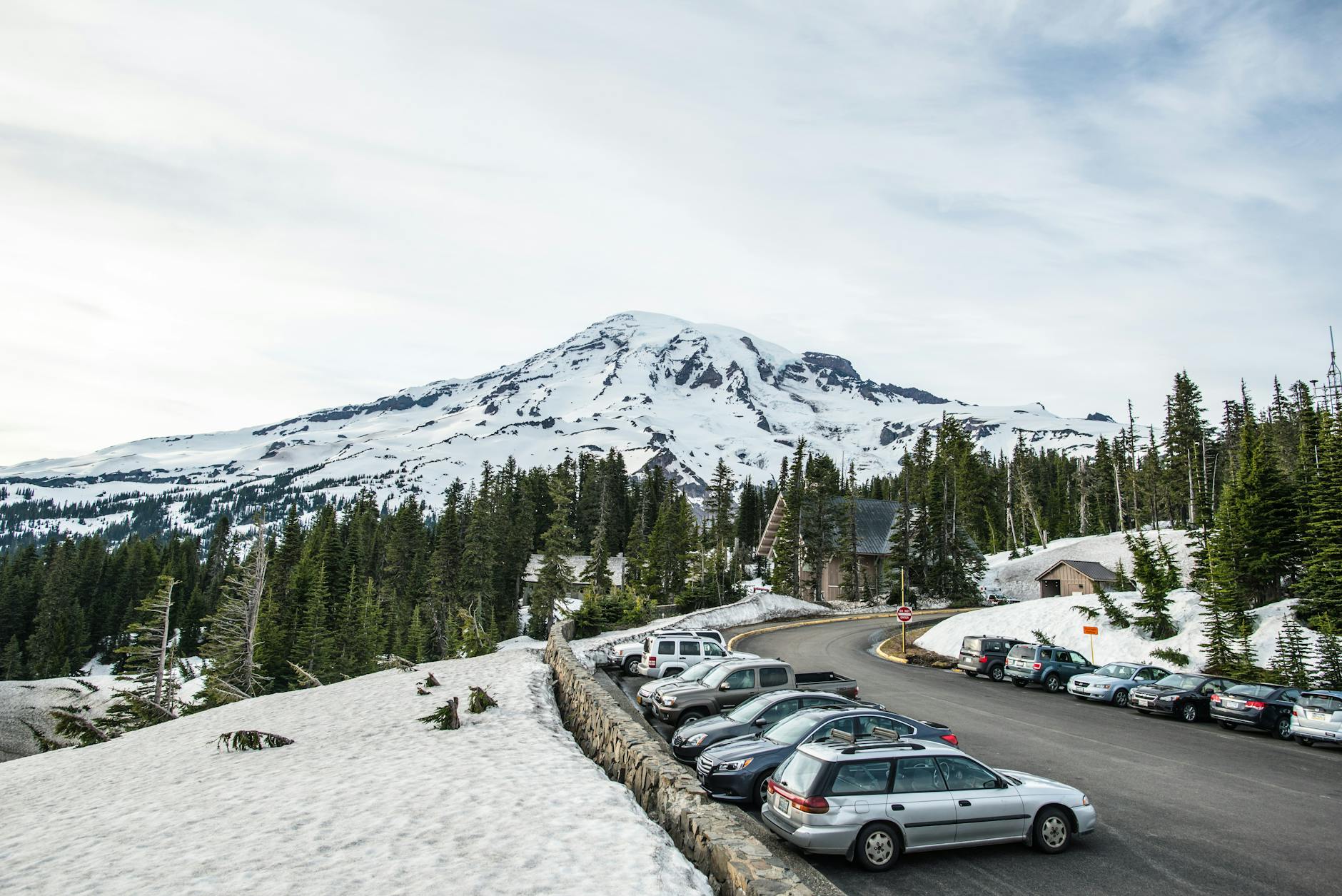
Photo by dumitru B on Pexels

Mount Rainier National Park: A First-Timer’s Guide

🌍 Plan & Book Your Trip

Compare the best deals for this destination β€” flights, hotels, tours and more:

Affiliate links β€” we may earn a commission at no extra cost to you.

Paradise in peak bloom β€” Mount Rainier’s 14,410-foot summit rising above subalpine meadows carpeted with lupine and paintbrush.

The first clear morning I spent at Paradise, I genuinely couldn’t process the scale of what I was looking at. Mount Rainier doesn’t just rise above the landscape β€” it dominates the entire sky, a 14,410-foot glaciated giant so massive it creates its own weather. Standing in a meadow of purple lupine with that white cathedral of ice and rock filling the horizon, I understood why locals simply call it “The Mountain.” If you’re looking for a practical Mount Rainier National Park guide for your first visit, I’ve hiked Paradise and Sunrise across two summers and learned exactly how to time a trip around the wildflowers, the crowds, and the famously fickle weather.

Mount Rainier National Park protects an active volcano in the Washington Cascades, about two hours southeast of Seattle. The mountain is the most glaciated peak in the contiguous United States, and its lower slopes burst into some of the most spectacular wildflower meadows on earth for a few precious weeks each summer. It’s a park of extremes β€” from old-growth rainforest at the base to permanent ice at the summit β€” and timing your visit right is the single biggest factor in how good your trip will be.

Key Takeaways

  • Timed entry reservations are required in peak summer for the Paradise and Sunrise corridors. Book at recreation.gov ahead of time.
  • The wildflower window is short β€” typically late July to mid-August at Paradise. This is THE time to go.
  • Paradise and Sunrise are the two must-visit areas. Paradise is open longest; Sunrise (the highest road) opens latest, usually early July.
  • The Skyline Trail at Paradise is the signature day hike β€” wildflowers, waterfalls, and Rainier looming overhead.
  • Weather is unpredictable. “The Mountain” is often hidden in clouds. Build in flexible days and check the forecast.
  • Best months: July through September. Snow lingers into July; many high areas close by October.
  • Start early. Paradise parking fills by mid-morning even with timed entry. Sunrise too.

Quick Facts

DetailInfo
LocationWest-central Washington (Cascade Range)
Summit elevation14,410 ft (4,392 m) β€” most glaciated peak in the lower 48
Drive from Seattle~2 hours to the Nisqually (SW) entrance
Drive from Portland~2.5 hours
Best monthsJuly–September (wildflowers peak late July–mid-Aug)
Timed entryRequired in peak summer (Paradise + Sunrise corridors)
Entrance fee$30/vehicle for 7 days (or America the Beautiful Pass)
Must-see areasParadise, Sunrise, Reflection Lakes, Grove of the Patriarchs
Signature hikeSkyline Trail (5.5-mile loop, Paradise)
Annual visitors~2.5 million

Getting to Mount Rainier

From Seattle: The most common gateway. It’s about a 2-hour drive to the Nisqually Entrance (southwest corner), which provides year-round access to Paradise. Sea-Tac Airport (SEA) is the nearest major airport.

From Portland: About 2.5 hours north, often entering via the southeast.

Park entrances:

  • Nisqually (southwest) β€” The main, year-round entrance; leads to Longmire and Paradise.
  • White River / Sunrise (northeast) β€” Seasonal; the road to Sunrise, the highest point you can drive to.
  • Stevens Canyon / Ohanapecosh (southeast) β€” Access to Reflection Lakes and the Grove of the Patriarchs.
  • Carbon River (northwest) β€” Remote, rainforest, limited access.
Getting around: You need a car β€” there’s no park shuttle. Distances between areas are significant, and roads wind slowly through the mountains.

The #1 thing first-timers don’t know: Mount Rainier “makes its own weather.” The mountain can be completely socked in clouds while it’s sunny 30 miles away. Always check the forecast, and if you have flexibility, save your Paradise day for the clearest weather window.

Understanding the Timed Entry System

To manage summer crowds, Mount Rainier introduced timed entry reservations for its two busiest corridors. Here’s the gist (always verify current rules at nps.gov/mora):

  • Two reservation areas: the Paradise Corridor and the Sunrise Corridor.
  • When: Required during peak summer season, typically daytime hours (e.g., 7 AM–3 PM).
  • Cost: A small reservation fee (around $2) on top of the park entrance fee.
  • Where to book: recreation.gov β€” released in advance, with a batch of next-day reservations released the evening before.
  • No reservation needed if you enter before or after the timed window, or if you have certain in-park lodging/camping/wilderness permits.
My strategy: Book your reservation the moment they’re released for your dates. If you miss out, enter early (before the window starts) β€” this also gets you the best parking and light. The early-entry loophole is the savviest move for photographers and serious hikers.

Paradise: The Heart of the Park

Paradise is the crown jewel of Mount Rainier β€” a high subalpine area (5,400 feet) famous for its wildflower meadows, waterfalls, and in-your-face views of the mountain. It’s where most first-timers spend the bulk of their time, and for good reason.

The Skyline Trail (The Signature Hike)

DetailInfo
Distance5.5 miles loop
Elevation gain~1,700 feet
DifficultyModerate-Hard
Best seasonMid-July–September (snow-free)
The Skyline Trail is the best day hike in the park, full stop. The loop climbs from the Paradise visitor area through wildflower meadows to Panorama Point, where you’re standing almost beneath Rainier’s glaciers β€” close enough to hear them cracking and groaning. On the way you’ll pass marmots, waterfalls, and (in season) endless carpets of lupine, paintbrush, and aster.

Tips:

  • Hike clockwise (uphill toward Panorama Point first) for the best progression of views.
  • Snow often lingers on the upper trail into mid-July β€” check conditions and bring microspikes if needed (see my winter gear guide for traction tips).
  • Move slowly β€” you’re at elevation, and it climbs fast.
  • Bring layers; weather changes in minutes up here.

Other Paradise Highlights

  • Myrtle Falls β€” A short, easy walk to a postcard waterfall with Rainier behind it.
  • Nisqually Vista Trail β€” An easy 1.2-mile loop with glacier views, great for families.
  • Alta Vista β€” A steep but short paved climb into the heart of the meadows.
  • Paradise Inn β€” A historic 1916 lodge worth a look (and a meal) even if you’re not staying.

Sunrise: The Highest You Can Drive

Sunrise sits at 6,400 feet on the northeast side β€” the highest point you can reach by car in the park. It opens latest (usually early July) because of heavy snow, but it offers a drier climate, fewer crowds than Paradise, and arguably the most expansive views of the mountain and its glaciers.

Best hikes from Sunrise:

  • Sourdough Ridge Trail β€” Easy ridgeline walk with panoramic views.
  • Mount Fremont Lookout β€” ~5.6 miles round trip to a historic fire lookout with sweeping views (and often mountain goats).
  • Sunrise Rim / Burroughs Mountain β€” A moderate hike onto a stark, tundra-like plateau facing the glaciers head-on.
Tips:
  • Sunrise Road opens later than Paradise β€” confirm the opening date before planning.
  • Bring layers; even in August it’s cold and windy up here.
  • The drive up is long and winding β€” allow time.

Reflection Lakes & Other Must-Sees

  • Reflection Lakes β€” Exactly what the name promises: on a calm morning, Rainier mirrors perfectly in the still water. It’s one of the most photographed spots in the park. Go early before wind ripples the surface.
  • Grove of the Patriarchs β€” A short trail (access varies β€” check status, as a footbridge has been damaged) through a grove of ancient, massive old-growth cedars and Douglas firs over 1,000 years old.
  • Christine Falls & Narada Falls β€” Roadside waterfalls framed by stone bridges, easy stops on the way to Paradise.
  • Tipsoo Lake β€” A gorgeous subalpine lake near Chinook Pass with wildflowers and reflections, on the park’s east side.

Best Time to Visit Mount Rainier

SeasonProsConsBest For
JulyWildflowers begin, everything opening, long daysSnow lingers on high trails early in month, Sunrise opens lateEarly wildflowers, waterfalls
Late July–mid-AugPEAK wildflowers, all trails open, warmestMost crowded, timed entry hardest to getWildflowers, Skyline Trail, photography
Late Aug–SeptFewer crowds, stable weather, still-open trailsWildflowers fading, coolerHiking, clearer skies, fewer people
OctoberFall color, solitudeHigh roads/areas closing, snow returningQuiet visits, lower-elevation color
Nov–MaySnowshoeing at Paradise, solitudeMost of park closed, Sunrise inaccessibleWinter sports, snowshoeing
The bottom line: For wildflowers and full access, target late July to mid-August. For fewer crowds with great hiking, September is a sweet spot.

Where to Stay

  • Inside the park: Paradise Inn (historic, seasonal) and National Park Inn at Longmire (year-round). Book months ahead β€” they fill fast.
  • Ashford β€” Just outside the Nisqually entrance; the most convenient base with cabins and lodges.
  • Packwood β€” Southeast side, good for accessing Reflection Lakes and the Ohanapecosh area.
  • Enumclaw β€” Northeast, the gateway to Sunrise.
  • Camping β€” Cougar Rock and Ohanapecosh are the main developed campgrounds; reserve early for summer.

What to Pack

  • Layers β€” it can be 75Β°F in the valley and 45Β°F with wind at Paradise
  • Rain shell β€” this is the Pacific Northwest; expect surprise weather
  • Sturdy hiking boots with good traction
  • Microspikes if hiking high trails early in the season (snow lingers)
  • Sun protection β€” high elevation + snow reflection = strong sun
  • Plenty of water and snacks
  • A headlamp for early starts or late returns
  • Your park pass and timed-entry reservation

Wildlife & Safety

Mount Rainier is home to black bears, mountain goats, marmots, deer, and elk. You’ll likely see marmots whistling in the meadows and possibly mountain goats near Sunrise. Keep your distance, never feed wildlife, and store food properly. On the trails, the bigger hazards are weather and snow β€” afternoon storms, lingering snowfields, and fast-changing visibility. Start early, carry layers, and turn back if conditions deteriorate. The glaciers and high routes above the day-hiking trails require mountaineering skills and permits β€” admire them from the trail.

A Quick Reflection

I’d budgeted three days at Mount Rainier, and “The Mountain” hid behind a thick wall of gray cloud for the first two. I hiked Paradise in a damp mist, never seeing more than the meadow at my feet, starting to wonder if I’d driven all this way to look at fog. Locals just shrugged and said, “That’s Rainier for you.”

On the third morning, I almost slept in. Instead, I dragged myself up to Reflection Lakes before sunrise out of stubbornness. As I stood there in the cold, the clouds began to lift β€” slowly, then all at once β€” and there it was: the entire mountain, glaciers glowing pink in the dawn light, mirrored flawlessly in the absolutely still lake. I was completely alone. Not another person, not a breath of wind, just me and 14,410 feet of ice and rock doubled in the water.

I stood there for an hour and barely took a photo. Some things you just want to watch. That morning taught me the real secret of Mount Rainier: the mountain reveals itself on its own schedule, so you build in the extra days and you get up early, every single morning, just in case today’s the day it decides to show off. When it does, it’s worth every gray hour of waiting.

Frequently Asked Questions

Before you go, check timed entry rules, road status, and conditions on the official Mount Rainier National Park site.

Final Thoughts

Mount Rainier is a park that rewards good timing and a little patience. Get the season right (late July to mid-August for wildflowers), book your timed entry early, build in flexible days for the weather, and you’ll witness one of the most spectacular alpine scenes in North America β€” meadows of wildflowers spilling out beneath a glacier-draped volcano.

Spend your core time at Paradise, hike the Skyline Trail, catch sunrise at Reflection Lakes, and if the road’s open, drive up to Sunrise for those vast glacier views. Carry layers, start early, and don’t get discouraged if the mountain hides for a day or two β€” that just makes the moment it reveals itself even more unforgettable.

Set the alarm. Watch the forecast. And when The Mountain finally comes out, you’ll understand exactly why Washingtonians are so obsessed with it.

Planning your Washington adventure? Use our Trip Planner to organize your hike list, time the wildflowers, and plan around the weather.

Related Reading:

✈️ Planning your trip?

Compare cheap flights, hotels and car rentals for your adventure.

Find Cheap Flights →Compare Hotels →

🌍 Plan & Book Your Trip

Compare the best deals for this destination β€” flights, hotels, tours and more:

Affiliate links β€” we may earn a commission at no extra cost to you.

Leave a Comment

Your email address will not be published. Required fields are marked *

Scroll to Top