Death Valley National Park: First-Timer’s Guide
🌍 Plan & Book Your Trip
Compare the best deals for this destination — flights, hotels, tours and more:
Affiliate links — we may earn a commission at no extra cost to you.
Badwater Basin — the lowest point in North America at 282 feet below sea level. Those polygonal salt formations stretch for miles in every direction.
The first time I stepped out of my car at Badwater Basin, the heat hit me like opening an oven door — except the oven was the entire sky. It was only March, barely cracking 95°F, and I already understood why this place holds the record for the highest air temperature ever reliably recorded on Earth (134°F in 1913). If you’re looking for a complete death valley national park guide, you’ve found it. I made every first-timer mistake so you don’t have to — from underestimating distances to nearly running out of gas on a remote dirt road.
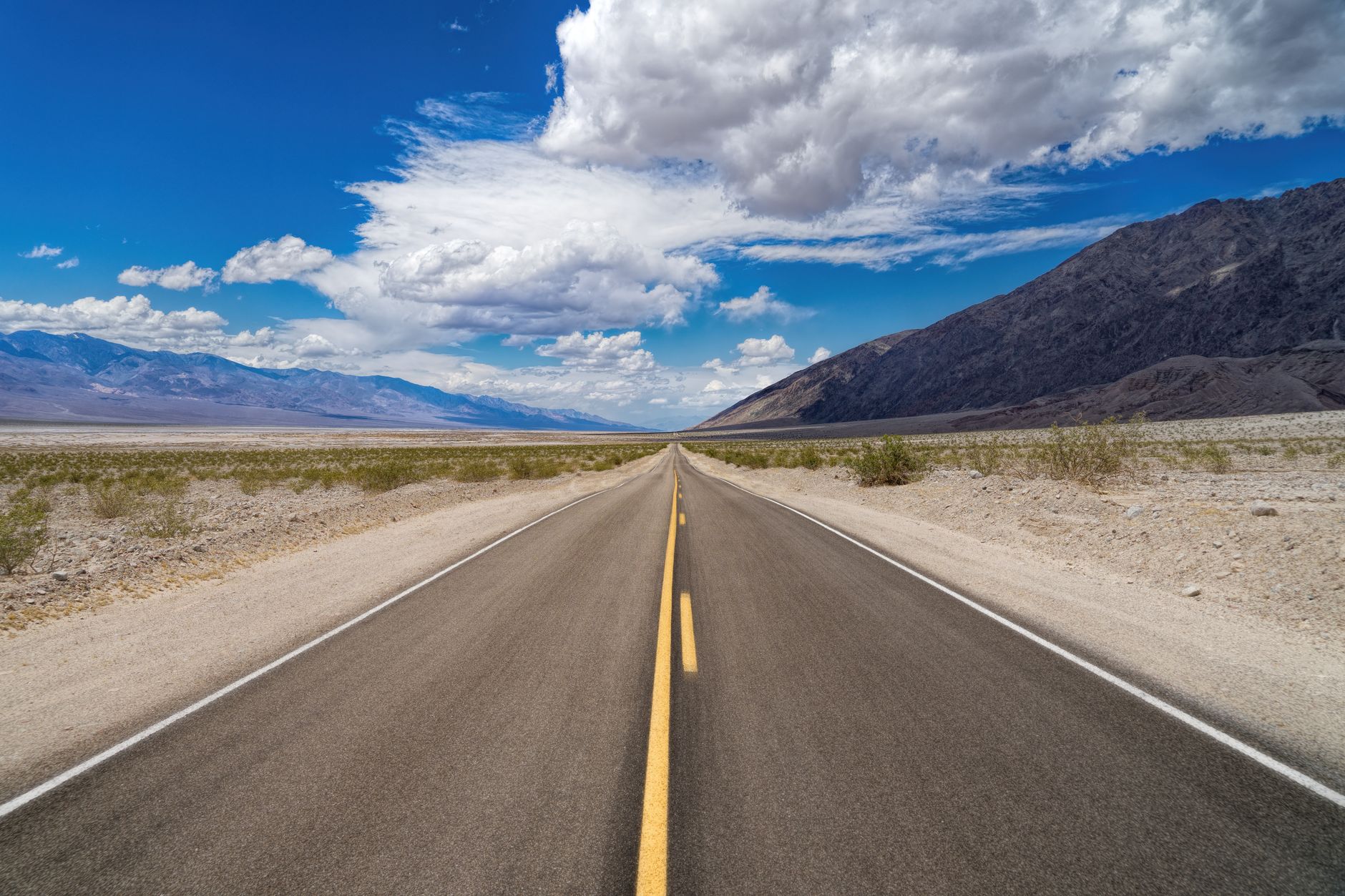
Death Valley is a land of superlatives: the hottest, driest, and lowest national park in North America. It’s also, paradoxically, one of the most stunningly beautiful. Golden sand dunes rippling against a sunrise sky. Badwater’s infinite salt flats glowing pink at sunset. Zabriskie Point’s eroded mudstone looking like another planet entirely. And in spring, if the rains cooperate, carpets of wildflowers explode across the desert floor.
But this park demands respect. It can genuinely kill you if you’re unprepared. Let me show you how to experience it safely and spectacularly.
Key Takeaways
- Visit November through March. Summer temperatures regularly exceed 120°F — genuinely life-threatening for outdoor activities.
- Carry at least 1 gallon of water per person per hour for any hiking in warm conditions.
- Fill your gas tank before entering. Gas stations are 50-100+ miles apart inside the park.
- Badwater Basin, Mesquite Dunes, Zabriskie Point, Artist’s Drive, and Dante’s View are the five must-see stops.
- The park is massive — 3.4 million acres, larger than Connecticut. Plan driving distances carefully.
- Cell service is essentially nonexistent throughout 95% of the park.
- Free entry with America the Beautiful Pass. Otherwise $30 per vehicle for 7 days.
- Furnace Creek is the hub — the only area with reliable gas, food, lodging, and a visitor center.
Quick Facts
| Detail | Info |
|---|---|
| Location | Eastern California (Inyo County), bordering Nevada |
| Size | 3.4 million acres (largest NP outside Alaska) |
| Lowest point | Badwater Basin: -282 ft (-86 m) below sea level |
| Highest point | Telescope Peak: 11,049 ft (3,368 m) |
| Record high temp | 134°F (56.7°C) — July 10, 1913 |
| Average annual rainfall | Less than 2 inches |
| Best months | November–March (60-80°F daytime) |
| Entrance fee | $30/vehicle for 7 days (or America the Beautiful Pass) |
| Nearest major city | Las Vegas, NV (2 hours) |
| Gas inside park | Only at Furnace Creek & Stovepipe Wells |
| Cell service | Minimal — only near Furnace Creek, if at all |
| Campgrounds | 9 total (Furnace Creek the most popular) |
Why Death Valley Deserves Your Bucket List
I’ll admit — before visiting, I thought Death Valley would be “just desert.” A barren wasteland you drive through between Vegas and the Sierra Nevada. I was spectacularly wrong.
Death Valley contains more geological diversity per square mile than almost any national park I’ve visited. Within a single day, you can stand on salt flats 282 feet below sea level, hike golden sand dunes, drive through a canyon painted in every color of the rainbow, and look down from a viewpoint at 5,475 feet where the entire valley sprawls below you like a topographic map come to life.
The park’s extreme isolation means some of the darkest night skies in the Lower 48 — the Milky Way here is so bright it casts shadows. And because so few people visit compared to parks like Yosemite or Zion, you’ll often have entire landscapes to yourself.
The 5 Must-See Stops (In Order of Priority)
1. Badwater Basin — The Lowest Point in North America
What: A vast salt flat at 282 feet below sea level — the lowest point in the Western Hemisphere. The salt forms into geometric polygon shapes that stretch to the horizon.
Why it’s incredible: The scale is incomprehensible. You walk out onto the white salt flats, and the mountains seem to get no closer no matter how far you go. Look up at the cliff behind the parking lot — there’s a small sign marking “Sea Level” that really drives home how far below the ocean you are.
Tips:
- Visit at sunrise or sunset for the best light and cooler temperatures.
- Walk at least 15-20 minutes out onto the flats — most tourists stop at the boardwalk edge and miss the best formations.
- The salt is sturdy enough to walk on (it’s several feet thick), but avoid any areas that look wet or muddy.
- Bring way more water than you think — even in winter, the reflected heat off the salt is intense.
2. Mesquite Flat Sand Dunes
What: A photogenic field of golden sand dunes right off the highway near Stovepipe Wells. The tallest dune (Star Dune) reaches about 100 feet.
Why it’s incredible: These dunes look like they belong in the Sahara. At sunrise, the low-angle light creates dramatic shadows between the dune ridges, and the Panamint Mountains provide a stunning backdrop. If you’re lucky, you’ll spot animal tracks crisscrossing the virgin sand from overnight visitors — sidewinder rattlesnakes, kit foxes, and kangaroo rats.
Tips:
- Sunrise is mandatory. The light is magical, the sand is cool enough to walk barefoot, and you’ll have the dunes nearly to yourself.
- There’s no trail — just walk toward the dunes from the parking lot (about 10 minutes to the first dunes, 45 minutes to the tallest).
- Bring shoes you don’t mind getting sandy. Sand gets everywhere.
- Don’t underestimate the distance — Star Dune looks close but takes 45-60 minutes to reach.
- Never hike here in summer — sand surface temperatures can exceed 200°F.
3. Zabriskie Point
What: A viewpoint overlooking an otherworldly landscape of eroded mudstone badlands. The formations are golden, tan, and brown, with deep erosion channels creating a miniature mountain range.
Why it’s incredible: This might be the most “alien planet” landscape in any US national park. The mudstone formations are remnants of an ancient lake (Furnace Creek Lake, which dried up 5 million years ago), and erosion has carved them into surreal shapes. At sunrise, the entire landscape glows gold.
Tips:
- Sunrise is the classic time — arrive 30 minutes before sunrise for parking.
- It’s a short paved walk from the parking lot (2 minutes) — fully accessible.
- For a deeper experience, hike the Badlands Loop (2.5 miles) which starts from the Zabriskie Point parking area and winds through the formations themselves.
- Sunset works too, but the light isn’t as dramatic as sunrise here.
4. Artist’s Drive and Artist’s Palette
What: A scenic one-way drive through a narrow canyon with hillsides painted in vivid colors — greens, purples, reds, pinks, and golds — caused by different mineral oxidation.
Why it’s incredible: The colors are genuinely surprising. You round a corner and suddenly an entire hillside is mint green (from decomposing mica) next to deep purple (manganese) next to red (iron oxide). Artist’s Palette, the most colorful section, looks like someone spilled paint across the mountains.
Tips:
- The drive is one-way (heading south to north), about 9 miles total. Allow 30-60 minutes.
- Afternoon light is best for the colors — morning has the hills in shadow.
- There’s a short paved pullout at Artist’s Palette — park and walk a few hundred yards for closer views.
- RVs and vehicles over 25 feet are prohibited (narrow road with tight turns).
5. Dante’s View
What: A viewpoint at 5,475 feet looking straight down at Badwater Basin and across to the Panamint Range. On clear days, you can see both the lowest point in North America (-282 ft) and the highest point in the Lower 48 (Mt. Whitney, 14,505 ft) simultaneously.
Why it’s incredible: The elevation contrast is staggering. You’re standing at 5,475 feet looking down at a point nearly a mile below sea level. The entire valley floor stretches out like a satellite image. It’s the single best viewpoint for understanding Death Valley’s scale and geology.
Tips:
- The drive to Dante’s View is 25 minutes from the main valley road (13 miles, winding but paved).
- Sunset is spectacular — the valley fills with golden light and shadows.
- It’s significantly cooler up here (15-20°F less than the valley floor) — bring a layer.
- The parking lot has been expanded but fills on holiday weekends. Arrive 45 minutes before sunset.
- Wind can be fierce — hold onto hats and loose items.
Best Hikes in Death Valley
Easy Hikes (Under 3 Miles)
| Hike | Distance | Difficulty | Highlights |
|---|---|---|---|
| Natural Bridge | 1 mile RT | Easy | Walk through a natural stone arch in a narrow canyon |
| Salt Creek Interpretive Trail | 0.5 miles RT | Easy (boardwalk) | Desert pupfish in a desert creek — yes, real fish |
| Golden Canyon | 2 miles RT | Easy-Moderate | Red cathedral walls, connects to Zabriskie Point |
| Harmony Borax Works | 0.5 miles RT | Easy | Historic borax mining ruins |
| Mesquite Dunes | 2 miles RT (variable) | Easy-Moderate | Wander the sand dunes freestyle |
Moderate to Challenging Hikes
| Hike | Distance | Difficulty | Highlights |
|---|---|---|---|
| Mosaic Canyon | 4 miles RT | Moderate | Polished marble walls, narrow slot sections |
| Golden Canyon to Zabriskie | 6 miles RT | Moderate | Full badlands traverse — best hike in the park |
| Wildrose Peak | 8.4 miles RT | Strenuous | Pinyon pine forest to panoramic summit views |
| Telescope Peak | 14 miles RT | Very Strenuous | Highest point in the park — 11,049 feet |
Extreme Heat Safety — This Is Not Optional
I need to be blunt here: Death Valley can kill you. Every year, tourists underestimate the heat and end up in serious medical emergencies. The park averages several heat-related deaths per year, and many more rescue evacuations.
Temperature Reality Check
| Month | Average High (Valley Floor) | Hiking Viability |
|---|---|---|
| November | 77°F (25°C) | Excellent — prime hiking season |
| December | 65°F (18°C) | Excellent — perfect conditions |
| January | 67°F (19°C) | Excellent — can be cold at night |
| February | 73°F (23°C) | Excellent — wildflower potential |
| March | 82°F (28°C) | Good — getting warm by afternoon |
| April | 92°F (33°C) | Fair — early morning hikes only |
| May | 102°F (39°C) | Limited — very short hikes only |
| June | 114°F (46°C) | Dangerous — no hiking recommended |
| July | 120°F (49°C) | Extreme danger — stay in vehicle/AC |
| August | 119°F (48°C) | Extreme danger — stay in vehicle/AC |
| September | 110°F (43°C) | Dangerous — no hiking recommended |
| October | 95°F (35°C) | Fair — early morning hikes only |
Non-Negotiable Safety Rules
- Carry 1 gallon (4 liters) of water per person per hour of hiking in temperatures above 90°F.
- Never hike after 10 AM from May through September. Ground temperatures exceed 200°F.
- Tell someone your plans. Cell service doesn’t exist here. If your car breaks down on a remote road, nobody knows.
- Keep your gas tank above half full at all times inside the park.
- Carry extra water in your car — minimum 2 gallons per person beyond what you’ll drink hiking.
- If your car breaks down in summer: Stay with your vehicle. It’s visible from the air and provides shade. People who wander away from broken-down cars are the ones who don’t make it.
- Know the signs of heat exhaustion: dizziness, nausea, headache, cessation of sweating. If you stop sweating in the heat, you’re in an emergency.
When to Visit Death Valley
Best Time: November through March
This is when Death Valley transforms from a survival challenge into a genuinely pleasant destination. Daytime temperatures hover between 60-80°F — perfect for hiking, photography, and exploring. Nights drop into the 40s-50s (bring warm layers for stargazing).
Peak season: November through February. Hotels fill up, especially around holidays. Book Furnace Creek Ranch or The Inn at Death Valley weeks or months in advance.
Wildflower Season: February through April
If winter rains are generous, Death Valley can erupt in one of nature’s greatest shows — a “superbloom” where millions of wildflowers carpet the desert floor. This doesn’t happen every year (maybe once every 5-10 years for a true superbloom), but when it does, it’s worth rearranging your entire schedule to witness.
Check the NPS wildflower reports starting in January for updates.
Summer: June through September (Avoid)
Unless you specifically want to experience “hottest place on Earth” bragging rights, avoid summer entirely. You’ll be limited to air-conditioned drives between viewpoints. No hiking. No comfortable outdoor time. Just punishing, dangerous heat.
Exception: Summer can work for a quick overnight if you focus only on Dante’s View (cooler at elevation), early morning dune walks (before 7 AM), and scenic drives with the AC blasting.
Planning Your Death Valley Trip
How Many Days Do You Need?
| Trip Length | What You’ll See | Best For |
|---|---|---|
| 1 day (from Vegas) | Badwater, Zabriskie, Dunes — rushed | Day-trippers who want highlights |
| 2 days / 1 night | All 5 must-sees + 1-2 hikes | Most first-timers — ideal minimum |
| 3 days / 2 nights | Everything above + remote areas (Racetrack, Titus Canyon) | Photography enthusiasts |
| 4+ days | Full exploration including Telescope Peak, Scotty’s Castle area | Dedicated nature lovers |
Sample 2-Day Itinerary
Day 1:
- Sunrise at Zabriskie Point (arrive 30 min before sunrise)
- Morning hike: Golden Canyon to Red Cathedral (2-4 miles)
- Late morning: Artist’s Drive
- Afternoon: Badwater Basin (less hot than midday in the open)
- Sunset: Dante’s View
- Sunrise at Mesquite Flat Sand Dunes
- Morning: Mosaic Canyon hike
- Midday: Stovepipe Wells area, Salt Creek
- Afternoon: Drive through the park, stop at pullouts
- Depart toward Las Vegas or continue to Eastern Sierra
Where to Stay
Inside the park:
- The Inn at Death Valley — Historic luxury hotel at Furnace Creek. Pool, restaurants, palm oasis. $$$$
- The Ranch at Death Valley — More affordable ranch-style rooms at Furnace Creek. Pool. $$$
- Stovepipe Wells Village — Basic but clean motel rooms with a pool and restaurant. $$
- Panamint Springs Resort — Remote western edge of park. Basic rooms + gas station. $$
- Furnace Creek Campground — Most popular, reservable (Oct-Apr). Water, flush toilets. $22/night.
- Sunset Campground — Near Furnace Creek, first-come-first-served. $14/night.
- Texas Spring — Slightly higher elevation (sea level), quieter. $16/night.
- Stovepipe Wells — Near the dunes. First-come. $14/night.
- Free dispersed camping — Several remote options (Emigrant, Wildrose, Thorndike).
- Beatty, NV (7 miles from east entrance) — Several budget motels, gas, restaurants.
- Lone Pine, CA (west side) — If combining with Mt. Whitney or Eastern Sierra.
- Las Vegas (2 hours) — If you prefer to base out of the city for a day trip.
Getting There
- From Las Vegas: 2 hours via NV-160 and Death Valley Junction. The most common approach.
- From Los Angeles: 4-5 hours via I-15 to Baker, then north on CA-127. Or via Lone Pine (395) for the western approach.
- From Yosemite / Eastern Sierra: 4 hours via US-395 south and CA-190 east (Panamint Springs entrance).
A Quick Reflection
On my second night in Death Valley, I drove to a random pullout about 20 miles from Furnace Creek, turned off my headlights, and stepped outside. The darkness was absolute — like being blindfolded. For about 30 seconds, I couldn’t see anything.
Then my eyes adjusted, and the Milky Way appeared. Not the faint smear you see from most places, but a thick, textured river of light so bright and detailed that I could see the dark dust lanes running through it. Individual stars became thousands, then millions. I could see the Andromeda galaxy — 2.5 million light-years away — as a visible fuzzy patch with my naked eye.
I sat on the still-warm hood of my car for over an hour, watching satellites drift, seeing two meteors streak across the sky, and feeling genuinely small in a way that was more comforting than scary. In our connected, illuminated, always-buzzing world, there’s something profoundly restorative about standing in a place with no cell signal, no artificial light, and 3.4 million acres of silence.
Death Valley isn’t just about surviving the heat. It’s about finding beauty in extremes — learning that the harshest places on Earth often hold the most unexpected gifts.
Beyond the Highlights: Hidden Gems
Titus Canyon (One-Way Dirt Road)
A 27-mile one-way dirt road descending through a narrow, dramatic canyon with vertical walls. Passable for most high-clearance vehicles (2WD OK when dry). Takes 2-3 hours. Ghost town of Leadfield along the route.
The Racetrack Playa
A dry lake bed famous for its “sailing stones” — rocks that mysteriously move across the flat surface, leaving trails behind them. The mystery was solved in 2014 (thin ice sheets push them during rare rain/freeze events), but seeing the stones and their tracks is still surreal. Requires 27 miles of rough washboard road (high clearance required, 4WD recommended). Takes a full day.
Ubehebe Crater
A massive volcanic crater (half-mile wide, 600 feet deep) that formed as recently as 2,000-7,000 years ago. You can walk the rim or hike down into the crater. Located in the northern section of the park — combine with the Racetrack trip.
Darwin Falls
A genuine year-round waterfall in the middle of the desert. A 2-mile round-trip hike leads to a lush oasis with a 20-foot cascade — completely unexpected in this landscape. Located near Panamint Springs.
Frequently Asked Questions
Before you go, check fees, road status, and extreme-heat warnings on the official Death Valley National Park site.
Final Thoughts
Death Valley isn’t the park you visit for lush forests, rushing waterfalls, or shady mountain trails. It’s the park you visit to experience landscape at its most extreme and elemental — to stand in places where the Earth’s geology is laid bare without any vegetation to soften it. It’s raw, vast, humbling, and surprisingly beautiful.
Visit in winter or early spring. Bring more water than you think you need. Fill your gas tank obsessively. And give yourself at least two days to let this landscape sink in. The first time you stand on Badwater’s salt flats at sunset, watching the mountains turn purple and the sky explode in color, you’ll understand why this “wasteland” draws millions of visitors.
Just don’t come in July unless you have a very specific reason. Trust me on that one.
Planning your Death Valley trip? Use our Trip Planner to organize your itinerary, track must-see stops, and budget your time across this massive park.
Related Reading:
- Best Hikes Near Las Vegas — More desert adventures within driving distance
- Joshua Tree National Park Guide — Another stunning desert park nearby
- Best Budget Hiking Gear Under $50 — Affordable gear for your next adventure
- 15 Best National Park Hikes in America — Our top picks across the US
✈️ Planning your trip?
Compare cheap flights, hotels and car rentals for your adventure.
Find Cheap Flights →Compare Hotels →🌍 Plan & Book Your Trip
Compare the best deals for this destination — flights, hotels, tours and more:
Affiliate links — we may earn a commission at no extra cost to you.