Olympic National Park: A Rainforest, Beach & Mountain Guide
🌍 Plan & Book Your Trip
Best deals powered by Travelpayouts:
Affiliate links — no extra cost to you.
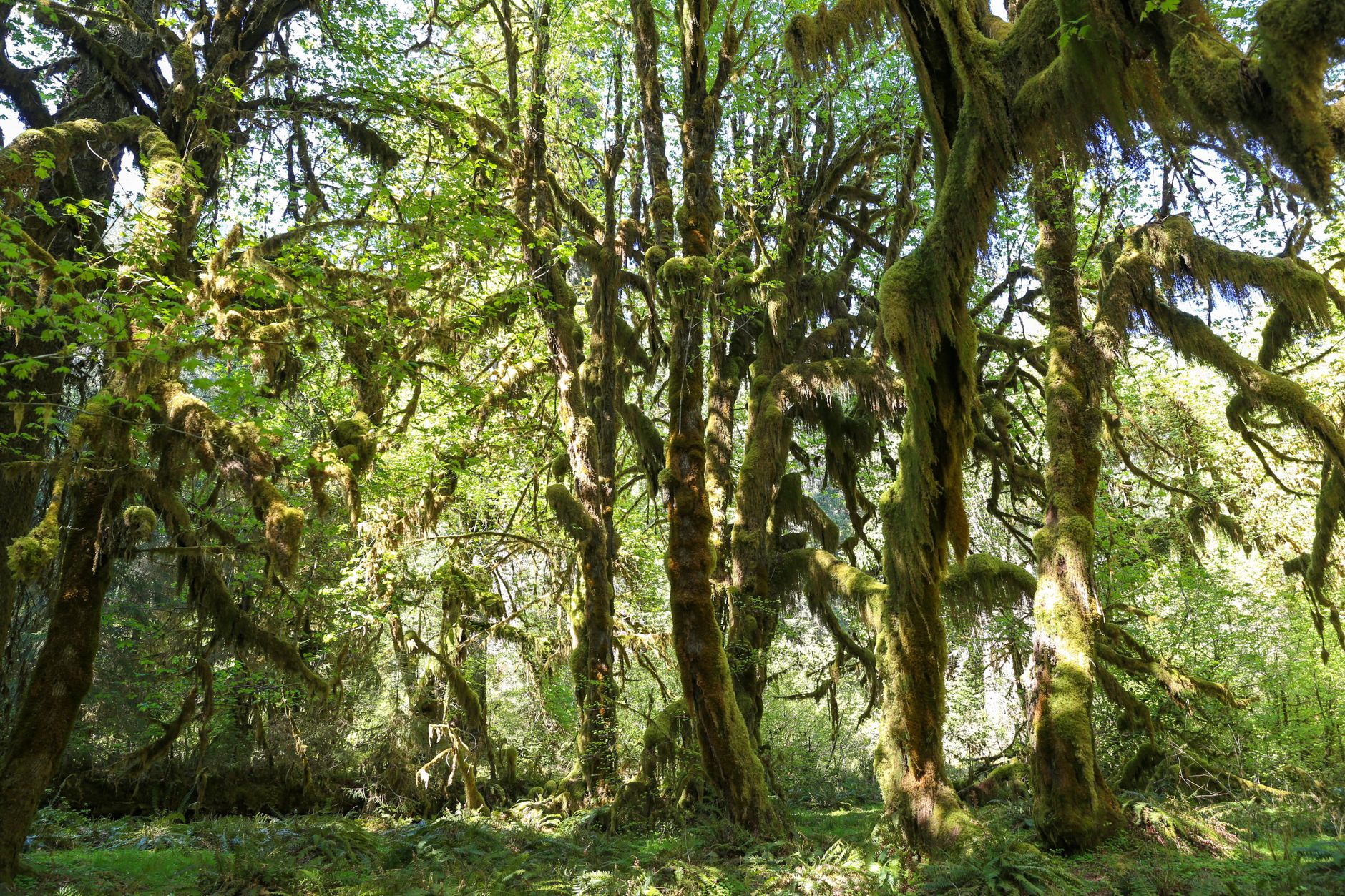
The Hall of Mosses in Olympic’s Hoh Rainforest — one of the greenest places in America.
Most national parks do one thing really well. Yosemite does granite valleys. Zion does slot canyons. The Smokies do misty forests. But Olympic? Olympic does everything. This olympic national park guide exists because I spent my first trip there completely overwhelmed — three ecosystems, dozens of trails, and no clue where to start. I don’t want that for you.
Here’s what makes Olympic genuinely unique among all 63 US national parks: within a single day, you can walk through a temperate rainforest dripping with moss, stand on a wild Pacific beach watching waves crash against sea stacks, and drive up to an alpine ridge with views of glaciated peaks. Three parks in one. No other park in the country offers that kind of variety.
Key Takeaways
- Olympic is essentially three parks in one: temperate rainforest, Pacific coastline, and alpine mountains.
- The park is spread out — you can’t see everything in one day. Plan at least 3-4 days.
- Hoh Rainforest is the star attraction but gets crowded; arrive before 9 AM or visit Quinault instead.
- Hurricane Ridge gives you alpine views with minimal hiking effort.
- The Pacific coast beaches (Rialto, Ruby, Second Beach) are wild, rugged, and nothing like California beaches.
Quick Facts
| Detail | Info |
|---|---|
| Location | Olympic Peninsula, Washington State |
| Park size | 922,000+ acres |
| Entrance fee | $30 per vehicle (7-day pass) |
| Best months | June–September (driest) |
| Annual rainfall (Hoh) | 140–170 inches |
| Nearest major city | Seattle (2.5–3 hours to park entrances) |
| Lodging in park | Kalaloch Lodge, Sol Duc Hot Springs Resort, Log Cabin Resort |
| Cell service | Very limited throughout; almost none in rainforest |
Understanding Olympic’s Layout: Three Parks in One
The first thing you need to understand about Olympic is that it’s shaped like a giant circle with roads only around the edges. There’s no road cutting through the middle — the interior is pure wilderness accessible only by trail.
This means you’ll be driving around the park to reach different areas. The Hoh Rainforest entrance is a solid 2-hour drive from Hurricane Ridge, even though they’re only about 30 miles apart as the crow flies. Mountain roads, switchbacks, and small-town speed limits add up.
The three zones:
- Rainforest (west side): Hoh, Quinault, and Queets river valleys. Lush, green, dripping, magical.
- Coast (west side, lower): Rialto Beach, Ruby Beach, Second Beach, Kalaloch. Wild Pacific coastline with sea stacks, tidepools, and driftwood.
- Mountains (north/interior): Hurricane Ridge, Deer Park, alpine meadows, glaciers. Snow-capped peaks and wildflower fields.
The Hoh Rainforest: America’s Green Cathedral
This is what most people picture when they think of Olympic National Park — and honestly, it lives up to the hype. The Hoh Rainforest is one of the largest temperate rainforests in the United States, and walking through it feels like stepping into another world.
Everything is green. The trees are green. The ground is green. The air feels green. Massive Sitka spruce and western red cedars tower overhead while club moss drapes from every branch like nature’s curtains. The forest floor is carpeted in ferns, and nurse logs (fallen trees that become nurseries for new growth) line the trail.
Hall of Mosses Trail
| Detail | Info |
|---|---|
| Distance | 0.8 miles (loop) |
| Elevation | Essentially flat |
| Difficulty | Easy — accessible for all ages |
| Time | 30–60 minutes |
My tip: Arrive before 9 AM or you’ll share this narrow trail with tour buses worth of people. The morning mist makes it even more atmospheric — there’s a reason photographers flock here at dawn.
Spruce Nature Trail
| Detail | Info |
|---|---|
| Distance | 1.2 miles (loop) |
| Elevation | Minimal |
| Difficulty | Easy |
| Time | 45–75 minutes |
Hoh River Trail (Longer Option)
For hikers wanting more, the Hoh River Trail continues deep into the park — all the way to the base of Mount Olympus (17.3 miles one way). But even hiking the first 2-3 miles gives you a quieter, less tourist-packed rainforest experience. You’ll leave the crowds behind within the first mile.
Quinault Rainforest: The Less-Crowded Alternative
If Hoh is too packed (and on summer weekends, it absolutely can be), drive south to the Quinault Rainforest. It’s the same ecosystem with fewer people. The Quinault Rain Forest Nature Trail loop is an easy 0.5-mile walk, and the longer Graves Creek trails take you deeper. Plus, the historic Lake Quinault Lodge makes a beautiful base.
Hurricane Ridge: Alpine Views Made Easy
On the completely opposite end of the Olympic spectrum, Hurricane Ridge gives you above-the-treeline alpine scenery — snow-capped peaks, wildflower meadows, and views stretching to the Strait of Juan de Fuca and even Canada on clear days.
The best part? You can drive to 5,242 feet elevation and get these views with barely any hiking at all. The visitor center parking lot itself has panoramic mountain views. But the trails up here are fantastic if you want to explore.
Hurricane Hill Trail
| Detail | Info |
|---|---|
| Distance | 3.2 miles round trip |
| Elevation change | 700 feet |
| Difficulty | Moderate (paved first section, dirt trail second) |
| Time | 1.5–2.5 hours |
My tip: Come for sunset. The road stays open late in summer, and watching the sun drop behind the Olympic peaks from up here is unforgettable. Bring layers — it’s significantly colder at elevation, especially once the sun goes down.
Sunrise Point & Cirque Rim Trail
For a shorter walk, the Cirque Rim Trail (0.5 miles) and the paved paths around the visitor center offer stunning views for minimal effort. You can also drive to Sunrise Point (different from Mt. Rainier’s Sunrise — confusing, I know) for views east toward the Elwha Valley.
Getting to Hurricane Ridge
The road to Hurricane Ridge starts in Port Angeles and climbs 17 miles with switchbacks. It takes about 45 minutes from town. In winter, the road is only open Friday-Sunday (weather permitting) and chains may be required. In summer, it’s open daily — but the parking lot fills by 10 AM on weekends.
Winter bonus: Hurricane Ridge has a small ski area — one of only three lift-served ski areas inside a national park. It’s tiny and charming, with rope tows and a small lodge.
The Pacific Coast: Wild Beaches Like Nowhere Else
Forget everything you know about “beach days.” Olympic’s coastline is raw, dramatic, and untamed. Massive driftwood logs pile on rocky shores. Sea stacks rise from the surf like ancient sentinels. Bald eagles soar overhead. The water is freezing cold, the waves are powerful, and you’ll likely be wearing a rain jacket, not a swimsuit.
It’s absolutely magnificent.
Rialto Beach to Hole-in-the-Wall
| Detail | Info |
|---|---|
| Distance | 3 miles round trip (to Hole-in-the-Wall) |
| Elevation | Beach level — flat |
| Difficulty | Easy-moderate (walking on rocks/sand) |
| Time | 1.5–3 hours |
Critical tip: Check tide tables before going. Hole-in-the-Wall is only accessible at low tide. At high tide, the water comes right up to the cliff face and you can’t reach it (or worse, you get trapped). The park posts tide charts at the trailhead.
The tidepools here are incredible — sea stars, anemones, crabs, and all kinds of marine life in the rocky pools. Bring kids (and adults) who love marine biology.
Ruby Beach
The most photographed beach in Olympic, and for good reason. Sea stacks (tall rocky islands just offshore), piles of driftwood, and Abbey Island create a constantly changing composition. It’s a short walk from the parking lot — just down a forested trail for about 0.2 miles to the beach.
Come at sunset for golden light on the sea stacks. Come at low tide for tidepools. Come in a storm for raw Pacific power (but stay back from the waves — sneaker waves are real and deadly on this coast).
Second Beach
| Detail | Info |
|---|---|
| Distance | 1.4 miles round trip |
| Elevation change | About 100 feet (forest trail drops to beach) |
| Difficulty | Easy |
| Time | 1–2 hours |
This is also a popular overnight backpacking beach (permit required for camping), so you might see tents along the tree line.
Sol Duc Falls & Hot Springs: The Perfect Rest Day
After days of hiking, nothing beats soaking in naturally heated mineral water surrounded by old-growth forest. Sol Duc Hot Springs Resort sits inside the park and offers developed hot spring pools (not wild — these are maintained pools fed by natural springs).
Sol Duc Falls Trail
| Detail | Info |
|---|---|
| Distance | 1.6 miles round trip |
| Elevation | ~200 feet |
| Difficulty | Easy |
| Time | 45 minutes–1 hour |
My tip: Combine the falls hike with an afternoon soak at the hot springs (about $15 for day use, last I checked — verify pricing). The pools range from warm to hot, and the forest setting makes it feel like a natural spa. It’s the perfect way to recover after bigger hikes earlier in the trip.
Lover’s Lane Loop
If you want a longer walk in the Sol Duc area, the Lover’s Lane Loop (5.8 miles) connects the resort to Sol Duc Falls and back via the opposite riverbank. It’s gentle, forested, and rarely crowded.
How Many Days Do You Need?
Here’s my honest recommendation based on having visited Olympic twice:
| Duration | What You Can See |
|---|---|
| 1 day | Pick ONE zone: Hurricane Ridge OR Hoh Rainforest OR coast. Don’t try to combine. |
| 2 days | Two zones. Example: Day 1 = Hurricane Ridge + Port Angeles. Day 2 = Hoh Rainforest. |
| 3 days | Three zones done right. One day each for rainforest, coast, and mountains. |
| 4-5 days | The ideal. Add Sol Duc, Quinault, longer hikes, and time to just be in these places. |
Where to Stay: Base Camp Strategy
The Olympic Peninsula doesn’t have a single hub — you’ll likely move between bases unless you’re okay with long drives. Here’s my strategy:
Option 1: Port Angeles base (north)
- Best for: Hurricane Ridge, easy access from Seattle ferry
- Stay: Downtown motels/Airbnbs, or Olympic Lodge
- Downside: 1.5-2 hours to Hoh Rainforest or coast
- Best for: Hoh Rainforest and coastal beaches
- Stay: Motels in Forks or cabins nearby
- Downside: 1+ hour to Hurricane Ridge
- Night 1-2: Port Angeles (Hurricane Ridge area)
- Night 3: Forks or Kalaloch (rainforest + coast)
- Night 4: Sol Duc area or back to Port Angeles for departure
- Kalaloch Lodge — Right on the coast. Oceanfront cabins with crashing waves. Book months ahead.
- Sol Duc Hot Springs Resort — Cabins in the forest with hot spring access.
- Log Cabin Resort — On Lake Crescent. Rustic, beautiful, quieter.
Weather & What to Pack
Let me be blunt: it rains. A lot. The Hoh Rainforest gets 12+ feet of rain annually. The coast is perpetually misty. Even in summer “dry season,” you’ll encounter drizzle, fog, and damp conditions.
Essential packing list:
- Rain jacket (non-negotiable, even in July/August)
- Waterproof hiking boots or trail runners
- Layers — temperatures vary wildly between coast (50s), rainforest (60s), and ridge (40s-50s)
- Gaiters or waterproof pants for rainy days
- Quick-dry everything
- Camera with lens cloth (the mist gets on everything)
A Quick Reflection
My first Olympic trip was a disaster — and I mean that in the most educational way possible. I tried to do the whole park in two days. Day one: Hurricane Ridge in the morning, Hoh Rainforest in the afternoon. I spent 4 hours driving and had maybe 2 hours actually on trails.
Day two I was smarter. I stayed near Forks, woke up early, and gave the Hoh Rainforest the time it deserved. I walked Hall of Mosses at 7 AM in thick fog, completely alone. The moss dripped. The forest creaked. A Roosevelt elk walked across the trail 20 feet in front of me and barely acknowledged my existence.
That’s when I understood Olympic. It’s not a park you conquer — it’s a park you surrender to. Slow down. Let the moss do its thing. Listen to the river. Stand on the coast and watch the waves reshape the driftwood. This place rewards patience, not speed.
When I came back for my second trip, I spent four full days. I soaked in Sol Duc. I watched sunset at Ruby Beach three nights in a row (it was different every time). I hiked into the Hoh River valley past where the tourists stop. That trip is still one of my favorite travel experiences, anywhere in the world.
Frequently Asked Questions
What makes Olympic National Park different from other national parks?
Olympic is the only park in the contiguous US that contains three completely distinct ecosystems — temperate rainforest, wild Pacific coastline, and glacier-capped alpine mountains — all within one park boundary. You can experience all three in a single day if you’re willing to drive, though I recommend at least 3 days to do them justice.
Is Olympic National Park worth visiting in the rain?
Absolutely — some would say it’s even better in the rain. The Hoh Rainforest is most atmospheric when it’s misty and dripping (that’s its natural state, after all). Beaches are dramatic in storms. The only area that suffers in bad weather is Hurricane Ridge, where low clouds block the mountain views entirely. If it’s socked in, skip the ridge and spend the day in the rainforest instead.
Can you see all of Olympic National Park in one day?
You can get a taste, but you won’t see it properly. The park’s three zones are 1-2 hours apart by car (no through-roads exist). If you only have one day, pick one zone: Hurricane Ridge for mountains, Hoh for rainforest, or Rialto/Ruby for coast. Trying to combine more than one zone in a day means spending most of your time driving.
When is the best time to visit Olympic National Park?
July through September offers the driest, warmest weather — but “dry” is relative here (expect some rain regardless). Late June through August is peak wildflower season on Hurricane Ridge. September brings fewer crowds with still-decent weather. Winter is wet and some roads close, but the rainforest is stunning year-round and the coast is powerful in storms.
Before you go, check road seasons, ferry/road status, and conditions on the official Olympic National Park site.
Final Thoughts
Olympic National Park isn’t the most famous park in the system, and that’s honestly part of its appeal. It doesn’t have the “one thing” that photographs perfectly on a postcard — no single Half Dome or Grand Prismatic. What it has is range. Depth. Three completely different worlds that somehow exist within the same boundary.
Give it time. Don’t rush. Let the Hoh Rainforest quiet your brain. Let the Pacific coast remind you how small you are. Let Hurricane Ridge show you what this planet can do with rock and ice and wildflowers.
It’s three parks for the price of one. And honestly? It might be the most underrated national park in America.
Ready to plan your trip? Use our free Trip Planner to build your Olympic National Park itinerary.
More Pacific Northwest & park guides:
- Best Hikes in the Pacific Northwest
- Best National Park Hikes in America
- Best Time to Visit Yosemite National Park
- Best Trekking Poles for Hiking in 2026
- Dog-Friendly Hikes Near National Parks
🌍 Plan & Book Your Trip
Best deals powered by Travelpayouts:
Affiliate links — no extra cost to you.