10 Best Hikes Near Portland, Oregon (2026)

10 Best Hikes Near Portland, Oregon (2026)
Photo by Soly Moses on Pexels

10 Best Hikes Near Portland, Oregon (All Levels)

🌍 Plan & Book Your Trip

Compare the best deals for this destination — flights, hotels, tours and more:

Affiliate links — we may earn a commission at no extra cost to you.

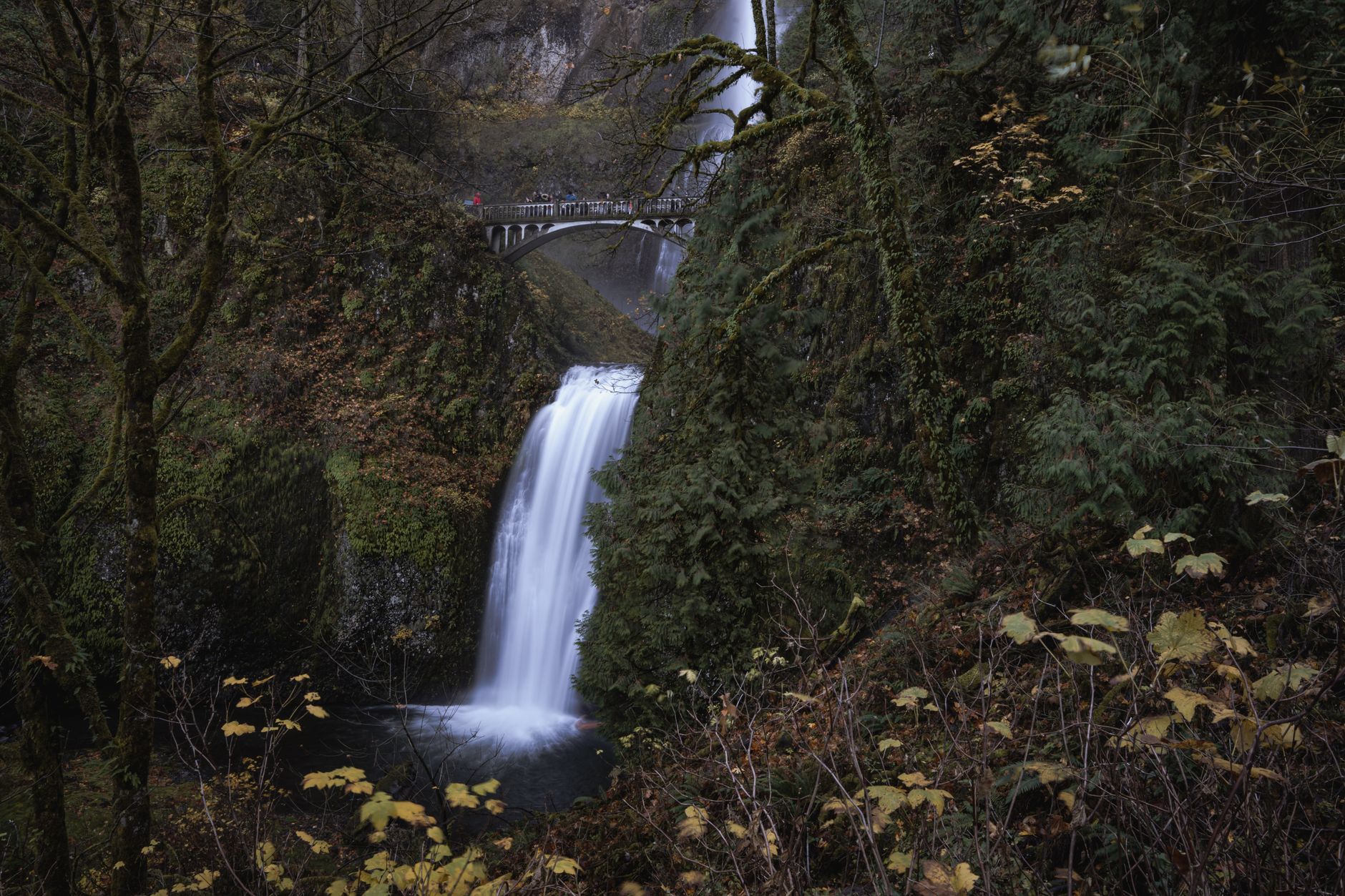
Multnomah Falls — the Columbia River Gorge’s 620-foot icon, just 30 minutes from downtown Portland. One of at least a dozen stunning waterfalls within an hour’s drive of the city.

Portland might be known for its food carts, coffee, and bookstores — but the real reason I could live there forever is what’s outside the city limits. Within an hour’s drive, you have hundreds of waterfalls, an active volcano with alpine meadows, the largest urban forest in America, and one of the most scenic gorges on the continent. I’ve spent dozens of weekends exploring trails in every direction from Portland, and narrowing it to ten felt almost criminal. But these are the best hikes near Portland Oregon — the ones I’d recommend to a friend visiting for the first time, whether they want a casual walk in the woods or a leg-burning climb to a volcanic summit.

What makes Portland exceptional for hiking isn’t just the quality of individual trails — it’s the variety and access. You can be standing on a forested trail within 15 minutes of downtown. An hour in any direction gives you waterfalls, mountain meadows, coastal rainforest, or high-desert canyon views. No other major US city offers this kind of nature access.

Key Takeaways

  • Columbia River Gorge (30-60 min east) is Portland’s crown jewel — dozens of waterfalls, dramatic canyon views, and trails for all levels.
  • Forest Park is a 5,200-acre urban wilderness you can reach by bus — the largest forested natural area within city limits in the US.
  • Mt. Hood (75 min east) offers alpine meadows, wildflowers, glacier views, and year-round snow.
  • Silver Falls State Park (75 min south) has 10 waterfalls on a single loop trail — Oregon’s best waterfall hike.
  • Spring and fall are the best hiking seasons — summer is dry and warm but smoky; winter trails are muddy but beautiful.
  • Permits are increasingly required — check recreation.gov for Columbia Gorge timed-entry and Mt. Hood wilderness permits.
  • Rain is your friend — the waterfalls are most impressive in winter/spring, and the forest is magical in mist.

Quick Facts

DetailInfo
CityPortland, Oregon
Trails within 30 min100+ (Forest Park alone has 80 miles)
Trails within 60 min300+
Waterfall trailsDozens in the Columbia River Gorge
Alpine trailsMt. Hood (75 min from Portland)
Urban forestForest Park — 5,200 acres
Best seasonMay-October (dry); year-round with rain gear
Avg rainfall43 inches/year (mostly Oct-May)
Permits neededSome Gorge areas + Mt. Hood wilderness (verify annually)
Trail appsAllTrails, Oregon Hikers (local favorite), Gaia GPS

The 10 Best Hikes

1. Multnomah Falls + Multnomah-Wahkeena Loop

DetailInfo
Distance5.4 miles (loop)
Elevation gain1,600 ft
DifficultyModerate
Drive from Portland30 minutes east
Permit requiredTimed-entry reservation for parking area (seasonal — check recreation.gov)
Dog-friendlyYes (leashed)
Best seasonYear-round (falls are most powerful Nov-May)
Why it’s on this list: Multnomah Falls at 620 feet is Oregon’s tallest waterfall and the most visited natural site in the state. But the real magic is escaping the crowds by linking it with Wahkeena Falls into a loop that passes five waterfalls total.

The loop: Start at Wahkeena Falls trailhead, climb up past Wahkeena Falls and Fairy Falls (a gorgeous cascade over mossy rock), continue to the ridge, then descend past the top of Multnomah Falls and down to the historic lodge. A shuttle or 0.5-mile road walk connects you back to your car.

My tip: Everyone crowds the viewing bridge at Multnomah’s base. The loop takes you ABOVE the falls — looking down 620 feet — with a fraction of the people. The upper viewpoint at Multnomah is one of the gorge’s most underrated spots.

2. Eagle Creek Trail to Punchbowl Falls

DetailInfo
Distance4.2 miles round trip (to Punchbowl Falls)
Elevation gain400 ft
DifficultyEasy-moderate
Drive from Portland45 minutes east
Permit requiredCheck current status — access has changed since 2017 Eagle Creek fire
Dog-friendlyYes (leashed) — but exposure sections make this risky for excitable dogs
Best seasonMay-October
Why it’s on this list: Eagle Creek is the single most dramatic trail in the Columbia River Gorge — carved into basalt cliffs with the creek hundreds of feet below, passing behind waterfalls, and through tunnels blasted in the rock. Punchbowl Falls is the turnaround for a moderate hike — a perfect amphitheater waterfall dropping into a teal pool.

Important note: The 2017 Eagle Creek Fire devastated this area. The trail has undergone extensive rebuilding. Verify current access status before planning — sections may still be closed or rerouted.

If it’s open: The trail follows Eagle Creek on a path literally carved into cliff walls, with cable handrails on exposed sections. It’s narrow in places with significant exposure — not ideal for those afraid of heights or for very young kids. But the scenery is absolutely world-class.

Extending the hike: Continue past Punchbowl Falls to High Bridge (2 more miles) or all the way to Tunnel Falls (6 miles from trailhead) where the trail passes behind a 175-foot waterfall through a tunnel in the rock. One of Oregon’s most iconic trail moments.

3. Dog Mountain

DetailInfo
Distance6.9 miles round trip
Elevation gain2,800 ft
DifficultyHard
Drive from Portland60 minutes east (Washington side of the Gorge)
Permit requiredYes — seasonal timed-entry permit required (April-June especially)
Dog-friendlyYes (leashed), despite the ironic name
Best seasonMid-May to mid-June (wildflower peak)
Why it’s on this list: For two weeks every spring, Dog Mountain’s summit meadow transforms into one of the most spectacular wildflower displays in the Pacific Northwest. Yellow balsamroot and purple lupine carpet the hillside above the Columbia River, with views stretching up and down the gorge. It’s relentlessly steep — 2,800 feet of climbing with no flat sections — but the reward is among the best in the region.

Timing is everything: The wildflower peak varies by year (depending on winter snow and spring temperatures) but typically hits mid-May to early June. Outside of wildflower season, it’s still a great workout hike with excellent gorge views — just without the flower carpet.

Tips:

  • Take the harder route up (right fork) for a more gradual climb; descend the steeper left fork (easier on knees than climbing it)
  • Start early — this trail bakes in afternoon sun and the parking lot fills by 8 AM on wildflower weekends
  • Pack sun protection and extra water — there’s no shade on the upper mountain
  • Permit system limits crowds somewhat, but weekends in bloom season are still busy

4. Forest Park — Wildwood Trail (Pittock Mansion to Macleay Park)

DetailInfo
Distance5.2 miles one way (or shorter loops possible)
Elevation gain900 ft
DifficultyEasy-moderate
Drive from Portland10 minutes (or take TriMet bus)
Permit requiredNo
Dog-friendlyYes (leashed)
Best seasonYear-round (muddy in winter but atmospheric)
Why it’s on this list: Forest Park is 5,200 acres of second-growth forest within Portland city limits — accessible by public transit, open year-round, and beautiful in every season. The Wildwood Trail runs 30+ miles through the park, but the Pittock Mansion to Macleay Park section gives you the best highlights in one walk: sweeping city views from Pittock Mansion, deep old-growth-feeling forest, a stone witch’s castle (an old ranger station), and the cool ravine of Balch Creek.

The forest-to-city contrast: You can be walking in dense forest where the only sound is birdsong and running water, then 15 minutes later you’re at a coffee shop in the Pearl District. That proximity is what makes Forest Park special — it’s not a weekend trip, it’s a Tuesday afternoon escape.

Make it a loop: Combine the Upper Macleay section with Balch Creek to Pittock Mansion for a roughly 5-mile loop with the stone Witch’s Castle ruins, creek walking, and the panoramic city view from Pittock (where Mt. Hood floats above the skyline on clear days).

5. Tom, Dick and Harry Mountain (Mirror Lake Trail)

DetailInfo
Distance6.4 miles round trip (to summit)
Elevation gain1,600 ft
DifficultyModerate
Drive from Portland60 minutes east (Government Camp area)
Permit requiredNW Forest Pass for parking ($5/day or $30/year)
Dog-friendlyYes (leashed in wilderness areas)
Best seasonJuly-October (snow-free)
Why it’s on this list: Mirror Lake alone is a pleasant hike — a calm alpine lake reflecting Mt. Hood on still mornings. But continue up the ridge to Tom, Dick and Harry summit and you get one of the most accessible jaw-dropping Mt. Hood viewpoints available. The entire south face of Hood fills your vision, with glaciers, rocky ridges, and ski runs visible in detail.

Pro tip: Visit on a weekday — Mirror Lake is one of the most popular Mt. Hood hikes and the parking lot fills early on summer weekends. If you arrive after 9 AM on a Saturday, you may need to park along the highway.

Photography: The reflection in Mirror Lake is best at dawn when the surface is glass-still. If you’re willing to start early, the sunrise shot of Hood reflected in the lake is poster-worthy.

6. Silver Falls — Trail of Ten Falls

DetailInfo
Distance8.7 miles (full loop)
Elevation gain1,200 ft
DifficultyModerate
Drive from Portland75 minutes south
Permit requiredOregon State Parks day-use fee ($5)
Dog-friendlyYes (leashed, some sections restricted)
Best seasonYear-round (falls most powerful Nov-May; least crowded weekdays)
Why it’s on this list: Ten waterfalls on a single loop trail, including four you walk behind. Silver Falls is Oregon’s most famous waterfall hike and justifiably so — the South Falls alone (177 feet, amphitheater shape, trail behind the curtain of water) is worth the drive from Portland. Doing the full loop adds nine more waterfalls ranging from delicate cascades to thundering plunges.

The big four (walk-behinds):

  • South Falls (177 ft) — the most impressive and photographed
  • North Falls (136 ft) — walk behind through a cavern
  • Lower South Falls (93 ft) — intimate and mossy
  • Middle North Falls (106 ft) — the quietest; often have it to yourself
Shorter options: Don’t have 4-5 hours? The South Falls to Lower South Falls section (2.5 miles out-and-back) hits the two most impressive waterfalls and takes about 90 minutes.

Best conditions: November through May when rain has the falls at full power. The creek below South Falls can be waded in summer (fun on hot days). Winter brings ice formations on the rock walls behind the falls — absolutely magical.

7. Ramona Falls

DetailInfo
Distance7.1 miles round trip
Elevation gain1,000 ft
DifficultyEasy-moderate
Drive from Portland75 minutes east (Mt. Hood area)
Permit requiredNW Forest Pass + Mt. Hood Wilderness self-issue permit
Dog-friendlyYes (leashed)
Best seasonJune-October (creek crossings can be difficult in spring snowmelt)
Why it’s on this list: Ramona Falls isn’t tall (120 feet) — it’s wide. Water cascades over a massive wall of columnar basalt in hundreds of individual streams, creating a curtain effect that looks like it belongs in a fantasy film. The approach trail through old-growth forest along the Sandy River is beautiful in its own right, and the river crossings add a touch of adventure.

Important: The bridge over the Sandy River washes out semi-regularly. In early summer when snowmelt is high, the river crossing can be thigh-deep and swift. Check recent trip reports for current conditions. Late summer (August-September) has the easiest crossing.

8. Angels Rest

DetailInfo
Distance4.8 miles round trip
Elevation gain1,500 ft
DifficultyModerate
Drive from Portland30 minutes east
Permit requiredNo (free parking at trailhead)
Dog-friendlyYes (leashed) — use caution at exposed summit
Best seasonYear-round (muddy in winter)
Why it’s on this list: Angels Rest offers the best effort-to-reward ratio in the Columbia River Gorge. Under 5 miles round trip, moderate climbing, and the payoff is a wide-open basalt promontory 1,500 feet above the Columbia River with views stretching from Mt. Hood to Mt. Adams to Table Mountain. It’s the gorge’s best sunset hike — west-facing with no obstructions.

Sunset magic: Time your ascent to arrive at the top 30-45 minutes before sunset. Bring a headlamp for the descent (the trail through the forest is dark even at dusk) and a warm layer — the exposed summit gets cold quickly after the sun drops.

Winter hiking: Angels Rest is one of the few gorge hikes worth doing in winter — the trail is below snowline, rain creates dramatic cloud effects in the gorge below, and you might have the summit to yourself. Traction devices help on the upper sections when it’s icy.

9. Marquam Nature Park to Council Crest

DetailInfo
Distance4.0 miles round trip
Elevation gain900 ft
DifficultyEasy-moderate
Drive from Portland5 minutes (or walk from downtown)
Permit requiredNo
Dog-friendlyYes (leashed)
Best seasonYear-round
Why it’s on this list: This is Portland’s secret — a forest trail that starts in a residential neighborhood and climbs through a ravine of mature Douglas fir to Council Crest, the highest point in Portland (1,073 ft). On a clear day, the summit panorama includes Mt. Hood, Mt. St. Helens, Mt. Adams, Mt. Rainier, and Mt. Jefferson. Five volcanoes from a city park.

Best on a clear day: Portland’s notoriously cloudy weather means clear-day volcano views are special. When you wake up to blue sky (most common July-September but happens year-round), this is the quick hike that rewards spontaneity.

Combine with: A post-hike beer at one of the dozen breweries within walking distance of Marquam Nature Park. Portland priorities.

10. McNeil Point (Mt. Hood)

DetailInfo
Distance10.4 miles round trip
Elevation gain2,300 ft
DifficultyHard
Drive from Portland80 minutes east
Permit requiredNW Forest Pass + Mt. Hood Wilderness self-issue permit
Dog-friendlyYes (leashed)
Best seasonMid-July to September (snowfields earlier)
Why it’s on this list: McNeil Point is the holy grail of Portland-area day hikes — a wildflower-filled alpine meadow directly beneath the north face of Mt. Hood with a historic stone shelter and views that stretch to Mt. Rainier, Mt. St. Helens, and Mt. Adams. It’s demanding (10+ miles, 2,300 ft gain) but the reward is among the most dramatic viewpoints on the mountain.

The view: Mt. Hood’s glaciated north face towers above you from barely a mile away. Sandy Glacier, Reid Glacier, and the Ladd Glacier are visible in detail. The stone shelter (built by the CCC in the 1930s) sits on a rocky promontory surrounded by lupine and paintbrush meadows in late July.

Timing: The wildflower peak at McNeil Point typically hits late July to early August. Earlier in the season, you’ll encounter snowfields on the approach (navigate carefully). By September, the flowers have faded but the views remain stunning.

Seasonal Hiking Guide for Portland

SeasonConditionsBest HikesTips
Spring (Mar-May)Waterfalls at peak flow, muddy trails, wildflowers startSilver Falls, Multnomah Loop, Angels RestWaterproof boots essential; waterfalls are most impressive
Summer (Jun-Sep)Dry, warm, long days, alpine trails openMcNeil Point, Dog Mountain, Tom Dick HarryStart early to beat heat; check wildfire smoke forecasts
Fall (Oct-Nov)Fall color, mushrooms, quiet trailsForest Park, Silver Falls, Eagle CreekShorter days — bring headlamp; rain returns
Winter (Dec-Feb)Rainy, misty, atmospheric, fewer peopleForest Park, Marquam/Council Crest, Angels RestEmbrace the rain — the forest is magical; traction for icy sections

A Quick Reflection

I moved to Portland primarily for the hiking. I’m not ashamed to admit that. I visited for a work conference, took a single afternoon to drive the Gorge, saw three waterfalls from the road without even getting out of the car, and started apartment-hunting that evening.

My first month, I hiked every weekend — Forest Park during the week when I needed a lunch break escape (the trailhead was a 12-minute drive from my office), and Gorge waterfalls on Saturdays. By month three, I’d ticked off maybe 30 trails and still had a list growing faster than I could check things off.

The thing that still amazes me is the compression. In most cities, “good hiking” means a 2-3 hour drive. In Portland, world-class trails — the kind that would be the main attraction in most states — start 15 minutes from downtown. Forest Park is literally inside the city limits. The Gorge is a 30-minute drive. Mt. Hood is barely an hour.

I’ve hiked in more dramatic mountain ranges. I’ve done longer trails in wilder places. But nowhere else have I found this quality of hiking this close to this quality of coffee. And after ten years of Portland weekends, I stand by my impulsive apartment-hunting decision.

Frequently Asked Questions

What’s the best hike near Portland for beginners?

Forest Park’s Wildwood Trail (Pittock Mansion section) is perfect for beginners — well-maintained, no dangerous exposure, easy to navigate, and accessible by public transit. For a waterfall hike, the short walk to the base of Multnomah Falls is paved and flat. Silver Falls’ South Falls loop (2.5 miles) is also excellent for newcomers.

Do I need a permit to hike in the Columbia River Gorge?

It depends on the specific trailhead and the current year. Some popular areas (like Multnomah Falls corridor) require timed-entry parking reservations during peak season. Others require no permit at all. The situation has changed frequently since 2020 — check recreation.gov before each visit.

When is wildflower season for Portland area hikes?

Low-elevation wildflowers (gorge trails, Forest Park) peak in April-May. Dog Mountain’s famous balsamroot display peaks mid-May to early June. Alpine wildflowers on Mt. Hood (McNeil Point, Paradise Park) peak late July to early August. Rain-dependent — years with more spring rain push peak earlier.

Can I hike near Portland in winter?

Absolutely — and you should. Low-elevation trails (Forest Park, Gorge waterfalls, Angels Rest) are hikeable year-round. The waterfalls are actually most impressive in winter when rainfall is highest. Pack waterproof layers, wear boots with grip, and bring traction devices for occasional icy sections. You’ll have the trails largely to yourself.

For current trail conditions around Portland, check the official Oregon State Parks site before you go.

Final Thoughts

The best hikes near Portland Oregon span everything from 15-minute urban forest escapes to all-day alpine adventures beneath glaciated volcanoes. What makes this city special isn’t any single trail — it’s the absurd density of quality hiking packed into every compass direction.

Start with the Columbia River Gorge waterfalls for jaw-dropping first impressions. Graduate to Forest Park for your everyday nature fix. Then climb to Mt. Hood’s alpine meadows when summer opens the high country. Portland rewards repeat visitors — the trails change with every season, and there are enough of them to fill years of weekends.

Pack rain gear, start early on summer weekends, and don’t skip the post-hike breweries. That’s the Portland hiking formula.

Plan Your Portland Hiking Trip

More trail inspiration for the Pacific Northwest:

Use Our Free Trip Planner →

✈️ Planning your trip?

Compare cheap flights, hotels and car rentals for your adventure.

Find Cheap Flights →Compare Hotels →

🌍 Plan & Book Your Trip

Compare the best deals for this destination — flights, hotels, tours and more:

Affiliate links — we may earn a commission at no extra cost to you.

Leave a Comment

Your email address will not be published. Required fields are marked *

Scroll to Top