Best Time to Visit Glacier National Park (Month-by-Month Guide)
🌍 Plan & Book Your Trip
Compare the best deals for this destination — flights, hotels, tours and more:
Affiliate links — we may earn a commission at no extra cost to you.
Going-to-the-Sun Road carving through the heart of Glacier National Park — one of America’s most dramatic drives, accessible just 10-12 weeks per year depending on snowpack.
I’ve visited Glacier National Park four times now — twice in peak July, once in early June (mistake), and once in mid-September (revelation). Each visit felt like a completely different park. The glaciers, the wildlife, the crowds, even the colors of the landscape shift dramatically depending on when you show up. If you’re researching the best time to visit Glacier National Park, the short answer is July through mid-September — but the real answer depends entirely on what experience you’re after.
Glacier is one of those parks where timing isn’t just about preference — it’s about access. Going-to-the-Sun Road, the park’s crown jewel, is buried under 80+ feet of snow for most of the year. Many trailheads are inaccessible until July. And the park’s famous grizzly bears behave differently month by month. Get the timing wrong and you’ll miss half of what makes this place extraordinary.
Let me break it all down by month so you can plan the trip that matches your priorities.
Key Takeaways
- Peak season (July-August) offers full access to Going-to-the-Sun Road, all trails, and the best weather — but crowds are intense.
- September is the secret sweet spot — fewer crowds, golden larch trees, active wildlife, and the road stays open through mid-October most years.
- Going-to-the-Sun Road typically opens mid-June to early July depending on snowpack — check nps.gov/glac for current status.
- Wildflower season peaks mid-July to early August in alpine meadows — Logan Pass is spectacular.
- Wildlife viewing is best in early morning year-round, but grizzly sightings increase in September when bears gorge on berries.
- June and early October are shoulder seasons — partial access, fewer services, but dramatic landscapes and solitude.
- Winter visits are possible but limited to lower elevations, cross-country skiing, and snowshoeing.
Quick Facts
| Detail | Info |
|---|---|
| Location | Northwestern Montana, bordering Canada |
| Park size | Over 1 million acres |
| Going-to-the-Sun Road | Typically open late June/early July through mid-October |
| Peak season | July 1 – Labor Day (early September) |
| Quietest months with access | September 15 – October 15 |
| Glaciers remaining | 25 (down from 150 in 1850) |
| Average July high | 78°F (26°C) at lake level; 55°F (13°C) at Logan Pass |
| Campgrounds | 13 (most require reservations; open dates vary) |
| Entry fee | $35/vehicle for 7 days (2026) |
| Vehicle reservations | Required for Going-to-the-Sun Road corridor, May 23 – Sept 8 (verify dates) |
| Nearest airports | Glacier Park International (Kalispell) — 30 min to west entrance |
Month-by-Month Breakdown
January – March: Deep Winter
| What’s Open | What’s Not |
|---|---|
| Apgar area and Lake McDonald | Going-to-the-Sun Road (closed at Lake McDonald Lodge) |
| Cross-country skiing trails | Most trails (buried under snow) |
| Snowshoeing on lower trails | East side access limited by weather |
| Izaak Walton Inn (near park) | Most campgrounds and lodges |
The reality: Glacier in winter is stunning but demanding. Temperatures regularly drop below 0°F, avalanche danger is real on steeper terrain, and services are minimal. It’s a niche visit — but the park draped in untouched snow with zero crowds has a magic that summer visitors never experience.
Wildlife: Occasional deer and elk near Apgar. Mountain lions are more active (and rarely seen). Many animals have migrated to lower elevations.
April – May: Mud Season and Awakening
| What’s Open | What’s Not |
|---|---|
| West side trails below 5,000 ft | Going-to-the-Sun Road (plowing in progress) |
| Trail of the Cedars | High-elevation trails |
| Avalanche Lake (often accessible by late May) | Logan Pass and Highline Trail |
| Some private lodges | Park lodges (most open June) |
The reality: April and May are transitional months. The park is waking up — snow is melting rapidly, waterfalls are at peak flow, and bears are emerging from hibernation (exciting but requires extra caution). However, many roads and trails remain closed, and the weather is unpredictable — you might get sunny 60°F days or late-season snowstorms.
Pro tip: Late May is underrated. Avalanche Lake is usually accessible, spring waterfalls are thundering, and you might have major trails nearly to yourself. But verify conditions — trail access changes daily.
Wildlife: Grizzly bears emerge hungry and are more visible at lower elevations. Black bears, mule deer, mountain goats beginning to move to higher terrain.
June: The Transition Month
| What’s Open | What’s Not |
|---|---|
| West side fully accessible | Going-to-the-Sun Road (partial — check daily updates) |
| Many glacier trails below 6,000 ft | Logan Pass (usually opens late June/early July) |
| Lake McDonald area | Highline Trail (snow-covered until July) |
| First campgrounds opening | Many Glacier area (road opens mid-June typically) |
The reality: June is a gamble. I visited in early June once and Going-to-the-Sun Road was closed at The Loop on the west side and at Rising Sun on the east side — meaning no crossing the park and no Logan Pass access. The lower trails were beautiful (and empty), but I missed the park’s signature experiences.
Late June is much better — the road typically opens by the last week of June or first week of July, and early visitors get a less-crowded window before school lets out.
Weather: Expect 60-70°F at valley level, 40-55°F at passes. Rain and even snow are possible at elevation. Pack layers.
Wildlife: Mountain goats with kids at mineral licks near Logan Pass (once accessible). Bears active in morning and evening.
July: Peak Season Begins
| Conditions | Details |
|---|---|
| Going-to-the-Sun Road | Fully open (barring unusual snowpack years) |
| Trails | Nearly all trails accessible by mid-July |
| Wildflowers | Beginning at alpine elevations — peak building |
| Wildlife | Mountain goats at Logan Pass, bears in berry patches |
| Crowds | HIGH — parking fills by 8-9 AM at Logan Pass |
| Weather | 70-80°F at valleys, 50-65°F at passes, generally clear |
| Daylight | 15+ hours — long hiking days possible |
The reality: July is when Glacier hits its stride. Everything is open, the weather is (mostly) cooperative, and the landscape is lush and green with wildflowers beginning their show. But the crowds are REAL. Logan Pass parking fills by 8 AM. The shuttle (if still operating — verify) has long waits. Popular trails like Highline and Hidden Lake have a steady stream of hikers.
How to beat the July crowds:
- Start early (at Logan Pass by 7 AM or earlier)
- Hike longer, less-popular trails (Pitamakan-Dawson loop, Cracker Lake)
- Use the park shuttle or guided bus tour instead of driving
- Visit the east side (Many Glacier) on days when the west side is packed
- Weekdays are noticeably quieter than weekends
August: Peak Everything
| Conditions | Details |
|---|---|
| Going-to-the-Sun Road | Fully open |
| Trails | All trails open, snow-free |
| Wildflowers | PEAK BLOOM at alpine elevations (first two weeks) |
| Wildlife | Bears increasingly visible as berry season ramps up |
| Crowds | HIGHEST — busiest month of the year |
| Weather | 75-85°F at valleys, 55-65°F at passes |
| Fire risk | Increasing — hazy days possible from regional wildfires |
The reality: If July is busy, August is packed. It’s also when the park is arguably at its most beautiful — wildflower meadows at Logan Pass explode in color (beargrass, Indian paintbrush, lupine, glacier lilies), afternoon thunderstorms create dramatic light, and every lake reaches its most vibrant turquoise.
The trade-off: potential smoke haze from wildfire season (which has worsened considerably in recent years), intense competition for parking and campsites, and the need to plan your itinerary around crowd-avoidance strategies.
Wildflower hotspots:
- Logan Pass to Hidden Lake overlook
- Highline Trail meadows
- Preston Park (below Siyeh Pass)
- Iceberg Lake trail
- Many Glacier area subalpine meadows
September: The Secret Sweet Spot
| Conditions | Details |
|---|---|
| Going-to-the-Sun Road | Open through mid-October (most years) |
| Trails | All trails accessible (some close for bear activity) |
| Fall color | Golden larch trees peak mid-September; aspens turning |
| Wildlife | BEST month — bears in hyperphagia (feeding frenzy), bighorn sheep rut |
| Crowds | Dramatically lower after Labor Day |
| Weather | 55-70°F at valleys, 40-55°F at passes, crisp and clear |
| Daylight | 12-13 hours — still plenty for big hikes |
The reality: September is my personal favorite time to visit Glacier, and I’ll die on this hill. Here’s why:
The crowds vanish. After Labor Day, visitation drops by 50-70%. Logan Pass parking — which filled by 8 AM in August — has spots available at 10 AM. Popular trails feel almost empty on weekdays. Campgrounds have walk-up availability again.
The colors are incredible. Western larch trees (the only deciduous conifer in North America) turn brilliant gold in mid-to-late September. Against the dark green of the conifers and the blue of the glacial lakes, the golden larches create a color palette you won’t find in summer. Huckleberry bushes turn crimson. Aspens glow yellow.
Wildlife is going crazy. September is hyperphagia for bears — they’re eating 20,000+ calories per day preparing for hibernation, which means they’re out feeding more often and more visibly. Bighorn sheep begin their rut (dramatic head-butting on mountain ridges). Elk are bugling in the valleys.
The light is photographer’s gold. Lower sun angle means longer golden hours, fewer harsh midday shadows, and that warm amber tone that makes mountain landscapes sing.
The downsides:
- Weather becomes less predictable — early snowstorms are possible at high elevation
- Some facilities close after Labor Day (limited food options)
- Days are shorter (12 hours vs. 15+ in July)
- A few trails may close for bear activity (usually clearly signed)
- Day 1: Going-to-the-Sun Road with stops at all pullouts (no crowds!)
- Day 2: Highline Trail to Granite Park Chalet (golden larch views)
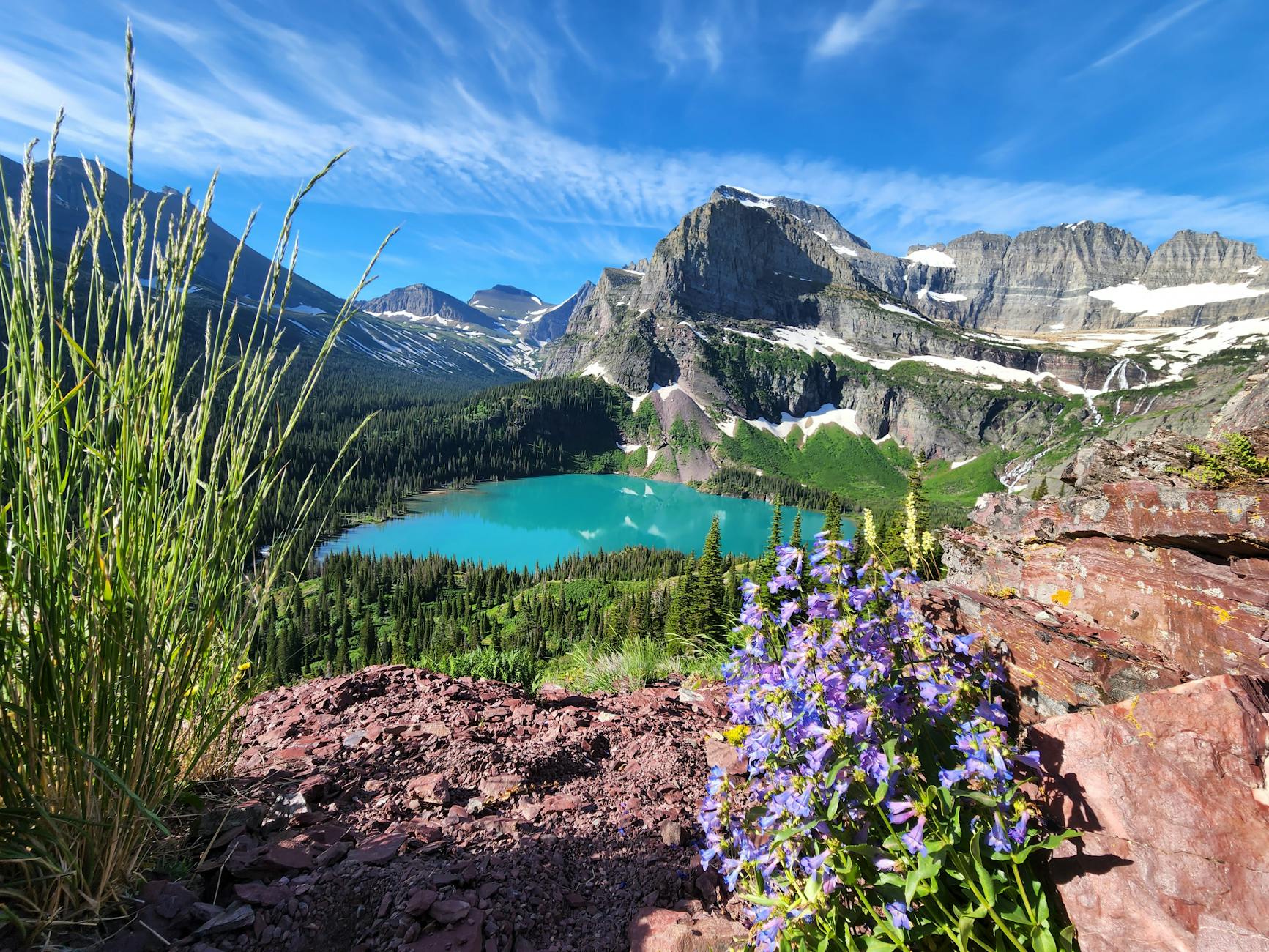
- Day 3: Grinnell Glacier trail from Many Glacier (turquoise water, fall color)
- Day 4: Iceberg Lake or Ptarmigan Tunnel (wildlife corridor)
- Day 5: Sunrise at Wild Goose Island, then Two Medicine area
October: Closing Down
| Conditions | Details |
|---|---|
| Going-to-the-Sun Road | Closes to vehicles mid-October (exact date varies) |
| Trails | Lower elevation trails accessible; high trails may have snow |
| Fall color | Peak aspens early October; larches finishing |
| Wildlife | Bears preparing for hibernation, last active period |
| Crowds | Very low |
| Weather | 40-55°F at valleys, 30-40°F at passes, snow possible anytime |
The reality: Early October can be spectacular — aspen groves blazing gold, zero crowds, and a sense of the park settling into its winter quiet. But access narrows rapidly. Going-to-the-Sun Road typically closes to vehicles by the third week of October (though you can walk or bike it after closure until snow makes it impassable). Snow can arrive any day, transforming the park overnight.
November – December: Early Winter
| What’s Open | What’s Not |
|---|---|
| Apgar area | Going-to-the-Sun Road |
| Some valley trails (weather-dependent) | Most of the park |
| Self-guided winter activities | Visitor centers (limited hours) |
Going-to-the-Sun Road: The Timing Wild Card
The single most important timing factor for Glacier visitors is Going-to-the-Sun Road — the 50-mile engineering marvel that crosses the Continental Divide at Logan Pass (6,646 ft).
Key timing facts:
| Factor | Typical Timing |
|---|---|
| Plowing begins | Mid-April |
| Road fully opens | Late June to early July |
| Road closes | Mid-October (date varies by conditions) |
| Vehicle reservation required | May 23 – Sept 8 (verify current year) |
| Best time to drive it | Early morning (6-8 AM) for no traffic + best light |
Vehicle reservations: Since 2022, Glacier has required timed-entry reservations for the Going-to-the-Sun Road corridor during peak season. Reservations release in batches — check nps.gov/glac for current booking windows.
Best Time for Specific Activities
| Activity | Best Time | Why |
|---|---|---|
| Driving Going-to-the-Sun Road | September | Open road, fall color, no reservation needed |
| Wildflower photography | Late July – early August | Alpine meadows at peak bloom |
| Wildlife viewing (bears) | September | Hyperphagia = bears feeding visibly |
| Backpacking | Late July – early September | Snow-free, permit availability |
| Avoiding crowds | September – early October | 50-70% fewer visitors |
| Hiking all trails | Mid-July – mid-September | Everything snow-free |
| Fall color (larches) | Mid-September – early October | Golden larches against dark conifers |
| Photography (light) | September – October | Low sun angle, golden hour |
| Budget travel | September – October | Lower lodging rates, last-minute availability |
| Family trips | July – early August | Best weather, longest days |
A Quick Reflection
My first visit to Glacier was in early June. I was so excited — I’d booked a week off work, drove 12 hours from Seattle, and arrived at the west entrance practically vibrating with anticipation. “Crown of the Continent!” I kept saying to my hiking partner, who was tolerating my enthusiasm with practiced patience.
Going-to-the-Sun Road was closed at Avalanche Creek. Six miles in. The ranger at the checkpoint was very kind about it. “Should be another three weeks or so,” she said. “You should still hike Avalanche Lake though — it’s beautiful.”
She was right — Avalanche Lake was beautiful. The handful of low-elevation trails on the west side were lovely. But driving 12 hours to see 10% of a park because you didn’t research road opening dates? That stung.
I came back in September three years later and got the Glacier experience I’d originally dreamed of — plus golden larches, plus bears in the berry bushes, plus empty trails. With about a third of the stress and a tenth of the crowds.
Lesson learned: for Glacier more than almost any other national park, timing isn’t a preference — it’s a prerequisite. Check the road status. Plan around it. Save yourself the disappointment.
Weather by Season: What to Pack
| Season | Valley Temps | Pass Temps | Conditions | Must-Pack |
|---|---|---|---|---|
| Summer (Jul-Aug) | 70-85°F | 50-65°F | Mostly sunny, afternoon storms | Sun protection, rain layer, layers for passes |
| Early Fall (Sept) | 55-70°F | 40-55°F | Clear, crisp, variable | Warm layers, rain gear, hat/gloves for passes |
| Late Fall (Oct) | 40-55°F | 30-40°F | Snow possible, shorter days | Winter layers, traction devices, headlamp |
| Winter (Nov-Mar) | 20-35°F | 10-25°F | Snow, ice, extreme cold | Full winter gear, avalanche safety equipment |
| Spring (Apr-May) | 45-60°F | 30-45°F | Rain, mud, variable | Waterproof everything, layers, patience |
Frequently Asked Questions
Is Going-to-the-Sun Road open in June?
Usually not fully. The road typically opens completely between late June and early July, depending on winter snowpack. In some years it’s opened as early as June 13; in others, not until July 13. Check the park’s official plowing status page starting in April for real-time updates. Partial access (lower sections only) is available from mid-May on both sides.
Do I need reservations to enter Glacier National Park?
During peak season (typically late May through early September), you need a timed-entry vehicle reservation to drive the Going-to-the-Sun Road corridor between 6 AM and 3 PM. The entry fee ($35/vehicle) is separate from the reservation. After Labor Day, reservations are no longer required. Check nps.gov/glac for current year dates and booking windows.
When is the best time to see bears in Glacier?
Bears are most visible in September during hyperphagia — when they’re eating 20,000+ calories daily preparing for hibernation. They’re active and visible in berry patches, especially along roadsides and in the Many Glacier area. Spring (May-June) is also good when bears emerge at lower elevations. Always carry bear spray and maintain 100-yard distance.
Is September too cold to visit Glacier National Park?
Not at all — September in Glacier is crisp and comfortable for hiking. Valley temperatures hover around 55-70°F during the day, perfect for active pursuits. Passes are cooler (40-55°F) but manageable with layers. The main risk is early snowstorms at high elevation, which are infrequent but possible. Pack a warm layer and rain gear and you’ll be fine.
Final Thoughts
The best time to visit Glacier National Park for most people is July through mid-September — that’s when Going-to-the-Sun Road is fully open, all trails are accessible, and the weather cooperates.
But if I had to pick one month? September. Every time. The crowds disappear, the larches turn gold, the bears put on a show, and the light turns everything to amber. You sacrifice a bit of weather predictability and a few restaurant options — and gain the kind of mountain solitude that July visitors can only dream about.
Whatever month you choose, check the road status before you book, arrive early to beat parking competition, and carry bear spray. This is grizzly country, and these are some of the most stunning mountains in North America. Respect both, and Glacier will give you memories that last a lifetime.
Plan Your Glacier Trip
Ready to explore? These guides will help:
- Grand Teton vs Glacier: Which Mountain Park to Visit? — help decide if Glacier is right for you
- Best Sunrise Hikes in the USA — including Glacier’s own Logan Pass area
- Best Hiking Backpacks for 2026 — essential for Glacier’s longer trails
- Best Headlamps for Hiking — for those early Logan Pass starts
- The Ultimate Hiking Packing List — everything you need for Glacier
✈️ Planning your trip?
Compare cheap flights, hotels and car rentals for your adventure.
Find Cheap Flights →Compare Hotels →🌍 Plan & Book Your Trip
Compare the best deals for this destination — flights, hotels, tours and more:
Affiliate links — we may earn a commission at no extra cost to you.