Banff vs the Swiss Alps: Which Is Better for Hiking?
🌍 Plan & Book Your Trip
Best deals powered by Travelpayouts:
Affiliate links — no extra cost to you.
Two of the most stunning mountain hiking destinations on Earth — but separated by an ocean, a different continent, and a completely different hiking culture. When it comes to Banff vs the Swiss Alps, which one should land on your bucket list first?
One offers vast Canadian Rockies wilderness with turquoise glacier lakes and grizzly bears. The other offers precision-engineered trail systems through picture-perfect Alpine villages with mountain huts serving fresh rösti at 8,000 feet. Both will ruin you for “normal” hiking forever.
Let’s break down what really matters: the trails, the views, the cost, the logistics, and which destination matches your adventure style.
Key Takeaways
- Banff = raw wilderness, glacier lakes, wildlife, rugged trails, cheaper lodging, car-dependent.
- Swiss Alps = precision trails, mountain hut culture, trains everywhere, fairy-tale villages, more expensive.
- Banff is best for wilderness seekers who want solitude and don’t mind bears.
- Swiss Alps is best for those who want world-class hiking with civilized comforts.
- Cost: Banff is significantly cheaper overall; Switzerland is one of the most expensive countries on Earth.
- Getting around: Banff requires a car; the Swiss Alps are accessible entirely by train + cable car.
The Quick Verdict (At a Glance)
| Banff National Park | Swiss Alps (Bernese Oberland/Valais) | |
|---|---|---|
| Signature scenery | Turquoise glacier lakes, rugged Rockies | Alpine meadows, dramatic peaks, waterfalls |
| Iconic sights | Lake Louise, Moraine Lake, Johnston Canyon | Matterhorn, Jungfrau, Lauterbrunnen Valley |
| Trail infrastructure | Good but rugged; some unmarked sections | World-class: signed, graded, maintained perfectly |
| Mountain huts | Limited backcountry lodges | Extensive network (sleep + eat at altitude) |
| Wildlife | Grizzly bears, elk, mountain goats, wolves | Marmots, ibex, chamois (no dangerous predators) |
| Transport | Car essential | Trains, cable cars, buses (no car needed!) |
| Daily hiking cost | $30-$80/day | $80-$200+/day |
| Crowds | Busy at icons, quiet elsewhere | Busy in villages, manageable on longer trails |
| Best for | Wilderness, solitude, photography, budget | Culture, comfort, multi-day hut treks, foodies |
| Hiking season | July–September (short!) | June–October (longer) |
| Language | English | German/French/Italian (English widely spoken) |
Scenery: Wild Rockies vs. Precision Alps
Banff hits you with raw, primordial beauty. The turquoise color of Lake Louise and Moraine Lake is genuinely unreal — caused by glacial rock flour suspended in meltwater. The mountains are massive, rugged, and sharp. Everything feels wild, ancient, and slightly untamed. You half-expect a grizzly to appear around every corner (and sometimes one does).
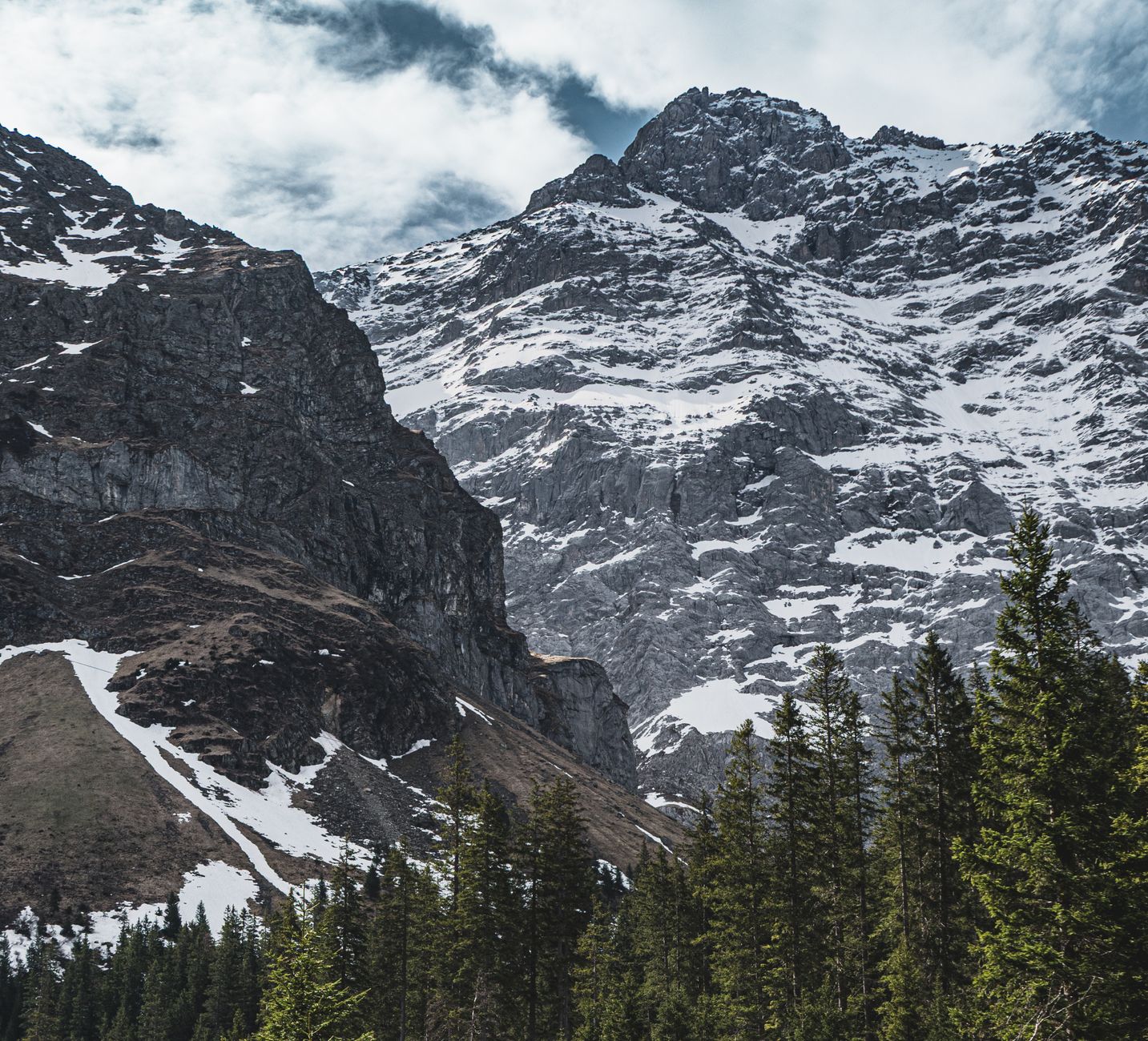
The Swiss Alps deliver orchestrated perfection. Imagine hiking through a meadow of wildflowers with cowbells in the distance, a perfect snow-capped peak above you, a wooden chalet below, and a trail so well-maintained it feels like a garden path — except you’re at 8,000 feet. It’s beauty that looks almost designed. The Matterhorn alone is worth the trip.
The difference in one sentence: Banff makes you feel small in the wilderness. The Swiss Alps make you feel welcomed into a masterpiece.
The Hiking Experience
Banff Trails
- Style: Rugged, less manicured, some scrambling sections, occasional route-finding needed
- Signage: Good at major trailheads, less consistent in backcountry
- Elevation: Trails typically start at 4,500-5,500 ft; summits reach 8,000-10,000 ft
- Bear safety: Carry bear spray, make noise, know bear protocols. This is REAL wilderness.
- Difficulty range: Easy lakeside walks to serious mountaineering
- Solitude potential: HIGH — venture beyond the famous lakes and you’ll barely see people
Top Banff hikes:
- Sentinel Pass via Larch Valley (11.6 km RT) — above the treeline through golden larches to a dramatic mountain pass
- Plain of Six Glaciers (13.8 km RT) — from Lake Louise to a teahouse surrounded by glaciers
- Johnston Canyon (5.4 km RT to Upper Falls) — accessible canyon walk to turquoise waterfalls
- Moraine Lake Rockpile Trail (0.6 km) — the famous “Twenty Dollar View”
- Cory Pass (13 km loop) — one of the most rewarding and challenging day hikes in Banff
Swiss Alps Trails
- Style: Perfectly marked, graded by difficulty (yellow = hiking, red/white = mountain, blue/white = alpine), maintained immaculately
- Signage: World-class — yellow diamond markers every 100m, timing estimates on signs
- Elevation: Valley floors at 1,800-3,500 ft; trails reach 8,000-12,000 ft
- Safety: No dangerous wildlife. Main risks: weather changes and exposed ridges
- Difficulty range: Paved panoramic paths to technical alpine routes
- Mountain huts: Sleep at altitude with a hot meal, beer, and a bed (book in advance!)
Top Swiss Alps hikes:
- Eiger Trail (8.6 km) — directly beneath the Eiger North Face; dramatic, moderate
- Schynige Platte to First (16 km) — full-day ridge walk with 360° panoramas of the Bernese Alps
- Lauterbrunnen to Mürren (various routes) — waterfalls, cliffs, car-free village above
- Five Lakes Walk (Zermatt) (9.5 km) — Matterhorn reflected in five alpine lakes
- Bachalpsee from First (6 km RT) — pristine mountain lake reflecting the Wetterhorn and Schreckhorn
Cost Comparison (Be Honest About This)
This is where the decision often gets made. Switzerland is expensive. Banff is a fraction of the cost.
| Expense | Banff (per day) | Swiss Alps (per day) |
|---|---|---|
| Accommodation | $80-$200 (hotels/lodges) | $150-$400+ (hotels/huts) |
| Food | $30-$60 | $50-$100+ |
| Transport | $0-$20 (car + gas) | $30-$80 (trains + cable cars) |
| Park entry | ~$15 CAD/day (Parks Canada pass) | Free (no park entrance fees!) |
| Lifts/cable cars | N/A (mostly) | $30-$70 per ride |
| Daily total | $130-$280 | $260-$650+ |
| 7-day trip total | $900-$2,000 | $1,800-$4,500+ |
Budget hack for Switzerland: Buy the Swiss Travel Pass (covers trains + most buses + some cable cars) and stay in mountain huts ($40-$80/night with dinner + breakfast) instead of valley hotels.
Budget hack for Banff: Camp in park campgrounds ($23-$38 CAD/night) and cook your own meals. A budget Banff trip can cost under $100/day.
Getting There & Around
Banff:
- Fly into Calgary (YYC) — 1.5 hours to Banff town
- You need a car. Trailheads are spread across a large area with no public transit between them
- Driving is easy, scenic, and parking is usually available (arrive early for Lake Louise and Moraine Lake)
- Moraine Lake now requires a shuttle reservation or bus in peak season (no private vehicles)
Swiss Alps:
- Fly into Zürich (ZRH) or Geneva (GVA) — then take a train (2-3 hours) to Interlaken, Grindelwald, or Zermatt
- You do NOT need a car. Switzerland’s rail/bus/cable car system reaches every trailhead
- The Swiss Travel Pass covers most transportation and simplifies everything
- Cable cars take you to altitude instantly — you can start hikes at 6,000-8,000 ft without climbing from the valley
Weather & Season
| Banff | Swiss Alps | |
|---|---|---|
| Hiking season | July–mid September (very short!) | June–October (longer, varies by altitude) |
| Snow-free trails | Most clear by mid-July | Most clear by mid-June at lower elevations |
| Summer temps | 60-75°F (15-24°C) | 60-80°F (15-27°C) in valleys; cooler at altitude |
| Rain risk | Moderate (afternoon thunderstorms) | Moderate (afternoon storms common) |
| Shoulder season | June (some snow), October (very cold) | June + October (great, fewer crowds) |
Key difference: Banff’s reliable hiking window is only about 8-10 weeks. The Swiss Alps give you 4-5 months of good hiking. This alone makes Switzerland more flexible for trip planning.
Wildlife: Excitement vs. Safety
Banff is home to grizzly bears, black bears, wolves, elk, moose, and mountain goats. This is genuine wilderness — you carry bear spray, make noise on the trail, know what to do in an encounter, and stay alert. Seeing a grizzly from a safe distance is a highlight; an up-close encounter is a genuine danger. The wildlife adds intensity and authenticity to every hike.
The Swiss Alps have marmots (adorable whistling rodents), ibex (wild mountain goats), chamois, and alpine birds. There are no dangerous predators. You can hike with headphones in (don’t, but you could) without worrying about a bear encounter. The wildlife is charming rather than thrilling.
Your preference decides this: Want the adrenaline and authenticity of sharing trails with apex predators? Banff. Want to hike in complete safety and relaxation? Switzerland.
Which Is Better for Beginners?
Swiss Alps wins for beginners because:
- Trails are perfectly marked and maintained (impossible to get lost)
- Cable cars let you skip difficult ascents (start high, walk downhill or flat)
- Mountain huts provide food/water/shelter along the route
- No bear/wildlife danger
- Short walks between villages are stunning (you don’t need to be fit to see incredible scenery)
Banff works for beginners too if you:
- Stick to well-traveled trails (Lake Louise shoreline, Johnston Canyon)
- Carry bear spray and stay in groups
- Don’t attempt backcountry without experience
- Are comfortable with less infrastructure on trails
Which Is More Photogenic?
Both are legendary for photography, but in different ways:
| Style | Banff | Swiss Alps |
|---|---|---|
| Sunrise reflections | ⭐⭐⭐⭐⭐ (Moraine Lake, Lake Louise) | ⭐⭐⭐⭐ (Bachalpsee, Riffelsee) |
| Mountain drama | ⭐⭐⭐⭐ (rugged, vast) | ⭐⭐⭐⭐⭐ (Matterhorn = iconic) |
| Village charm | ⭐⭐⭐ (Banff town is nice) | ⭐⭐⭐⭐⭐ (fairy-tale wooden chalets) |
| Wildlife | ⭐⭐⭐⭐⭐ (bears, elk, goats) | ⭐⭐ (marmots are cute but less dramatic) |
| Turquoise water | ⭐⭐⭐⭐⭐ (unmatched glacial color) | ⭐⭐⭐ (alpine lakes are clear, less turquoise) |
| Autumn/larch season | ⭐⭐⭐⭐⭐ (golden larches in September) | ⭐⭐⭐⭐ (fall colors, later in October) |
Can You Combine Both? (The Dream Trip)
If budget allows, the ultimate hiking trip is:
- Week 1: Swiss Alps — hut-to-hut trekking in the Bernese Oberland, ending in Zermatt
- Week 2: Banff — wilderness hiking, glacier lakes, backcountry camping
The contrast makes each one better. Going from Swiss precision to Banff wildness (or vice versa) highlights what makes each destination special. Total trip: ~$4,000-$7,000 for 2 weeks (flights, accommodation, food, transport).
A Quick Reflection
I hiked the Eiger Trail in Switzerland on a Tuesday morning — perfectly marked, a café at the midpoint, the Eiger’s North Face looming above me like a wall of the world. I felt safe, comfortable, and awestruck.
Two months later, I was on Sentinel Pass in Banff with bear spray on my hip, wind in my face, and not another soul visible in any direction. The mountains felt like they could swallow me whole. I was terrified and alive in equal measure.
Both are 10/10 hiking destinations. But they’re 10/10 for completely different reasons. Switzerland is a symphony performed by a world-class orchestra. Banff is a wolf howling at the moon. Pick the one that makes your heart beat faster — or better yet, experience both.
So, Which Should YOU Choose?
- Choose Banff if: you want genuine wilderness, turquoise glacier lakes, wildlife encounters, and a more affordable trip. You’re comfortable with less infrastructure and want to feel truly remote.
- Choose the Swiss Alps if: you want world-class trails with mountain hut culture, don’t need a car, prefer safety and comfort on trails, and love the idea of hiking between charming villages.
- Choose both if: you have 2 weeks and budget — the contrast between the two is one of the greatest hiking experiences on Earth.
FAQ
Is Banff or the Swiss Alps better for hiking? Neither is objectively “better” — they offer different experiences. Banff delivers raw wilderness with glacier lakes and wildlife. The Swiss Alps deliver precision trails with mountain hut culture and stunning villages. Choose based on whether you prefer wild and rugged or comfortable and charming.
Is it cheaper to hike in Banff or Switzerland? Banff is significantly cheaper. A week of hiking in Banff costs $900-$2,000 vs. $1,800-$4,500+ in Switzerland. Food, accommodation, and transport are all cheaper in Canada. Switzerland is one of the most expensive countries for tourists.
Do I need a car in the Swiss Alps? No — that’s one of Switzerland’s biggest advantages. The train, bus, and cable car system reaches essentially every trailhead. A Swiss Travel Pass simplifies everything. You can have a world-class hiking holiday without driving once.
Are there bears in the Swiss Alps? No dangerous predators. Switzerland’s wildlife includes marmots, ibex, and chamois — all harmless. You don’t need bear spray or wildlife protocols. Banff, by contrast, is prime grizzly bear habitat requiring bear awareness on every hike.
When is the best time to visit Banff for hiking? Mid-July through mid-September, when trails are reliably snow-free. The larch season (golden larch trees) in mid-to-late September is particularly stunning. The Swiss Alps offer a longer season from June through October.
Planning either trip? See the official Parks Canada – Banff and MySwitzerland sites.
Final Thoughts
Banff vs the Swiss Alps is the hiking equivalent of “adventure vs. artistry.” Banff throws you into raw, wild, slightly dangerous beauty that makes you feel human-sized in an inhuman landscape. The Swiss Alps welcome you into a millennia-old culture of mountain appreciation where every trail is a masterwork and every village feels painted. Both will change how you think about mountains. The only wrong answer is choosing neither.
More mountain comparisons: Grand Teton vs Glacier, Sequoia vs Yosemite, Zion vs Bryce Canyon. Plan your trip with our free Trip Planner. Need flights? See how to find cheap flights to adventure destinations.