Grand Teton vs Glacier National Park: Which Should You Visit?
🌍 Plan & Book Your Trip
Best deals powered by Travelpayouts:
Affiliate links — no extra cost to you.
Two of the most dramatic mountain parks in America, both in the northern Rockies, both with jagged peaks rising above crystal lakes — but completely different in character. So when it comes to Grand Teton vs Glacier National Park, which one gets your limited vacation days?
One is compact, accessible, and centered on a single jaw-dropping mountain wall. The other is vast, wild, and demands more from you to see its best. By the end of this guide, you’ll know exactly which fits your trip — and whether combining both makes sense.
Key Takeaways
- Grand Teton = dramatic, sharp mountain wall rising abruptly from the valley, easier to access, smaller park.
- Glacier = vast alpine wilderness, glacial lakes, Going-to-the-Sun Road, more remote and wild.
- Grand Teton is more accessible for short trips; Glacier rewards those with more time and flexibility.
- They’re about 9-10 hours apart by car — a combined trip is possible but best as a road trip commitment.
- No vehicle reservations required at either park in 2026, though Glacier has new Logan Pass parking limits.
The Quick Verdict (At a Glance)
| Grand Teton National Park | Glacier National Park | |
|---|---|---|
| Signature scenery | Jagged Teton spires rising from Jackson Hole valley | Glacial lakes, carved valleys, alpine passes |
| Elevation | Valley floor ~6,800 ft; peaks to 13,775 ft | Valley floor ~3,200 ft; passes to 6,646 ft |
| Iconic drive | Teton Park Road with mountain reflections | Going-to-the-Sun Road (one of America’s best) |
| Best hikes | Cascade Canyon, Delta Lake, Paintbrush Canyon | Highline Trail, Grinnell Glacier, Iceberg Lake |
| Wildlife | Moose, elk, bison, bears | Grizzly bears, mountain goats, bighorn sheep |
| Crowds | Busy but manageable | Extremely popular, Logan Pass busy |
| Time needed | 2-3 days | 3-5 days |
| Best for | Photographers, short trips, gateway town lovers | Wilderness seekers, road trippers, backpackers |
| Entrance fee | $35/vehicle (7-day) | $35/vehicle (7-day) |
| Reservations needed (2026) | None | None for vehicles; ticketed shuttle to Logan Pass |
Scenery: Mountain Wall vs Alpine Wilderness
This is the heart of the Grand Teton vs Glacier decision, and they deliver awe in very different ways.
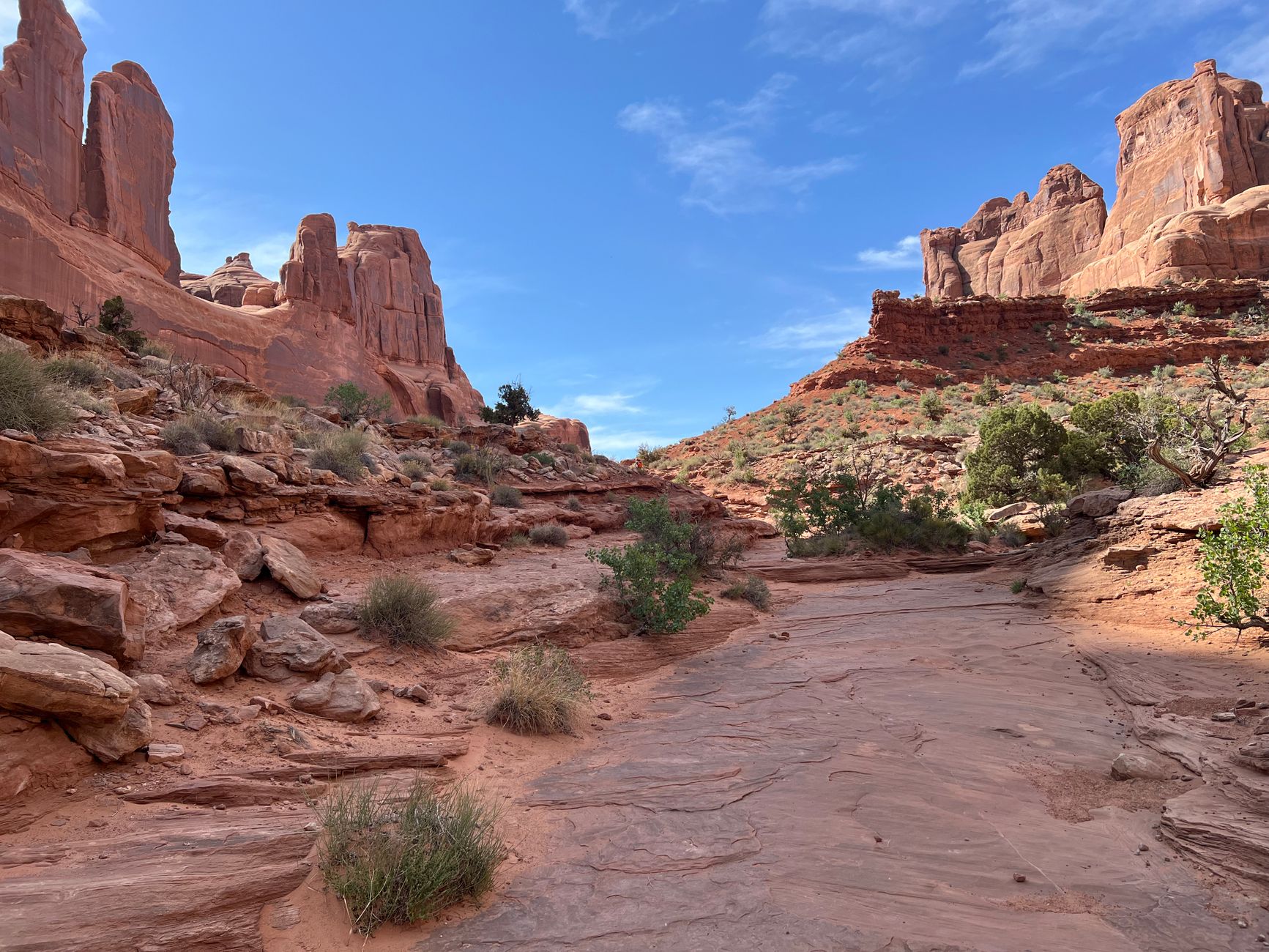
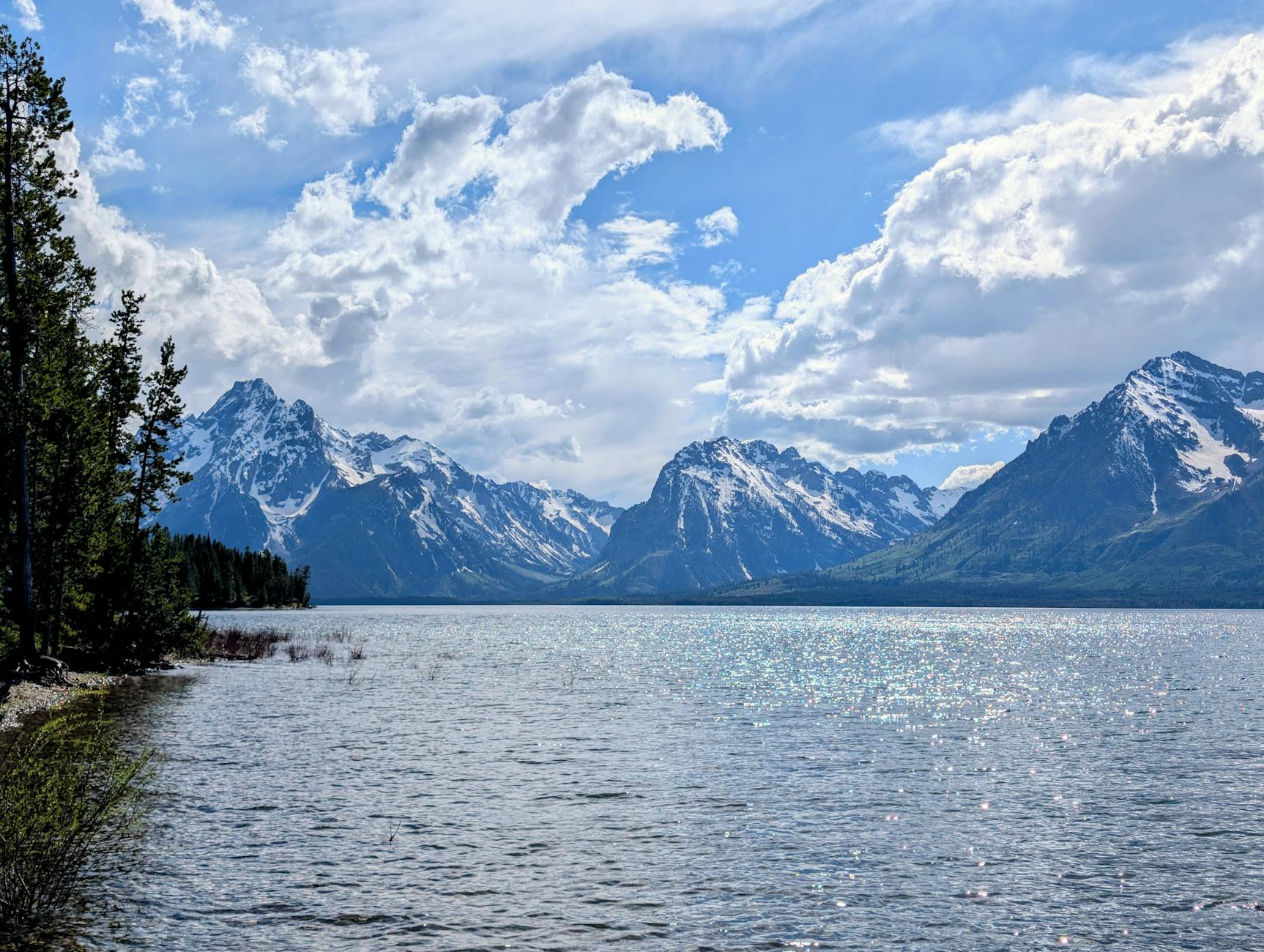
Grand Teton is about one overwhelming visual. The Teton Range rises straight out of the valley floor with no foothills — just flat land, then BAM, a wall of jagged granite peaks soaring 7,000 feet overhead. There’s nothing quite like the first time you see the Tetons reflected in a calm lake at sunrise. It’s sudden, dramatic, and almost unreal in its sharpness.
Glacier is about immersion in scale. You don’t look at one thing — you’re surrounded by carved valleys, turquoise glacial lakes, ancient glaciers (dwindling but still there), and peaks in every direction. Driving Going-to-the-Sun Road or hiking the Highline Trail gives you that slow-building sense of being deep inside a mountain world.
Think of it this way: Grand Teton is a masterpiece on a wall — you stand before it and stare. Glacier is stepping inside the painting — you’re surrounded by beauty on all sides.
Hiking: Accessible Peaks vs Wild Backcountry
Grand Teton’s hikes are world-class but more concentrated. Cascade Canyon, Lake Solitude, and Delta Lake are bucket-list caliber, and most trailheads are easy to reach from the valley. The park is compact enough that you can hit major highlights without massive drives between them.
Glacier’s hikes are spread across a much larger area and often feel more remote. The Highline Trail runs along a cliffside with the continent dropping away below you. Grinnell Glacier hike takes you to the foot of one of the park’s remaining glaciers. Iceberg Lake sits in a dramatic cirque with chunks of ice floating in the water even in July. These hikes demand more time and planning but deliver a true wilderness feeling.
Winner depends on you: Want world-class hikes accessible from a single base? Grand Teton. Want to feel like you’re in true, vast wilderness? Glacier.
Wildlife
Both parks are exceptional for wildlife, but the star animals differ:
Grand Teton is arguably the best national park in the lower 48 for moose sightings, particularly around willow flats and along the Snake River. You’ll also see elk herds, bison (especially in the southern portion), and bears at a distance.
Glacier is prime grizzly bear country — one of the best places in the continental US to see grizzlies in the wild. Mountain goats appear on the peaks and near Logan Pass, and bighorn sheep frequent the eastern slopes. The wildlife feels wilder here because the landscape is less accessible.
The Drives
Grand Teton’s scenic driving is beautiful but relatively brief. Teton Park Road and the Moose-Wilson Road offer spectacular mountain views, but you can see the highlights in an afternoon of driving.
Glacier’s Going-to-the-Sun Road is a different beast entirely — widely considered one of the most spectacular drives in North America. It climbs over 6,600-foot Logan Pass through cliff-edge switchbacks with walls of rock on one side and thousand-foot drop-offs on the other. It’s a destination in itself. The full crossing takes about 2 hours without stops (but you’ll stop constantly).
When to Visit
Grand Teton:
- Spring (May–June): Wildflowers begin, some trails still snow-covered at high elevation. Lakes mirror the peaks.
- Summer (July–August): Everything open, warm, busiest. Early mornings are magic.
- Fall (September–October): Golden aspens, elk bugling, thinner crowds. A photographer’s dream.
- Winter: Cross-country skiing and snowshoeing; most roads closed but Jackson stays alive.
- Spring (April–June): Many roads and trails still snow-covered. Going-to-the-Sun Road typically doesn’t fully open until late June or early July.
- Summer (July–mid September): The only time everything is accessible. Short but spectacular window.
- Fall (late September–October): Larch trees turn gold, crowds vanish, but snow can close roads quickly.
- Winter: Most of the park is inaccessible by car. Backcountry skiing only.
Key difference: Grand Teton has a much longer accessible season. Glacier’s prime window is essentially July through mid-September — miss that window and you miss most of what makes it famous.
Logistics & Access
Grand Teton sits just south of Yellowstone and right next to Jackson, Wyoming — a vibrant mountain town with restaurants, gear shops, and easy airport access (Jackson Hole Airport is literally inside the park). Getting here is easy.
Glacier is more remote. The nearest towns (Whitefish, Kalispell, West Glacier) are smaller and services are more limited. The closest airport is Glacier Park International (FCA) in Kalispell. Getting here takes more effort, but the remoteness is part of the appeal.
What’s New in 2026
Grand Teton (2026):
- No timed entry or reservations required
- Construction projects underway across the park — check road closures before visiting
- Entrance fee: $35/vehicle for 7 days
- No vehicle reservations required anywhere in the park (a major change from 2023-2025)
- Logan Pass parking limited to 3 hours starting July 1
- New ticketed shuttle system to Logan Pass for hikers planning longer trips (tickets via Recreation.gov, $1 processing fee, available 60 days in advance)
- Two Medicine Campground closed all of 2026 for construction
- No fuel available inside the park — fill up before entering