15 Best Photo Spots in Yosemite National Park
🌍 Plan & Book Your Trip
Best deals powered by Travelpayouts:
Affiliate links — no extra cost to you.
Sunset alpenglow on Half Dome from Glacier Point — a Yosemite photographer’s dream.
Few places reward a camera like Yosemite. Granite monoliths catching alpenglow, waterfalls plunging off thousand-foot cliffs, meadows mirroring Half Dome at dawn — it’s no wonder this valley shaped the career of Ansel Adams himself. But the difference between a forgettable phone pic and a jaw-dropping image usually comes down to where you stand and when.
Here are the best photo spots in Yosemite National Park, with timing tips to help you nail each one.
Key Takeaways
- Tunnel View is the most iconic shot — stunning at sunset and after a storm clears.
- Glacier Point offers the best high panorama (seasonal road).
- Spring means thundering waterfalls; fall means golden light and calm reflections.
- Golden hour and alpenglow on the granite are the magic windows.
- A tripod and wide-to-mid zoom range cover almost everything here.
Quick Facts
| 📍 Park | Yosemite National Park, California |
|---|---|
| 📸 Top spots | Tunnel View, Glacier Point, Valley View |
| 🌅 Best light | Sunset alpenglow, sunrise meadow reflections |
| 🗓️ Season tips | Spring = thundering waterfalls; fall = golden light |
| 🚗 Road notes | Glacier Point & Tioga roads are seasonal |
| 🎟️ Entry | Timed-entry reservation may apply in peak season |
When the Light Is Best
- Sunrise: Soft light and calm air for meadow reflections (Cook’s Meadow, Sentinel Meadow).
- Golden hour: Warm light on El Capitan and Half Dome.
- Sunset / alpenglow: Half Dome glows pink — best from Glacier Point and Tunnel View.
- After a storm: Mist and clearing clouds in the valley create legendary, moody shots.
The 15 Best Photo Spots
1. Tunnel View
The Yosemite shot: El Capitan, Bridalveil Fall, and Half Dome framed in one sweeping vista. Spectacular at sunset and unreal when fog lifts after a storm.
2. Glacier Point
A 3,200-foot-high panorama over the valley with Half Dome front and center. Incredible at sunset and for night-sky photography. (Road is seasonal — closed in winter.)
3. Valley View (Gates of the Valley)
A riverside view of El Capitan reflected in the Merced — beautiful in soft morning or evening light.
4. Cook’s Meadow Loop
The classic Half Dome and Yosemite Falls compositions, with foreground meadow and reflections at sunrise.
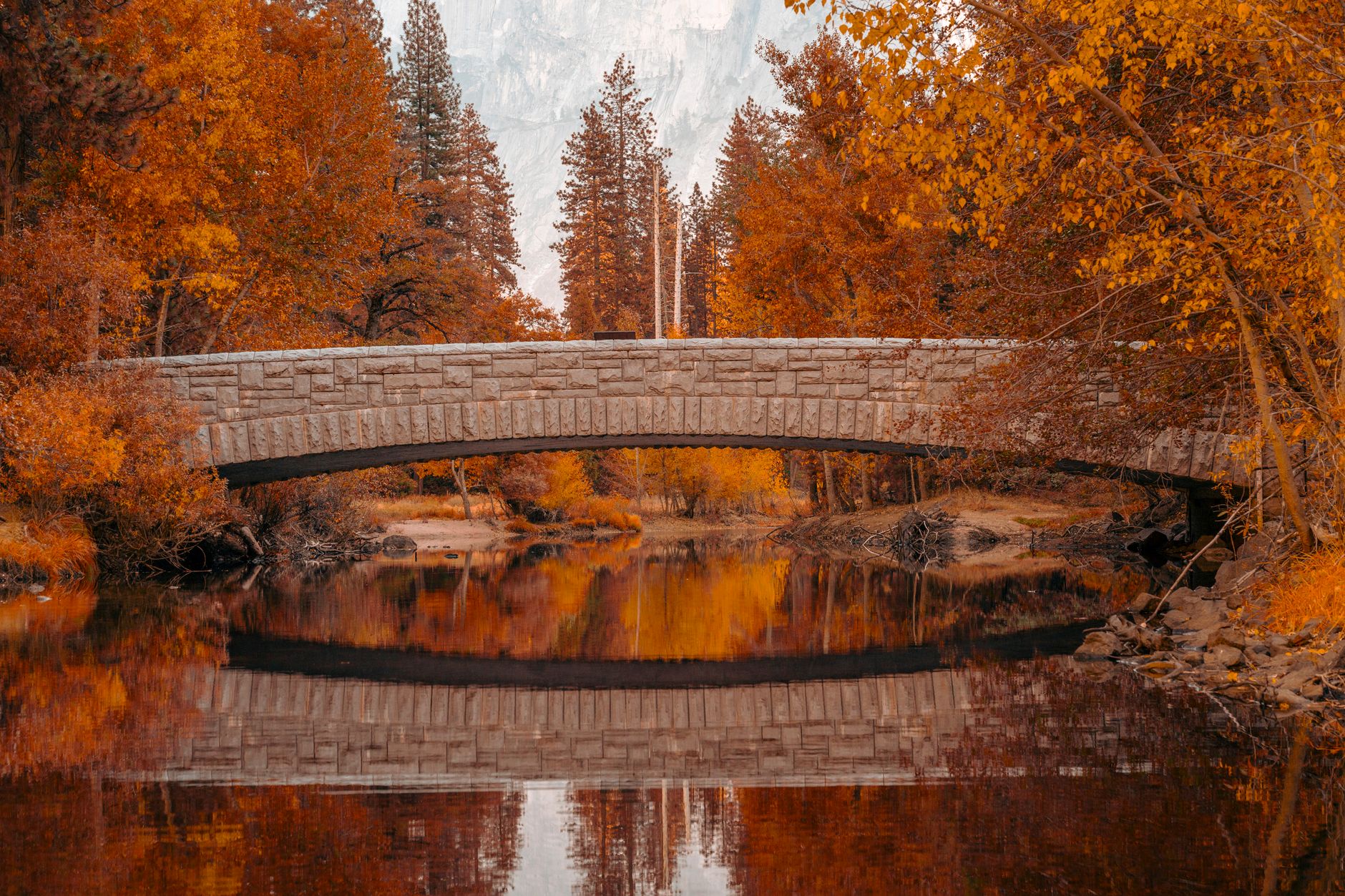
5. Sentinel Bridge
A famous spot for Half Dome reflected in the Merced River, especially glowing at sunset.
6. Yosemite Falls (Lower Falls)
Get close to the thundering falls in spring; use a slow shutter for silky water.
7. Bridalveil Fall
The first big waterfall most visitors see — great light in late afternoon.
8. El Capitan Meadow
Look up at the granite giant; at dusk you can photograph climbers’ headlamps glowing on the wall.
9. Taft Point
Dizzying, railing-free cliff edges near Glacier Point — dramatic sunset silhouettes (be very careful near the edge).
10. Sentinel Meadow / Swinging Bridge
Quiet reflections of Yosemite Falls with far fewer people.
11. Mirror Lake
In spring, it lives up to its name with Half Dome reflections; by late summer it can dry up.
12. Olmsted Point (Tioga Road)
High-country granite domes and a distant back-side view of Half Dome (summer only).
13. Tenaya Lake (Tioga Road)
A stunning alpine lake for reflections and star photography (summer only).
14. Tuolumne Meadows (Tioga Road)
Wide-open subalpine meadows, winding river, and granite peaks (summer only).
15. Yosemite Valley after a Storm
Not a single spot but a condition — when clouds clear and mist rises off the cliffs, the whole valley becomes a photographer’s paradise. Chase it.
Gear Tips for Yosemite
- Tripod — vital for sunrise reflections, silky waterfalls, and night skies.
- Polarizing filter — manages glare on water and deepens skies.
- Neutral density filter — for long-exposure waterfall shots in daylight.
- Wide-angle for grand vistas; telephoto to isolate Half Dome or climbers.
- Layers + headlamp for pre-dawn and post-sunset shoots.
Best Time of Year for Yosemite Photography
Yosemite’s photo character shifts hard by season:
- Spring (Apr–Jun): Peak waterfalls — Yosemite Falls and Bridalveil thunder, and Mirror Lake actually mirrors. The best season for dramatic water.
- Fall (Sep–Oct): Golden cottonwoods and oaks, calm reflective water, soft light, and far fewer people.
- Winter (Dec–Feb): Snow-dusted granite, moody fog, and — in mid-to-late February — the famous Horsetail Fall “firefall” glow at sunset.
- Summer: The high country opens (Olmsted Point, Tenaya Lake, Tuolumne) for alpine and astrophotography, though the valley is busiest and waterfalls fade.
A Sample Sunrise-to-Sunset Shooting Plan
Make the most of the light with a full-day valley plan:
- Sunrise: Set up at Cook’s Meadow or Sentinel Bridge for still reflections of Half Dome.
- Morning: Shoot Valley View (Gates of the Valley) as side light hits El Capitan over the Merced.
- Midday: Get close to Lower Yosemite Falls for long-exposure water (an ND filter helps).
- Late afternoon: Drive up to Glacier Point (seasonal) for the big panorama.
- Sunset: Catch alpenglow on Half Dome from Glacier Point or Tunnel View, then linger for blue hour and stars.
After a storm, drop everything and head to Tunnel View — clearing mist makes the most legendary Yosemite frames of all.
A Quick Reflection
My most memorable Yosemite morning started in fog so thick I almost turned back. I waited it out at Tunnel View with a thermos of coffee, half-convinced I’d wasted the alarm. Then the clouds began to tear open, and El Capitan emerged piece by piece through the mist while the first sun lit Bridalveil Fall. I fired off frames like a maniac. The lesson: in Yosemite, “bad” weather often makes the best photos — so show up anyway and be patient.
Getting Around for Photographers
Yosemite Valley has a free shuttle, but for photography you’ll often want your own car for pre-dawn and post-sunset freedom, since shuttles don’t run before first light. The valley spots (Tunnel View, Valley View, Cook’s Meadow, Sentinel Bridge) sit close together and are easy to hit in one morning. Glacier Point is about an hour’s drive from the valley (seasonal road), so plan a dedicated sunset trip up. The Tioga Road high country (Olmsted Point, Tenaya Lake, Tuolumne) is a summer-only drive of an hour-plus each way — treat it as its own day, and fill your tank first.
A Note on Night-Sky Photography
Yosemite’s high country is excellent for astrophotography in summer. Glacier Point, Olmsted Point, and Tenaya Lake offer dark skies with granite foregrounds, and Half Dome under the Milky Way is a bucket-list frame. Shoot around a new moon, bring a fast wide-angle lens and a sturdy tripod, and dress warmly — even July nights are cold at elevation.
Tips for Better Yosemite Photos
- Time it with the seasons — spring for waterfalls, fall for golden calm.
- Shoot sunrise for reflections when the air is still and crowds are thin.
- Use foreground — meadows, the river, trees — to add depth.
- Chase storms and fog for once-in-a-lifetime conditions.
- Respect meadows and wildlife — stay on boardwalks and trails.
- Scout compositions the evening before so you’re already in position for first light.
- Check the moon phase for night shots, and the calendar for February’s firefall window.
FAQ
What is the best photo spot in Yosemite? Tunnel View is the most iconic, capturing El Capitan, Bridalveil Fall, and Half Dome in one frame. It’s stunning at sunset and especially dramatic when fog clears after a storm.
What is the best time of day to photograph Yosemite? Sunrise for calm meadow reflections, and golden hour to sunset for warm alpenglow on the granite. Conditions right after a storm clears are among the best of all.
When are Yosemite’s waterfalls best for photos? Spring, usually around May, when snowmelt makes them thunder. By late summer many slow to a trickle, so plan a spring visit if waterfalls are your goal.
Is Glacier Point open year-round? No. The road to Glacier Point is seasonal and closes in winter, typically reopening in late spring depending on snow. Always check current road status.
What is the Yosemite firefall and when can you photograph it? The “firefall” is a natural phenomenon when the setting sun lights up Horsetail Fall on El Capitan so it glows like flowing lava. It happens for roughly two weeks in mid-to-late February, only with the right sun angle, clear skies, and enough water flow. It draws big crowds, so arrive hours early for a spot.
Before you go, confirm road seasons and reservations on the official Yosemite National Park site.
Final Thoughts
Yosemite is a place where the scenery does most of the work — but the photographers who plan around light, season, and weather walk away with the truly unforgettable frames. Pick your spots, set the alarm for sunrise, and don’t fear a cloudy forecast. In this valley, the moodiest mornings often make the most magical photographs.
Plan around the light with our best time to visit Yosemite guide, and read our full Yosemite first-timer’s guide. Comparing parks? See Sequoia vs Yosemite. Map it all with our free Trip Planner.
🌍 Plan & Book Your Trip
Best deals powered by Travelpayouts:
Affiliate links — no extra cost to you.